
Golden-naped woodpecker
The golden-naped woodpecker is a bird species found in Costa Rica and western Panama, inhabiting subtropical or tropical moist lowland forests and degraded former forest areas. It is closely related to the beautiful woodpecker and is characterized by its yellow nape and distinctive markings on its crown, with males and females exhibiting slight differences. This species is currently listed as "least concern" by the IUCN.
Key Facts
- ›Found on the Pacific slopes of Costa Rica and western Panama.
- ›Inhabits moist lowland forests, degraded areas, and plantations.
- ›Males have a yellow fore-crown and red central-crown, while females have a yellow crown with a black band.
- ›Diet includes fruits, tree-dwelling insects, and flying insects caught in MID-air.
- ›Nests are made in holes excavated in trees.
- ›Conservation status is 'least concern'.

Central America, Costa Rica, Panama
Subtropical Or Tropical Moist Lowland Forests, Heavily Degraded Former Forest, Primary Humid Rainforest, Open Areas With Tall Trees, Woodland Edges, Secondary Forests, Plantations
- Yellow nape
- Black mask surrounding the eyes and running to the nape
- Small white patch behind the eye
- Red patch on mid-belly
- Male: Yellow fore-crown and red central-crown
- Female: Whole crown yellow except for a narrow central transverse black band
Fruit, Dates, Bananas, Figs, Cecropia Fruits, Insects, Beetle Larvae, Winged Termites, Flying Insects
- Forages on tree trunks for insects
- Sallies high in the air to catch flying insects, particularly at dusk
Hole In A Tree
About Golden-naped woodpecker
The golden-naped woodpecker (Melanerpes chrysauchen) is a species of bird belonging to the woodpecker family, Picidae. This species is closely related to the beautiful woodpecker, and at times, they have been considered the same species. Both are sometimes placed within the genus Tripsurus.
Distribution and Habitat
This woodpecker is endemic to Central America, specifically inhabiting the Pacific slopes of southwestern Costa Rica and western Panama. Its preferred environments include subtropical and tropical moist lowland forests, as well as heavily degraded former forest areas. It can be found in primary humid rainforests, particularly in open areas with mature trees, woodland edges, secondary forests, plantations, and degraded zones adjacent to natural forests. The species is not migratory and remains within its established range, which spans from sea level up to about 1,500 meters.
Description
Adult golden-naped woodpeckers reach a length of approximately 18 centimeters. While generally similar in appearance to the beautiful woodpecker, their geographical ranges do not overlap. The sexes exhibit some differences in plumage. Males possess a yellow fore-crown and a red central-crown, whereas the female's entire crown is yellow, interrupted only by a narrow black band across the center. Both sexes are distinguished by a yellow nape and a black mask that encircles the eyes and extends to the nape. A small white spot is present behind the eye. The lores, cheeks, chin, throat, and breast are a pale yellow, buff, or grey. The lower breast, belly, and flanks are marked with black and white barring, and a distinct red patch is located on the mid-belly. The mantle is predominantly black, and the wings are brownish with white tips on the flight feathers. The back and rump are mainly white, sometimes with black blotches, and the tail is black with white barring on the outer feathers. The iris is brown, the beak is greyish-black, and the legs are greyish-olive.
Ecology and Behavior
The diet of the golden-naped woodpecker is varied, consisting largely of fruits such as dates, bananas, figs, and fruits from the Cecropia genus. They also forage on tree trunks for insects, including beetle larvae. A notable behavior is their aerial sallies, especially at dusk, to capture flying insects like winged termites. Nests are constructed within cavities excavated in trees. The breeding season typically falls between March and June, with the possibility of raising two broods within a single season.
Conservation Status
The golden-naped woodpecker is assessed by the International Union for Conservation of Nature as being of 'least concern.' There are no identified particular threats to the species, and its population is considered to be steady. Despite its restricted geographical range, it is a common bird within its habitat, with an estimated total area of occupation of 23,800 square kilometers.
Source: Wikipedia ↗
Frequently Asked Questions
Where is the golden-naped woodpecker found?
The golden-naped woodpecker is found in Central America, specifically on the Pacific slopes of southwestern Costa Rica and western Panama. It inhabits areas ranging from sea level up to approximately 1,500 meters.
What does the golden-naped woodpecker eat?
Its diet primarily consists of fruits such as dates, bananas, figs, and Cecropia fruits. It also forages for insects like beetle larvae on tree trunks and catches flying insects, such as winged termites, in the air, especially at dusk.
How do golden-naped woodpeckers nest?
Golden-naped woodpeckers create their nests by excavating holes in trees. The breeding season typically occurs between March and June, and it is possible for the species to raise two broods within a single season.
What is the conservation status of the golden-naped woodpecker?
The golden-naped woodpecker is classified as 'least concern' by the International Union for Conservation of Nature. No specific threats have been identified for the species, and its population is believed to be steady.
What are the physical characteristics of the golden-naped woodpecker?
This woodpecker is about 18 cm long. Both sexes share a yellow nape and a black mask around the eyes. Males have a yellow fore-crown and a red central-crown, while females have a predominantly yellow crown with a narrow black band across the center.
Related Woodpecker species
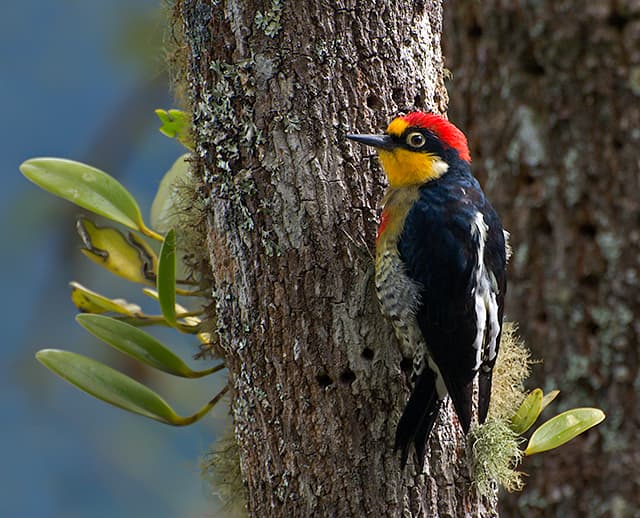
Yellow-fronted woodpecker
The yellow-fronted woodpecker is a colorful bird found in eastern South America, specifically in Brazil, Paraguay, and northeastern Argentina. It inhabits subtropical and tropical lowland forests, as well as degraded former forest areas. This species is characterized by its distinctive yellow fore-crown and throat, with males having a red crown and nape.
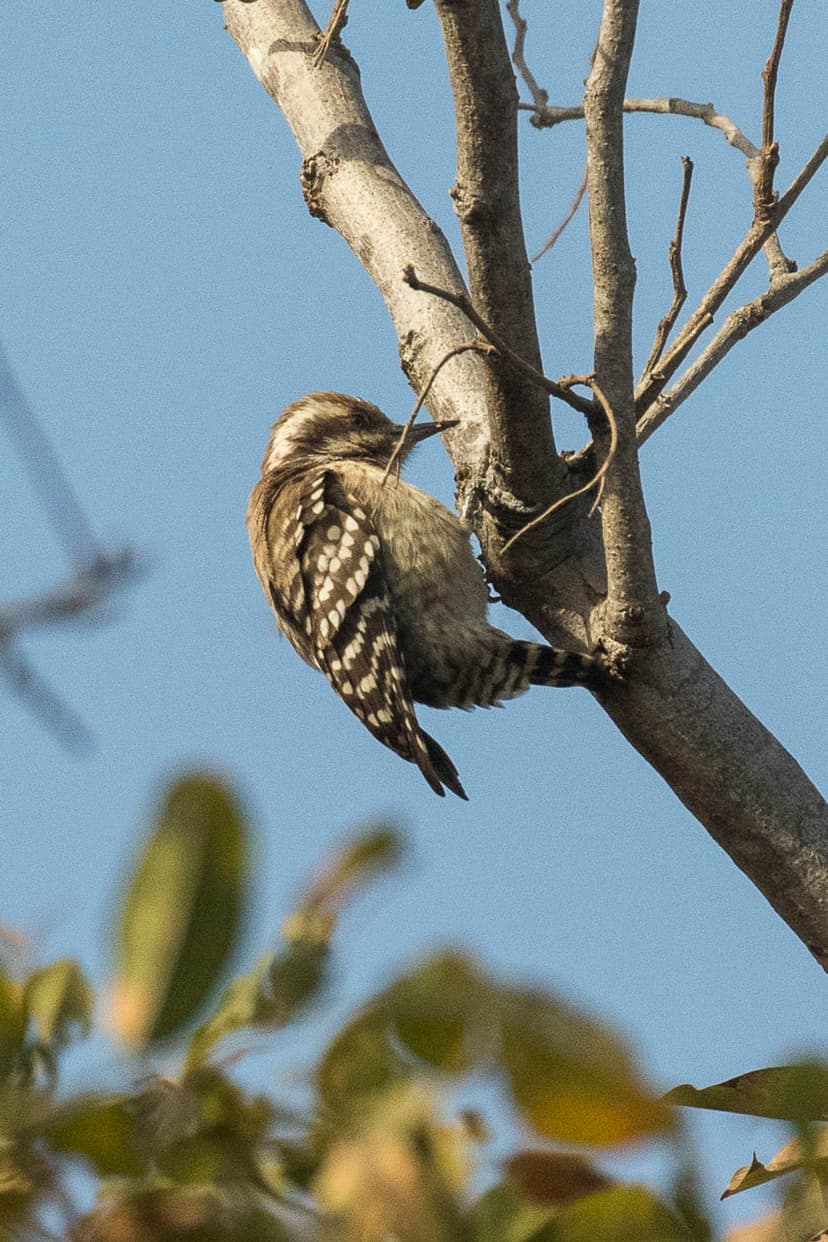
Brown-backed woodpecker
The brown-backed woodpecker is a small bird found across the savannah regions of sub-Saharan Africa. It is characterized by its brown plumage with white barring and a distinctive white supercilium and moustache. This species inhabits a variety of open, dry environments, from scrubland to suburban gardens.

Yellow-tufted woodpecker
The Yellow-tufted woodpecker is a South American bird known for its distinctive plumage, featuring bluish-black upper parts, a red breast and belly, and yellow markings on its crown. It inhabits humid lowland forests and degraded areas across several northern South American countries. This social and gregarious species primarily feeds on insects and fruits.