
Brown-capped pygmy woodpecker
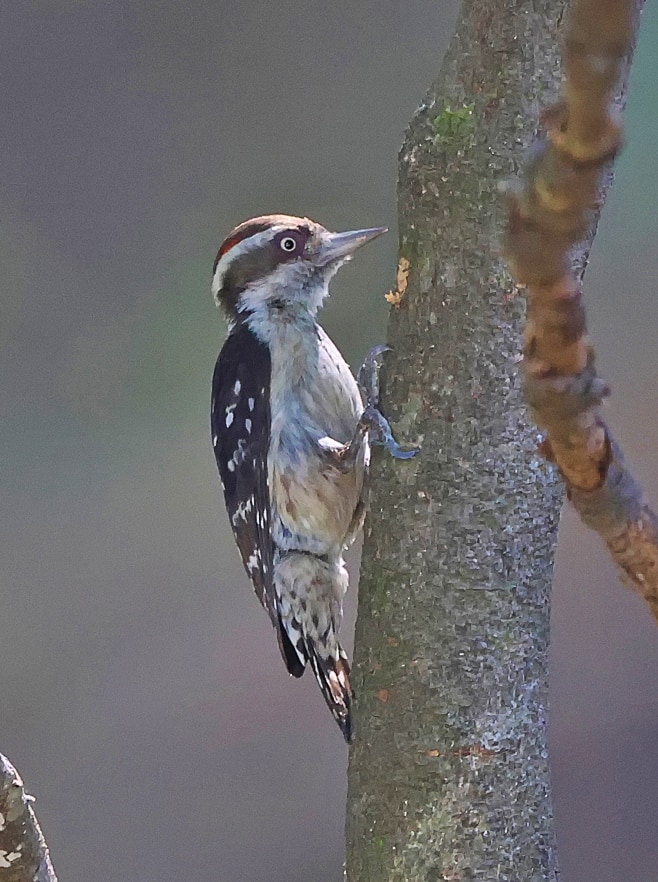
The brown-capped pygmy woodpecker is a very small species of woodpecker found in Nepal, India, and Sri Lanka. It is characterized by its brownish cap, pink-rimmed white irises, and barred brown and white plumage. These active birds are often observed foraging in pairs or small family groups in the tree canopy.
Key Facts
- ›Found across most of India, Nepal, and Sri Lanka.
- ›Inhabits diverse habitats including forests, orchards, and urban gardens.
- ›Feeds on small invertebrates, nectar, and fruit.
- ›Nests in tree cavities, with both sexes participating in excavation and feeding.
- ›Known for being highly active and constantly foraging.
- ›Has a distinctive pink-rimmed white iris and a barred brown and white upper body.
Indian Pygmy Woodpecker
Asia, Indian Subcontinent
Deciduous Forests, Secondary Forests, Orchards, Urban Gardens, Mangroves, Cultivated Areas
Brownish Cap From Forehead To Hindneck, Pink-Rimmed White Irises, Barred Brown and White Upperparts, Lightly Streaked Dirty White Underparts, White Supercilia and Cheeks, Paler Brown Crown, Eyestripes
Small Invertebrates, Nectar, Fruit
Gleaning, Probing Wood, Foraging In Tree Canopy
Tree Cavities, Dead Branches
Weak, rapid, rattling sound on a rising scale, Lasting 1.2 to 1.5 seconds
About Brown-capped pygmy woodpecker
The brown-capped pygmy woodpecker, also known as the Indian pygmy woodpecker, is a diminutive member of the woodpecker family found across parts of South Asia. Its scientific name is Yungipicus nanus, though it has historically been placed in genera such as Dendrocopos or Picoides by some taxonomic authorities.
Description and Identification
This small bird is characterized by a distinct brownish cap that extends from its forehead to its hindneck. A notable feature is its white irises, which are often edged with pink. The upperparts of the brown-capped pygmy woodpecker are barred with brown and white, while the underparts are lightly streaked with dirty white. Males may exhibit a red edging on their paler brown crown. They also possess white supercilia (eyebrows) and cheeks, contrasting with darker eyestripes.
Distribution and Habitat
The brown-capped pygmy woodpecker is a non-migratory species with a range that covers most of India, excluding the northeastern regions and the Thar Desert. It is also found in Nepal and Sri Lanka. This adaptable bird inhabits a diverse array of environments, including deciduous and secondary forests, orchards, and even urban gardens, with records indicating its presence up to altitudes of 2300 meters.
Behavior and Ecology
These woodpeckers are known for their high activity levels, often observed foraging diligently in the tree canopy. They are frequently seen in pairs or small family groups and may also associate with mixed-species flocks. Their diet consists primarily of small invertebrates, which they obtain by gleaning and probing into wood. They also consume nectar and fruit. The brown-capped pygmy woodpecker is a territorial and monogamous species. Their vocalization is described as a weak, rapid, rattling sound that rises in pitch and lasts between 1.2 and 1.5 seconds. The breeding season typically occurs from February to May. Nesting involves excavating cavities 2 to 14 meters high in dead branches, with an entrance hole diameter of approximately 3 cm. Both sexes share responsibilities in excavating the nest and feeding the young.
Source: Wikipedia ↗
Frequently Asked Questions
What is the scientific name of the brown-capped pygmy woodpecker?
The scientific name for the brown-capped pygmy woodpecker is Yungipicus nanus. Some taxonomic authorities may also place it in the genera Dendrocopos or Picoides.
Where can the brown-capped pygmy woodpecker be found?
This species is found across most of India, excluding the northeast and the Thar desert. It is also present in Nepal and Sri Lanka.
What kind of habitats does the brown-capped pygmy woodpecker prefer?
The brown-capped pygmy woodpecker inhabits a variety of habitats up to 2300 meters. These include deciduous and secondary forests, orchards, mangroves, cultivated areas, and urban gardens.
What does the brown-capped pygmy woodpecker eat?
Its diet primarily consists of small invertebrates, which it gleans and probes from wood. It also supplements its diet with nectar and fruit.
How does the brown-capped pygmy woodpecker nest?
The brown-capped pygmy woodpecker is a cavity nester, excavating nesting holes typically 2 to 14 meters high in dead branches. Both the male and female participate in digging the nest and feeding the young.
Related Woodpecker species

Sulu pygmy woodpecker
The Sulu pygmy woodpecker is a small bird endemic to the Philippines, found in tropical lowland forests, mangroves, and arable lands. It is threatened by habitat loss due to deforestation and conversion of land for agriculture and urbanization. This species is known for foraging on dead tree branches, often alone or in pairs, and is presumed to feed on insects.
Yellow-fronted woodpecker
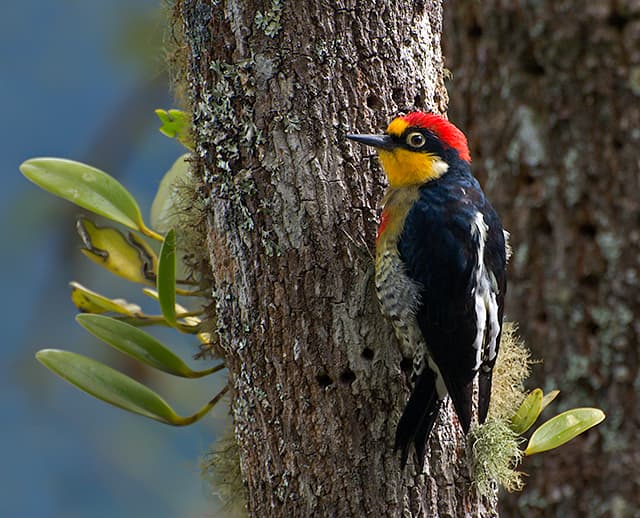
The yellow-fronted woodpecker is a colorful bird found in eastern South America, specifically in Brazil, Paraguay, and northeastern Argentina. It inhabits subtropical and tropical lowland forests, as well as degraded former forest areas. This species is characterized by its distinctive yellow fore-crown and throat, with males having a red crown and nape.
Red-rumped woodpecker
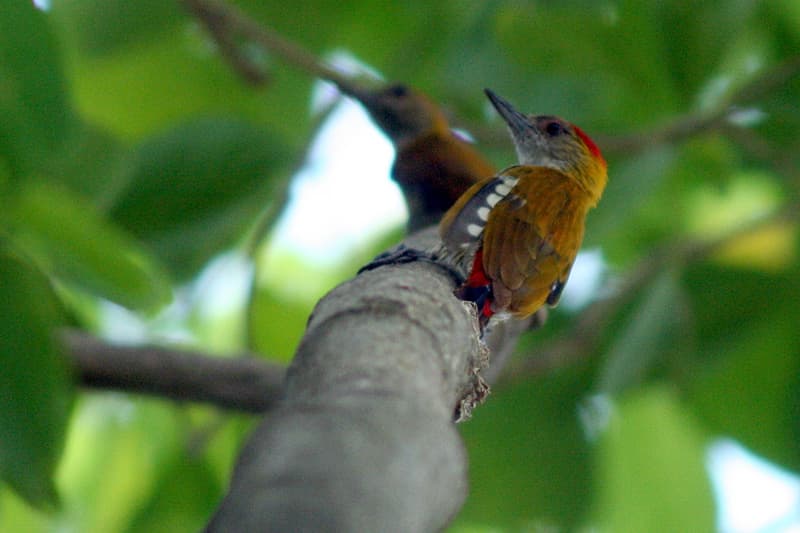
The red-rumped woodpecker is a bird species found in Central and South America, ranging from Costa Rica to Peru and Brazil. It is characterized by its olive-brown plumage with a crimson-red rump and uppertail coverts. This species inhabits a variety of forest types and savannas, and its diet primarily consists of insects.