
Brown-fronted woodpecker
Dendrocoptes auriceps·Picidae·medium-sized
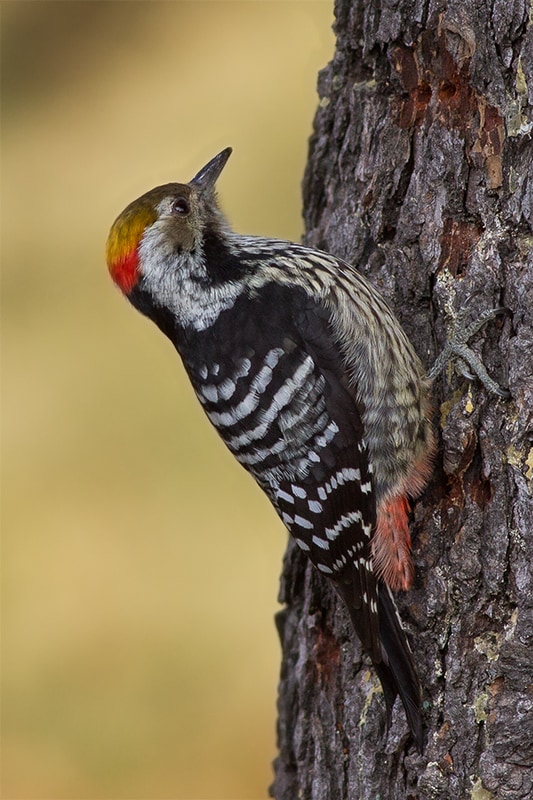
The brown-fronted woodpecker is a medium-sized, pied bird found in the lower-to-middle altitudes of the Himalayas, spanning across Afghanistan, India, Nepal, Pakistan, and Bhutan. Its natural habitats include temperate and moist montane forests. It is characterized by prominent black markings, yellow in its crown, and distinct underpart streaking.
Key Facts
- ›Found in the lower-to-middle altitudes of the Himalayas.
- ›Inhabits temperate and subtropical/tropical moist montane forests.
- ›Distinguished by a yellow crown and prominent black moustache.
- ›Males have a red patch on the rear of their crown, while females have a yellow crown.
- ›The vent is a deep pink color.
Indian Subcontinent, Afghanistan, India, Nepal, Pakistan, Bhutan
- Yellow In Crown
- White-Barred Black Back
- Prominent Black Moustache Extending To Breast
- Black-Streaked White Underparts
- Deep Pink Vent
- Male: Brown Forecrown, Yellow Center, Red Rear
- Female: All-Yellow Crown
About Brown-fronted woodpecker
The brown-fronted woodpecker, scientifically known as Dendrocoptes auriceps, is a medium-sized bird belonging to the Picidae family. It is recognized for its distinctive pied plumage, featuring a yellow crown, white barring on its black back, and a prominent black moustache that extends to its breast. The underparts are streaked with black on white, and it possesses a notable deep pink vent.
Geographic Distribution and Habitat
This species is found across the northern regions of the Indian subcontinent, primarily inhabiting the lower to middle altitudes of the Himalayan mountain range. Its range extends through Afghanistan, India, Nepal, Pakistan, and Bhutan. The natural habitats favored by the brown-fronted woodpecker include temperate forests, as well as subtropical and tropical moist montane forests.
Source: Wikipedia ↗
Frequently Asked Questions
Where is the brown-fronted woodpecker found?
The brown-fronted woodpecker is found across the northern regions of the Indian subcontinent. Its range includes Afghanistan, India, Nepal, Pakistan, and Bhutan, primarily in the lower to middle altitudes of the Himalayas.
What kind of forests does the brown-fronted woodpecker live in?
This woodpecker species inhabits natural habitats such as temperate forests. It also resides in subtropical or tropical moist montane forests.
What are the key physical characteristics of the brown-fronted woodpecker?
It is a medium-sized, pied woodpecker with yellow in its crown. It features white barring on its back, a prominent black moustache extending to the breast, and black-streaked white underparts. The vent is a deep pink.
How can I tell the difference between a male and female brown-fronted woodpecker?
The male brown-fronted woodpecker has a forecrown that is brown with a yellow center and a red rear. The female, in contrast, has a whole crown that is yellow.
What is the scientific name for the brown-fronted woodpecker?
The scientific name for the brown-fronted woodpecker is Dendrocoptes auriceps. Some taxonomic authorities may also place it in the genus Dendrocopos or Leiopicus.
Related Woodpecker species
Rufous-bellied woodpecker
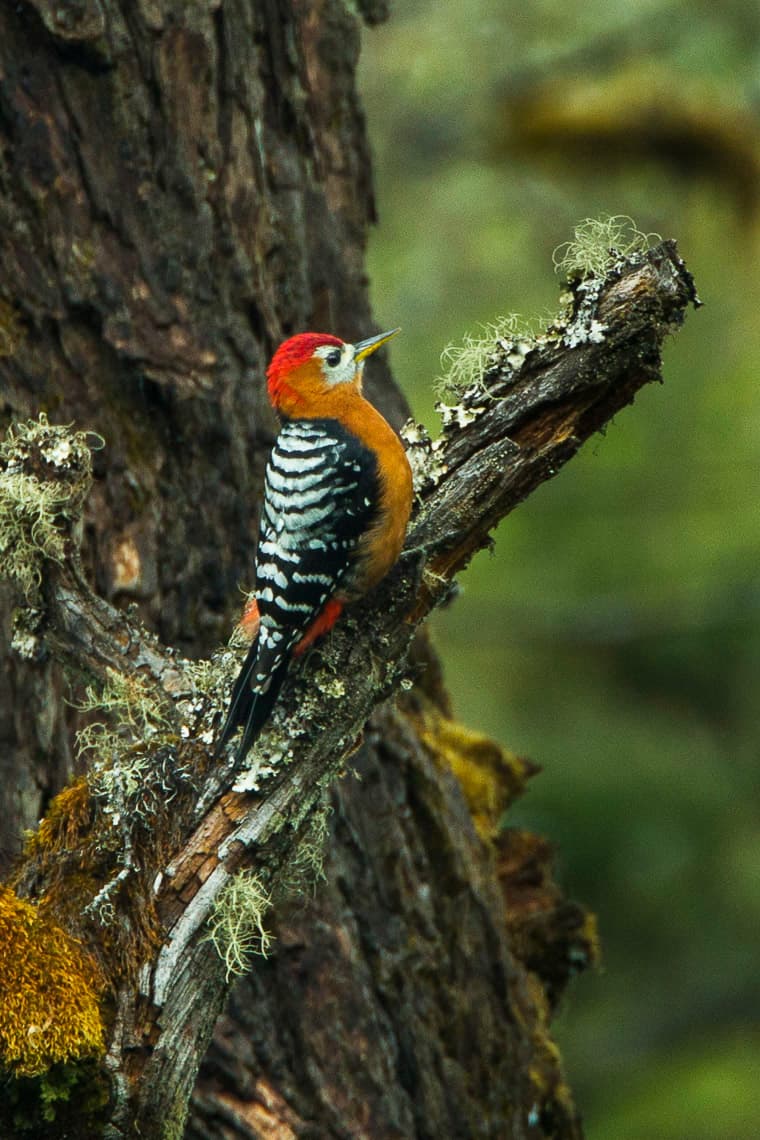
The rufous-bellied woodpecker, also known as the rufous-bellied sapsucker, is a bird species found across the Himalayas and parts of Southeast Asia, inhabiting subtropical and tropical moist forests. It is characterized by its distinctive pitting of tree bark to feed on sap, and its plumage includes a black mantle and back with white barring on the wings and tail, contrasted by a rufous or cinnamon underside.
Necklaced woodpecker
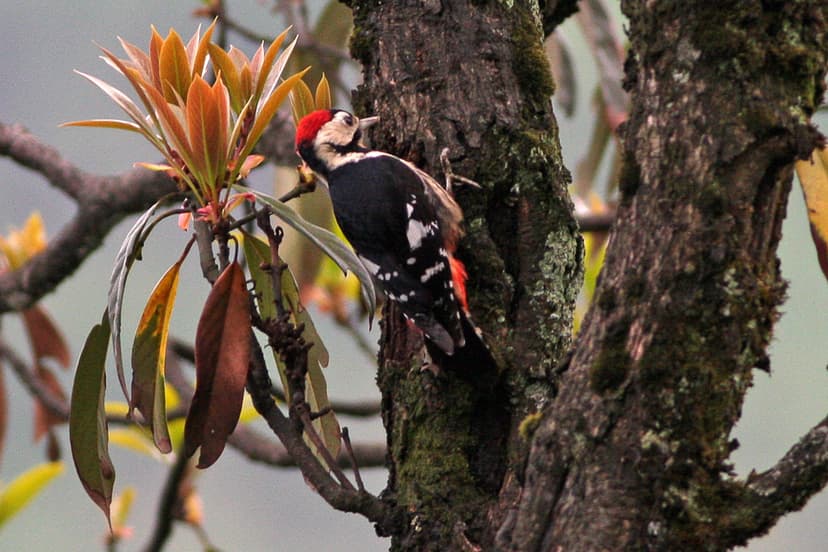
The necklaced woodpecker is a small, stout, black-and-white bird found in lowland and montane forests across Southeast Asia and China. It is characterized by buffy underparts, with males displaying a distinctive fiery orange neck patch and a crimson red crown.

Checker-throated woodpecker
The checker-throated woodpecker, also known as the checker-throated yellownape or Javan yellownape, is a species of bird native to Southeast Asia. It inhabits subtropical and tropical moist forests, and its population is declining due to deforestation.