
Checker-throated woodpecker
The checker-throated woodpecker, also known as the checker-throated yellownape or Javan yellownape, is a species of bird native to Southeast Asia. It inhabits subtropical and tropical moist forests, and its population is declining due to deforestation.
Key Facts
- ›Native to Southeast Asia, including Myanmar, Thailand, Malaysia, Singapore, Brunei, and Indonesia.
- ›Inhabits subtropical or tropical moist lowland or montane forests and mangrove forest edges.
- ›Feeds on insects and berries, foraging by gleaning and probing.
- ›Nests are excavated in deadwood.
- ›Breeding season occurs in March-April in Malaysia and February-June in Borneo.
- ›Classified as near Threatened by the IUCN due to habitat loss.

Checker-Throated Yellownape, Javan Yellownape
Southeast Asia, Myanmar, Thailand, Malaysia, Singapore, Brunei, Indonesia
Not Specified In Text
Checker-Throated Pattern
Insects, Berries
Gleaning, Probing, Forages in lower and middle canopy storeys
Excavated In Deadwood
Not Specified In Text
About Checker-throated woodpecker
The checker-throated woodpecker, scientifically known as Chrysophlegma mentale, is a bird species native to the diverse forest ecosystems of Southeast Asia. It is also recognized by the common names checker-throated yellownape and Javan yellownape.
Distribution and Habitat
This species boasts a wide distribution across Southeast Asia, with confirmed occurrences in Myanmar, Thailand, Malaysia, Singapore, Brunei, and Indonesia. Its preferred habitats are subtropical and tropical moist forests, encompassing both lowland and montane regions. Additionally, the checker-throated woodpecker can be found at the landward edges of mangrove forests, adapting to these coastal environments.
Ecology and Behavior
The checker-throated woodpecker is an insectivore, supplementing its diet with berries. Its foraging behavior involves gleaning and probing for food within the lower and middle canopy layers of the forest. The species excavates its nests in deadwood, utilizing available decaying trees for shelter and reproduction. Breeding has been recorded between March and April in Malaysia, and extends from February to June in Borneo.
Conservation Status
Regrettably, the checker-throated woodpecker faces significant threats, primarily from habitat destruction. Deforestation driven by illegal logging for timber and the expansion of agricultural developments, such as palm oil plantations, are severely impacting its populations. Consequently, the species is experiencing a decline and is currently classified as Near Threatened by the International Union for Conservation of Nature (IUCN).
Source: Wikipedia ↗
Frequently Asked Questions
What is the scientific name of the checker-throated woodpecker?
The scientific name of the checker-throated woodpecker is Chrysophlegma mentale. This binomial name is used to classify the species within the scientific community.
Where can the checker-throated woodpecker be found?
The checker-throated woodpecker has a wide distribution across Southeast Asia. It is known to occur in countries such as Myanmar, Thailand, Malaysia, Singapore, Brunei, and Indonesia.
What kind of habitats does the checker-throated woodpecker prefer?
This species primarily inhabits subtropical or tropical moist lowland or montane forests. It can also be found at the landward edge of mangrove forests.
What does the checker-throated woodpecker eat?
The checker-throated woodpecker's diet consists mainly of insects, which are supplemented by berries. They forage by gleaning and probing for food.
What is the conservation status of the checker-throated woodpecker?
The checker-throated woodpecker is currently classified as Near Threatened by the IUCN. This status reflects the significant threats it faces, primarily from deforestation.
Related Woodpecker species
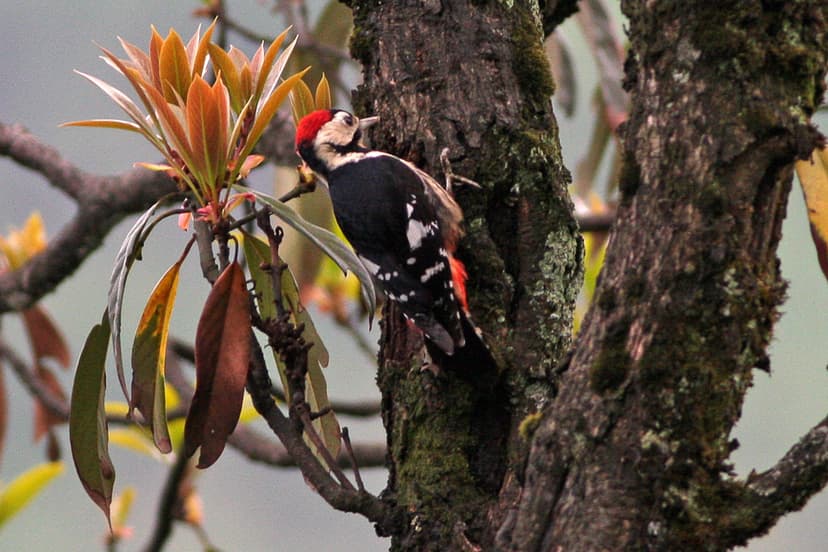
Necklaced woodpecker
The necklaced woodpecker is a small, stout, black-and-white bird found in lowland and montane forests across Southeast Asia and China. It is characterized by buffy underparts, with males displaying a distinctive fiery orange neck patch and a crimson red crown.
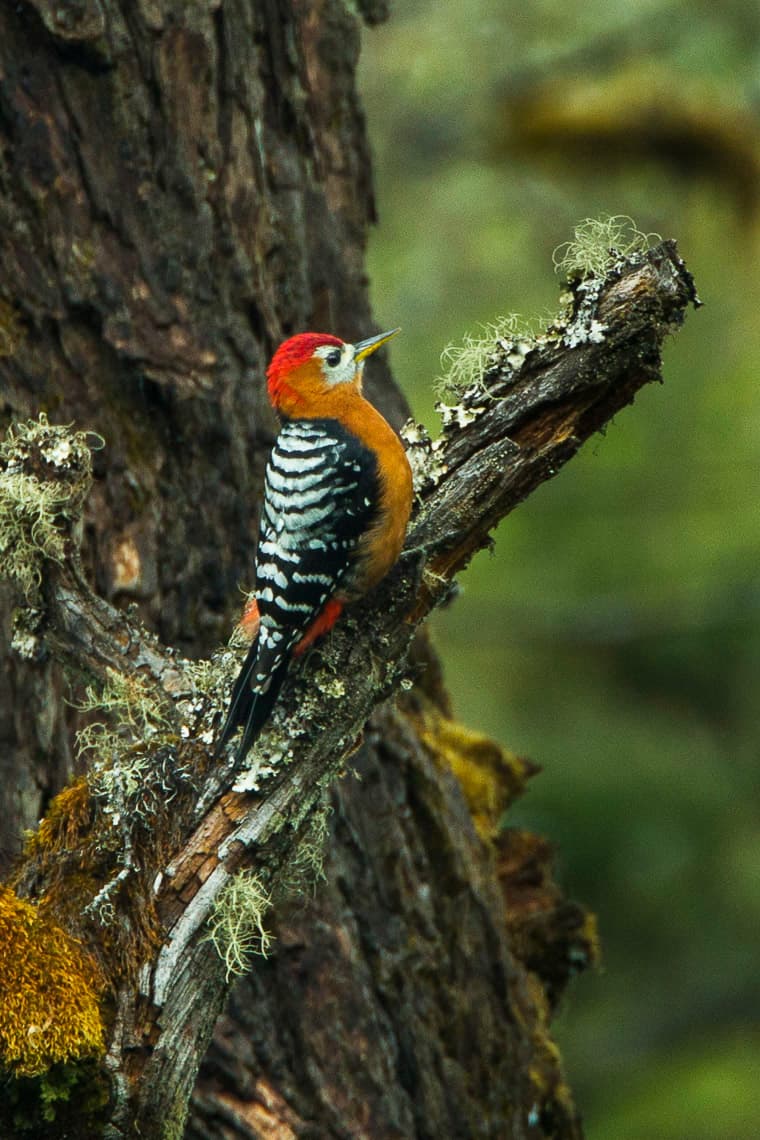
Rufous-bellied woodpecker
The rufous-bellied woodpecker, also known as the rufous-bellied sapsucker, is a bird species found across the Himalayas and parts of Southeast Asia, inhabiting subtropical and tropical moist forests. It is characterized by its distinctive pitting of tree bark to feed on sap, and its plumage includes a black mantle and back with white barring on the wings and tail, contrasted by a rufous or cinnamon underside.
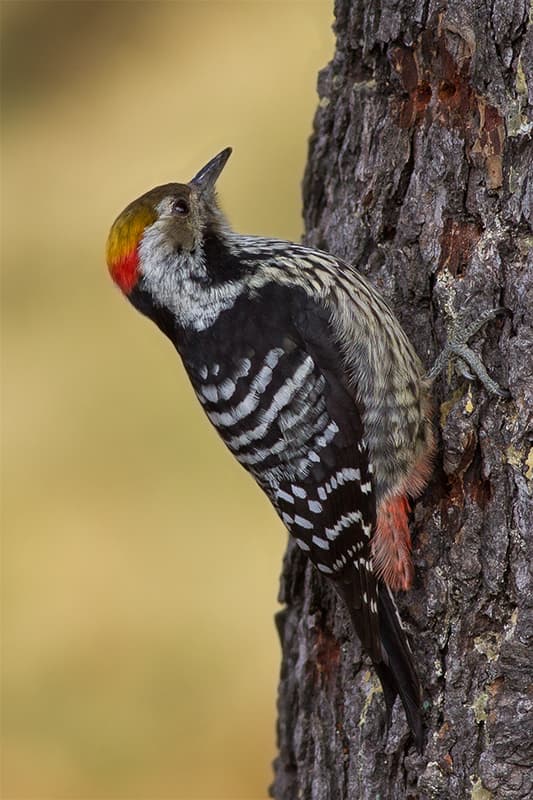
Brown-fronted woodpecker
The brown-fronted woodpecker is a medium-sized, pied bird found in the lower-to-middle altitudes of the Himalayas, spanning across Afghanistan, India, Nepal, Pakistan, and Bhutan. Its natural habitats include temperate and moist montane forests. It is characterized by prominent black markings, yellow in its crown, and distinct underpart streaking.