
Buff-spotted flameback
The buff-spotted flameback is a species of bird found across several Philippine islands, known for its distinctive drumming behavior and preference for tropical moist lowland forests. This species is characterized by its plumage and is believed to feed primarily on insects and wood-boring larvae.
Key Facts
- ›Found on the Philippine islands of Bohol, Leyte, Samar, Biliran, Panaon, Mindanao, Basilan, and Samal.
- ›Presumably feeds on insects and wood-boring larvae.
- ›Known for its long drumming pattern, averaging about 51 beats per drum.
- ›Nests in tree cavities.
- ›Breeding is believed to occur from January to may.
- ›Assessed as least-concern by the IUCN, but its population is decreasing.
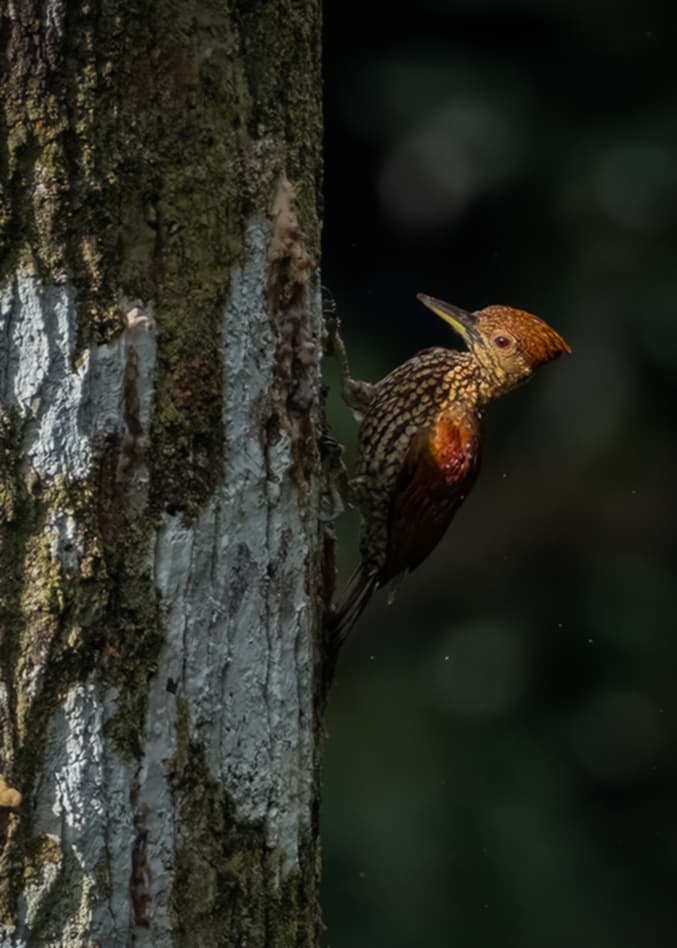
Buff-Spotted Flameback, Greater Flameback
Philippines
Tropical Moist Lowland Forest, Forest With Dense Understory
Heavily Spotted Throat and Belly, Dirty Crown In Females, Red Face, Red Back, Pale Gold Back
Insects, Wood-Boring Larvae
Drumming To Attract Mates, Foraging In Trees
Tree Cavities
- Long Drumming Pattern Averaging About 51 Beats Per Drum
About Buff-spotted flameback
The buff-spotted flameback, scientifically known as Chrysocolaptes lucidus, is a bird species native to the Philippines. It inhabits tropical moist lowland forests with dense understory, typically found at elevations up to 1,500 meters above sea level.
Description and Behavior
This species is characterized by its plumage, with variations noted among its recognized subspecies. Females often exhibit dirty crowns, and both sexes have a heavily spotted throat and belly. The buff-spotted flameback is known for its drumming, a rapid tapping of the beak against objects like dead trees, which is used to attract mates. Its drumming pattern is notably long, averaging around 51 beats per session. They are usually observed in pairs or family groups and may associate with other woodpecker species.
Diet and Nesting
The diet of the buff-spotted flameback is presumed to consist of insects and wood-boring larvae, typical for woodpeckers that forage within tree bark and wood. Like many woodpeckers, they nest in tree cavities. Breeding is believed to occur between January and May.
Habitat and Conservation
The buff-spotted flameback is found on several Philippine islands, including Bohol, Leyte, Samar, Biliran, Panaon, Mindanao, Basilan, and Samal. Despite its assessment as a least-concern species by the IUCN, its population is declining. The primary threat is habitat loss due to logging, agricultural conversion, and mining. While it occurs in some protected areas, enforcement against illegal activities remains a concern.
Taxonomy
The buff-spotted flameback was formerly considered conspecific with the greater flameback. It is now recognized as one of eight distinct species within the Greater flameback species complex. Three subspecies are recognized: C.l. lucidus (Zamboanga Peninsula and Basilan), C.l. montanus (Samal Island and Mindanao except Zamboanga Peninsula), and C.l. rufopunctatus (Bohol, Leyte, and Samar).
Source: Wikipedia ↗
Frequently Asked Questions
What is the scientific name of the buff-spotted flameback?
The scientific name of the buff-spotted flameback is Chrysocolaptes lucidus. This name places it within the genus Chrysocolaptes, which includes other flameback species.
What does the buff-spotted flameback eat?
The buff-spotted flameback is presumed to feed on insects and wood-boring larvae. This diet is typical for woodpecker species that forage in trees.
Where can the buff-spotted flameback be found?
This species is endemic to the Philippine islands, specifically found on Bohol, Leyte, Samar, Biliran, Panaon, Mindanao, Basilan, and Samal. It inhabits tropical moist lowland forests.
What are the nesting habits of the buff-spotted flameback?
The buff-spotted flameback nests in tree cavities. This is a common nesting strategy for many woodpecker species.
What is the conservation status of the buff-spotted flameback?
The buff-spotted flameback is currently assessed as a least-concern species by the IUCN. However, its population is experiencing a decrease, primarily due to habitat loss.
Related Woodpecker species
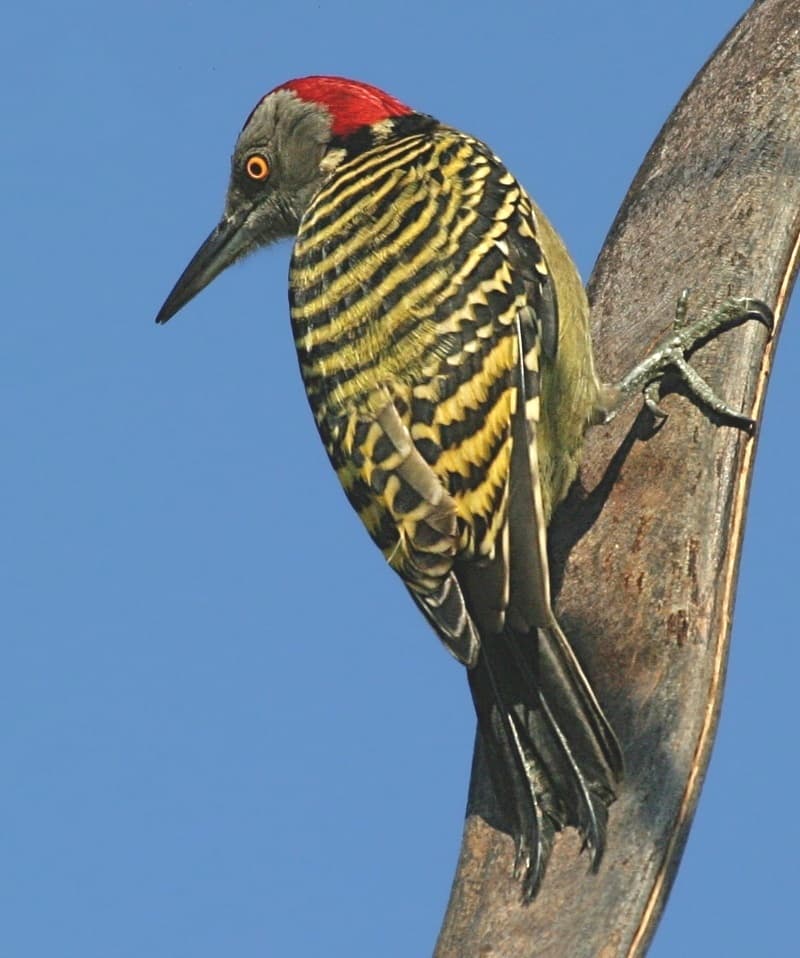
Hispaniolan woodpecker
The Hispaniolan woodpecker is a medium-sized, gold and black barred bird found exclusively on the island of Hispaniola. This species is known for its social behavior and distinctive vocalizations, inhabiting a variety of forest types, plantations, and even urban parks across both Haiti and the Dominican Republic.

Golden-cheeked woodpecker
The golden-cheeked woodpecker is a species of bird found exclusively in Mexico. It is characterized by its distinctive golden-yellow cheeks, a prominent feature that helps identify it among other woodpecker species. This bird inhabits a variety of forest types and open landscapes, foraging for insects, fruits, and seeds.

Stripe-breasted woodpecker
The stripe-breasted woodpecker is a bird species found in Southeast Asia, inhabiting subtropical and tropical moist forests. It is characterized by its black and white barred plumage, with males and females differing in crown coloration. This species primarily feeds on insects and nests in excavated cavities within rotten tree stumps or trees.