
Buff-spotted woodpecker
The buff-spotted woodpecker is a small bird found across large parts of tropical central Africa, inhabiting primary and secondary tropical forests. It is characterized by its plain green upper parts and spotted or barred underparts, with males possessing a distinctive red nape. Primarily feeding on ants and termites, this species is considered to be of 'least concern' by the IUCN due to its wide distribution and presumed stable population.
Key Facts
- ›Native to tropical central Africa.
- ›Measures approximately 15 cm (6 in) in length.
- ›Males have a red nape, while females do not.
- ›Diet consists mainly of black ants and termites.
- ›Inhabits primary and secondary tropical forests.
- ›Conservation status is 'least concern'.
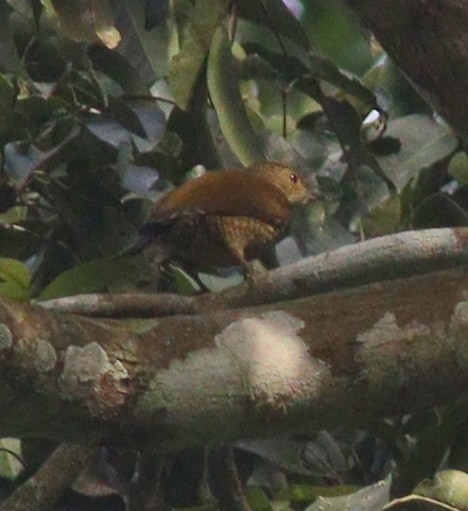
Buff-Spotted Woodpecker
Central Africa
Tropical Forest, Primary Forest, Secondary Forest
Green, Yellowish-Olive, Dark Olive, Buff, Black, Red
Red Nape, Buff-Spotted Or Barred Underparts, Curved and Rather Short Beak
Ants, Termites
Forages Singly Or In Pairs, Forages In Understorey Layers, May Form Part of Mixed-Species Groups
About Buff-spotted woodpecker
The buff-spotted woodpecker, scientifically known as Pardipicus nivosus, is a bird species belonging to the family Picidae. It is native to extensive regions within tropical central Africa and is recognized for its wide distribution. This species is generally considered uncommon, though it can be locally abundant. The International Union for Conservation of Nature (IUCN) has classified its conservation status as 'least concern' due to its broad range and presumed stable population.
Description and Characteristics
This is a small woodpecker, typically measuring around 15 cm (6 inches) in length. Adult males are distinguished by a dark olive or blackish crown and a striking bright red nape, while the rest of their head is whitish or buff with olive streaks. Females lack the distinctive red nape. Both sexes share plain green upper parts. Their underparts are yellowish-olive or dark olive and are marked with buff spots or bars. The bird possesses a curved and relatively short beak.
Distribution and Habitat
The buff-spotted woodpecker's range covers large areas of the African tropical rainforest. It prefers primary and secondary tropical forests, commonly found at altitudes up to approximately 1,800 meters (5,900 feet), though it is most frequently observed at elevations below 950 meters (3,100 feet).
Ecology and Behavior
This species is an inconspicuous and quiet bird. Its diet primarily consists of black ants, particularly those of the Crematogaster genus, and termites, which it finds on trees. Foraging often occurs solitarily or in pairs, typically within the understory layers of the forest. Occasionally, the buff-spotted woodpecker may join small flocks composed of mixed species.
Source: Wikipedia ↗
Frequently Asked Questions
What is the scientific name of the buff-spotted woodpecker?
The scientific name of the buff-spotted woodpecker is Pardipicus nivosus.
Where can the buff-spotted woodpecker be found?
This species is native to large parts of tropical central Africa. Its typical habitat is primary and secondary tropical forest.
What does the buff-spotted woodpecker eat?
The buff-spotted woodpecker feeds largely on black ants, specifically from the genus Crematogaster, and termites. It finds this food on trees.
What are the key physical characteristics of the buff-spotted woodpecker?
The buff-spotted woodpecker is small, about 15 cm long, with plain green upper parts and buff-spotted or barred underparts. Males have a distinctive bright red nape, a feature absent in females.
What is the conservation status of the buff-spotted woodpecker?
The International Union for Conservation of Nature has rated the conservation status of the buff-spotted woodpecker as 'least concern'. This is due to its extremely wide range and a population that is presumed to be steady.
Related Woodpecker species
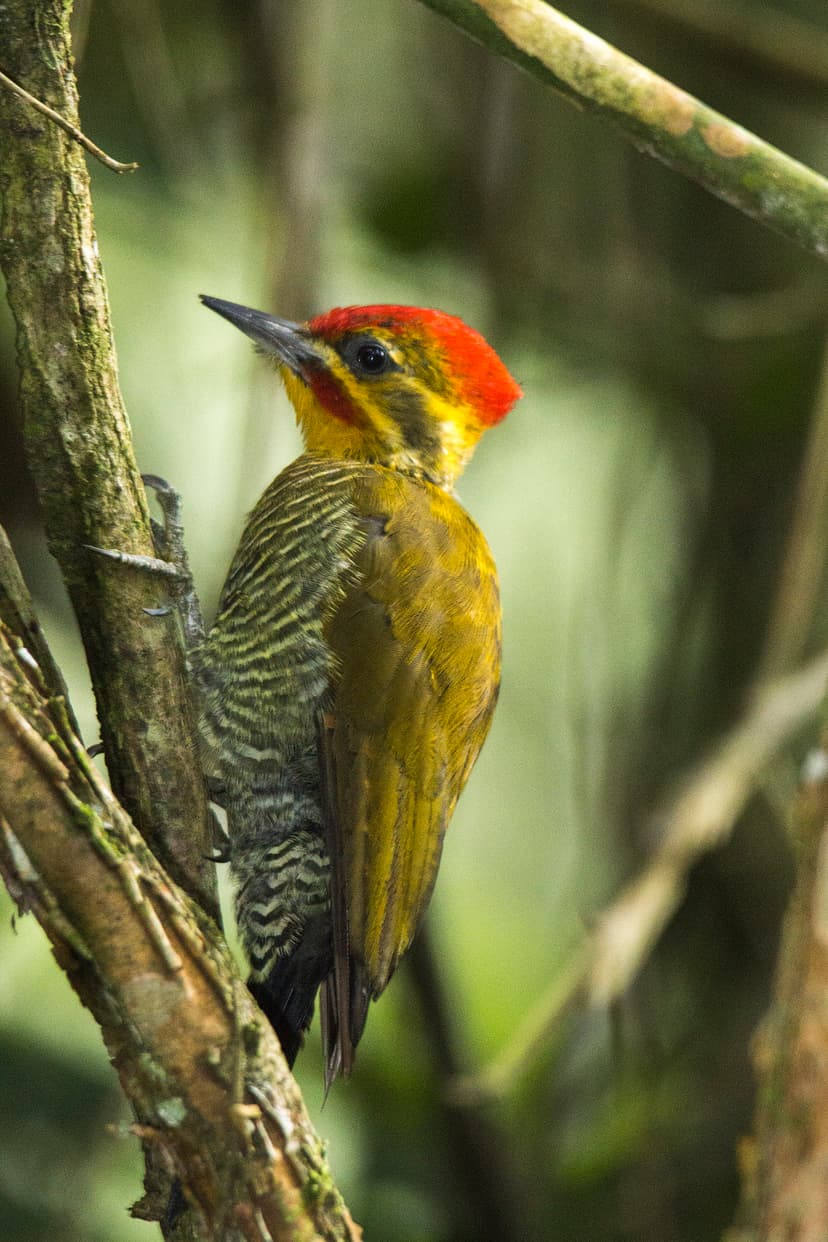
Yellow-browed woodpecker
The yellow-browed woodpecker, also known as the white-browed woodpecker, is a Near Threatened bird species found in Argentina, Brazil, Paraguay, and Uruguay. Measuring between 21 to 22 cm, it is characterized by its olive green upperparts and whitish underparts with dark olive bars, with males and females exhibiting distinct head plumage. This species primarily inhabits humid forests and woodlands, often foraging in the mid-levels for ants and their eggs.

Brown-eared woodpecker
The brown-eared woodpecker (Pardipicus caroli) is a species of bird native to the African tropical rainforest. This relatively shy bird is characterized by its distinct plumage, including a buff supercilium and rufous-brown patch behind the eye, and is found in dense forests, plantations, and riverine areas across numerous African countries.
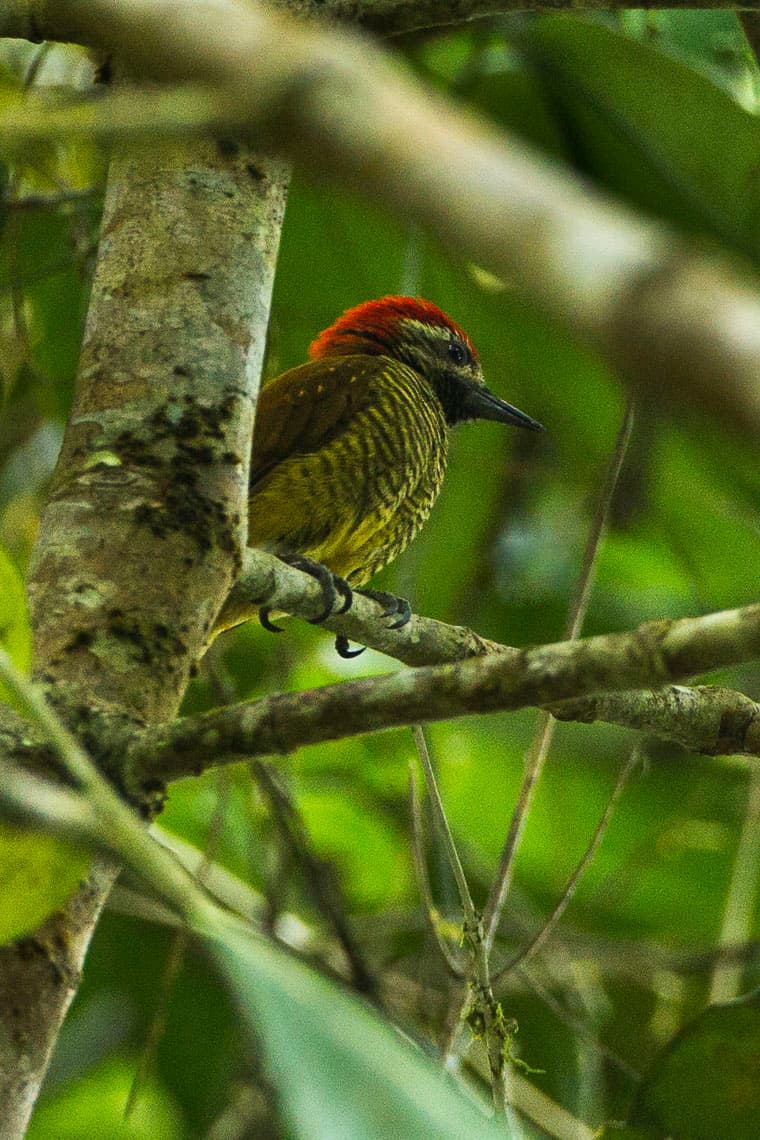
Yellow-vented woodpecker
The yellow-vented woodpecker is a species found in the montane forests of Colombia, Ecuador, Peru, and Venezuela. It is characterized by its yellow flanks and belly, and males have a red crown while females have a black crown. This species primarily inhabits humid cloud forests and is known for its relatively quiet nature.