
Yellow-browed woodpecker
The yellow-browed woodpecker, also known as the white-browed woodpecker, is a Near Threatened bird species found in Argentina, Brazil, Paraguay, and Uruguay. Measuring between 21 to 22 cm, it is characterized by its olive green upperparts and whitish underparts with dark olive bars, with males and females exhibiting distinct head plumage. This species primarily inhabits humid forests and woodlands, often foraging in the mid-levels for ants and their eggs.
Key Facts
- ›Found in Argentina, Brazil, Paraguay, and Uruguay.
- ›Measures 21-22 cm in length and weighs 22-68g.
- ›Males have red on the head and a yellow supercilium, while females have olive heads with less red.
- ›Inhabits humid mature montane forests, dense secondary forests, woodlands, and humid lowland forests.
- ›Diet includes ants and their eggs.
- ›Assessed as near Threatened by the IUCN due to a restricted range and decreasing population.
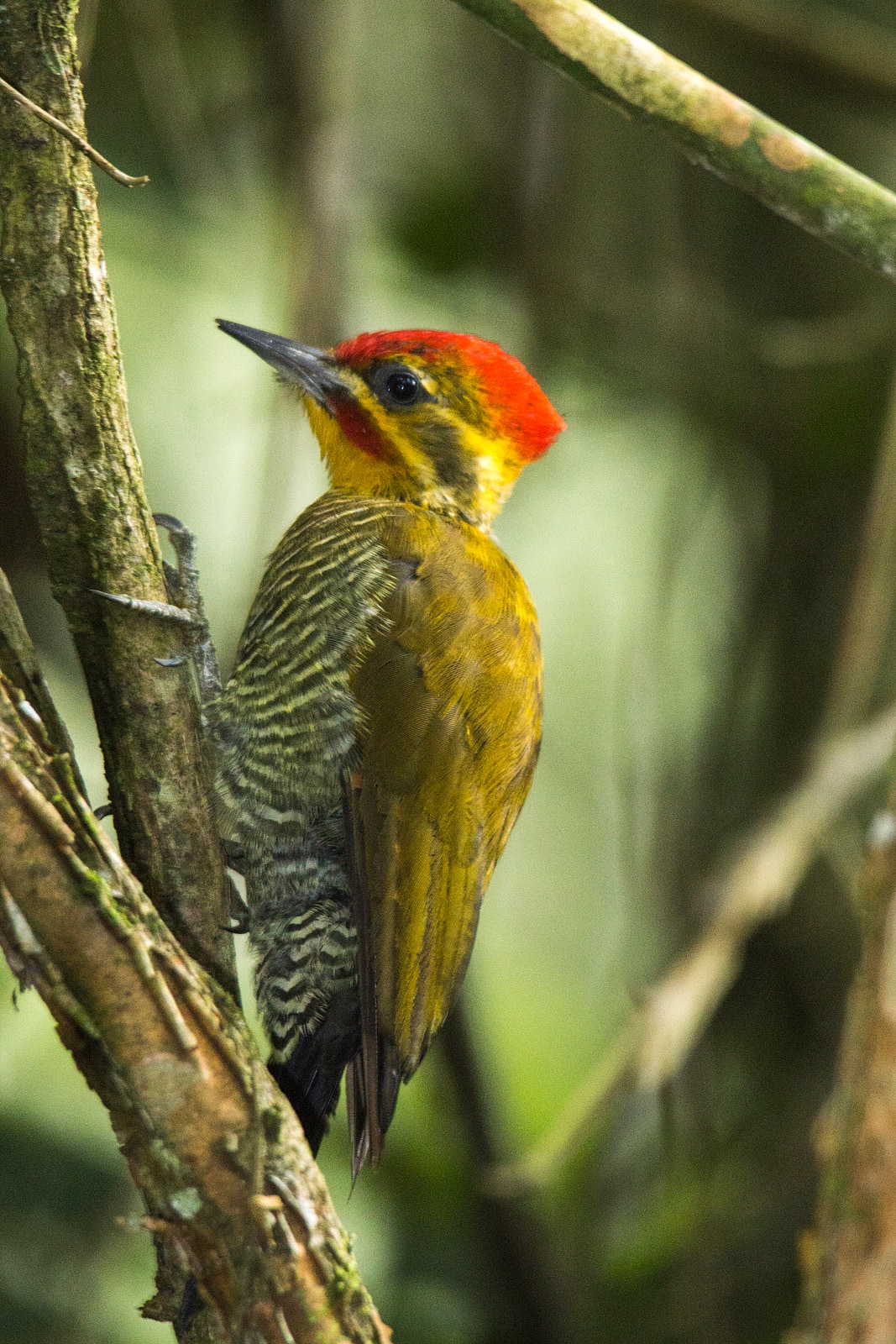
White-Browed Woodpecker
South America
Montane Forest, Secondary Forest, Woodland, Lowland Forest
Yellowish white supercilium, Red malar band, Olive forehead and crown, Whitish underparts with wide dark olive bars
Ants, Ant Eggs
Gleaning, Pecking, Forages In Forest's Middle Level
Excavated nest cavity high in a tree
- Song: Slow Or Hurried Series of 7-15 High 'Wuh' Notes
- Drumming: Rapid, Regular Rolls
About Yellow-browed woodpecker
The yellow-browed woodpecker (Piculus aurulentus), also recognized as the white-browed woodpecker, is a species of bird within the woodpecker family Picidae. This species is classified as Near Threatened by the IUCN, indicating a concern for its future survival due to ongoing population declines and a restricted geographic range.
Distribution and Habitat
This woodpecker is found in the southeastern parts of South America, with its range extending through Argentina, Brazil, Paraguay, and Uruguay. It inhabits a variety of forest types, including the interior and edges of humid mature montane forests, dense secondary forests, woodlands, and humid lowland forests. While found at elevations up to 2,000 meters in Brazil, it generally occurs at lower altitudes in other countries within its range.
Description and Behavior
The yellow-browed woodpecker measures approximately 21 to 22 cm in length and weighs between 22 to 68 grams. Adult plumage is predominantly olive green on the upperparts and whitish with broad dark olive bars on the underparts. Males and females exhibit sexual dimorphism, particularly in their head coloration; males feature red on their head and a distinctive yellowish-white supercilium, while females have a more subdued olive head. The species is a year-round resident throughout its known distribution. Its diet primarily consists of ants and their eggs, which it obtains by gleaning and pecking in the middle levels of the forest. The breeding season appears to span from August to November, and nest cavities are typically excavated high in trees, though details regarding clutch size and parental care remain unknown.
Vocalizations and Conservation
Characteristic sounds of the yellow-browed woodpecker include a song composed of a series of high-pitched 'wuh' notes and drumming that produces rapid, regular rolls. The species is considered rather uncommon and appears to be shy, contributing to its infrequent sightings. Much of its natural habitat has been lost due to conversion for agriculture and pasture, a trend that continues to impact its population. The unknown population size, believed to be decreasing, coupled with its limited range, underlies its Near Threatened conservation status.
Source: Wikipedia ↗
Frequently Asked Questions
What are the main countries where the yellow-browed woodpecker is found?
The yellow-browed woodpecker is distributed across South America, specifically in Argentina, Brazil, Paraguay, and Uruguay. It is found from southern Brazil down through eastern Paraguay and northern Uruguay into northeastern Argentina.
What is the typical size of a yellow-browed woodpecker?
Adult yellow-browed woodpeckers are typically between 21 to 22 cm (8.3 to 8.7 inches) in length. Their weight can range from 22 to 68 grams (0.78 to 2.4 ounces).
What are the distinguishing features between male and female yellow-browed woodpeckers?
Males and females differ primarily in their head plumage. Males display red from the forehead to the nape, a narrow yellowish-white supercilium, and a red malar band, while females have an olive forehead and crown with less red on the malar area.
What type of forests does the yellow-browed woodpecker inhabit?
This species prefers humid mature montane forests, dense secondary forests and woodlands, and humid lowland forests. They can be found in the interior and at the edges of these wooded environments.
What does the yellow-browed woodpecker eat?
While its diet has not been extensively studied, the yellow-browed woodpecker is known to consume ants and their eggs. It typically forages in the middle levels of the forest.
What is the conservation status of the yellow-browed woodpecker?
The yellow-browed woodpecker is classified as Near Threatened by the IUCN. This status is due to its somewhat restricted range and an estimated decreasing population, often attributed to habitat loss.
How does the yellow-browed woodpecker communicate?
The yellow-browed woodpecker's vocalization includes a song described as a slow or hurried series of 7-15 high 'wuh' notes. It also communicates through drumming, producing rapid, regular rolls.
Related Woodpecker species
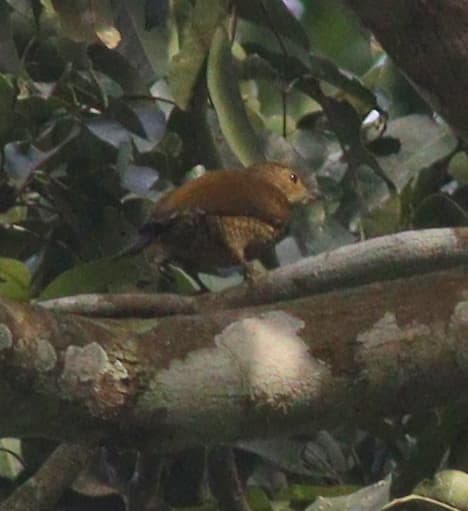
Buff-spotted woodpecker
The buff-spotted woodpecker is a small bird found across large parts of tropical central Africa, inhabiting primary and secondary tropical forests. It is characterized by its plain green upper parts and spotted or barred underparts, with males possessing a distinctive red nape. Primarily feeding on ants and termites, this species is considered to be of 'least concern' by the IUCN due to its wide distribution and presumed stable population.
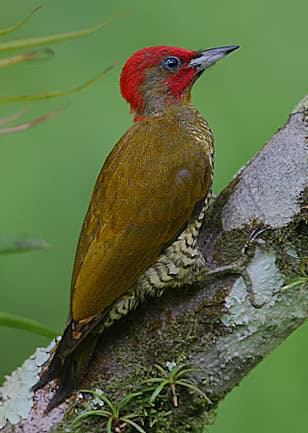
Rufous-winged woodpecker
The rufous-winged woodpecker is a bird species found in Central America, inhabiting humid forests and sometimes nearby open areas with large trees. This species is characterized by its bronze-green upperparts and cinnamon-rufous flight feathers, with males and females differing primarily in head plumage. It is known for its distinctive song and drumming, and primarily feeds on ants and beetles.

Stripe-cheeked woodpecker
The stripe-cheeked woodpecker is a species endemic to Panama, characterized by its bronze-green upperparts and buffy white underparts with greenish olive barring. Males and females exhibit sexual dimorphism primarily in head plumage, with males displaying more extensive red coloration. This bird inhabits humid forests at mid-elevations.