
Cinnamon woodpecker
The cinnamon woodpecker is a medium-sized bird found in Central and South America, inhabiting humid to wet forests. It is characterized by its rufous head with a bushy crest and distinctive black streaks, and its diet primarily consists of ants and termites, supplemented with fruit. This species is a year-round resident and is known for its varied vocalizations and slow, short drumming.
Key Facts
- ›Found in Colombia, Costa Rica, Ecuador, Nicaragua, and Panama.
- ›Primarily inhabits the interior of humid to wet forests.
- ›Feeds mainly on ants and termites, also consuming fruit.
- ›Builds nest cavities in living or dead trees, typically 6-9 meters above ground.
- ›Possesses a distinctive call described as 'wheeét!-wheeét-wheet-it'.
- ›Assessed as Least Concern by the IUCN, though its population is believed to be decreasing.

Central America, South America
Humid Forest, Wet Forest, Forest Edge, Treed Pastures, Secondary Forest, Clearings
Bushy crest, Black streaks on crown, Red chin and throat, Dark rufous upperparts with narrow black bars, Black flight feathers with rufous bars, Black tail with buff to whitish bars, Black arrowhead-shaped marks on underparts
Ants, Termites, Fruit
- Pecking
- Gleaning
- Forages near or in the canopy in forest interiors
- Hunts lower in more open areas
Living Trees, Recently Dead Trees
- Loud and Far-Carrying 'WheeéT!-WheeéT-Wheet-It'
- Introductory 'Chuweeo'
- Sharp, Descending Rolling Chatter
- 'ChikikikiíT'
- 'Tititit-Toò'
- 'Chweé-Titit'
- Slow and Short Drumming
About Cinnamon woodpecker
The cinnamon woodpecker (Celeus loricatus) is a species of bird belonging to the woodpecker family, Picidae, and is found across parts of Central and South America. Its distribution includes countries such as Colombia, Costa Rica, Ecuador, Nicaragua, and Panama.
Description and Habitat
This woodpecker is recognized by its rufous head adorned with a bushy crest and prominent black streaks on the crown. Males also feature a red chin and throat, while females share the same rufous coloration as the rest of their head. Adults typically display dark rufous upperparts with fine black barring, contrasting with paler buff underparts marked with bold, black arrowhead-shaped patterns. Their wings are barred with rufous, and their tail is black with wide buff or whitish bars. The cinnamon woodpecker measures between 19 to 23 cm in length and weighs 74 to 83 grams. Its preferred habitat is the interior of humid to wet forests, though it can occasionally be found at forest edges and in more open landscapes like treed pastures and secondary forests.
Behavior and Diet
The cinnamon woodpecker is a year-round resident throughout its range. Its diet is primarily composed of ants and termites, with fruit, such as bananas, also being consumed. Foraging typically occurs singly or in pairs, and the birds use both pecking and gleaning techniques to find their food. They tend to forage higher in the canopy within forest interiors and lower down in more open environments.
Breeding and Vocalizations
The breeding season varies by region, occurring from March to May in Costa Rica and January to April in Colombia. Both sexes participate in excavating nest cavities in living or dead trees, usually situated between 6 and 9 meters above the ground. Details regarding clutch size, incubation, and parental care are not well-documented. The species is known for its distinctive vocalizations, including a loud and far-carrying call described as 'wheeét!-wheeét-wheet-it,' and various other chatters and calls. Their drumming is characterized as slow and short.
Conservation Status
The International Union for Conservation of Nature (IUCN) has assessed the cinnamon woodpecker as Least Concern. While it possesses a large range and an estimated population of at least 50,000 mature individuals, its population is believed to be decreasing. No immediate threats have been identified, and the species is often heard more than seen, occurring in several protected areas.
Source: Wikipedia ↗
Frequently Asked Questions
What is the scientific name of the cinnamon woodpecker?
The scientific name of the cinnamon woodpecker is Celeus loricatus. This binomial nomenclature classifies it within the woodpecker family, Picidae.
Where is the cinnamon woodpecker distributed?
The cinnamon woodpecker is found across several countries in Central and South America, including Colombia, Costa Rica, Ecuador, Nicaragua, and Panama. Its range is divided among four distinct subspecies.
What does the cinnamon woodpecker eat?
The primary diet of the cinnamon woodpecker consists of ants and termites. It also supplements its diet with fruits, such as bananas, and forages by pecking and gleaning.
What are the nesting habits of the cinnamon woodpecker?
Both male and female cinnamon woodpeckers excavate their nest cavities in living or recently dead trees. These nests are typically situated between 6 and 9 meters above the ground.
What are the conservation status and population trend of the cinnamon woodpecker?
The cinnamon woodpecker is listed as Least Concern by the IUCN. Despite a large range and an estimated population of over 50,000 mature individuals, the population is believed to be decreasing.
What sounds does the cinnamon woodpecker make?
The cinnamon woodpecker has a distinctive, far-carrying call described as 'wheeét!-wheeét-wheet-it'. It also produces other vocalizations, including a sharp, descending rolling chatter when agitated, and its drumming is noted as slow and short.
Related Woodpecker species

Crimson-bellied woodpecker
The crimson-bellied woodpecker is a large woodpecker species found on the eastern slopes of the Andes in South America. It is characterized by its striking red underparts, black and white wings, and a distinctive red crest in both sexes. This species primarily inhabits humid and wet forests, foraging near the ground for beetles.
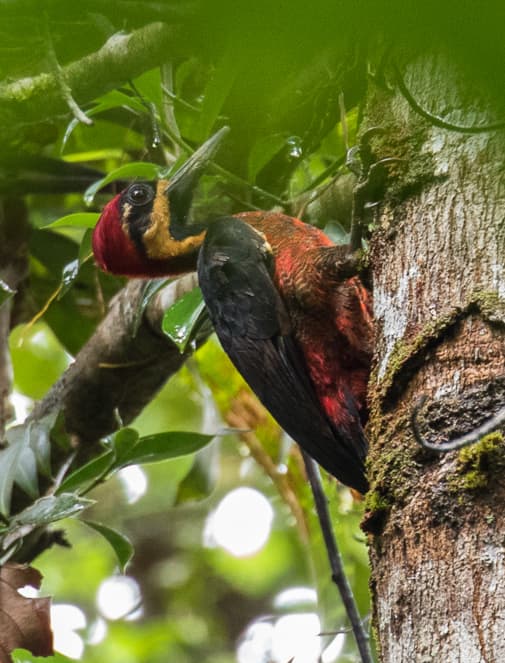
Splendid woodpecker
The splendid woodpecker is a striking bird found in Colombia, Ecuador, and Panama, recognized for its predominantly red plumage, black markings, and distinctive white spots on its wings. This species inhabits humid and montane forests, typically foraging near the ground on large tree trunks for beetle larvae and adults. While its exact population size is unknown, it is assessed as Near Threatened due to habitat loss from logging and cultivation.
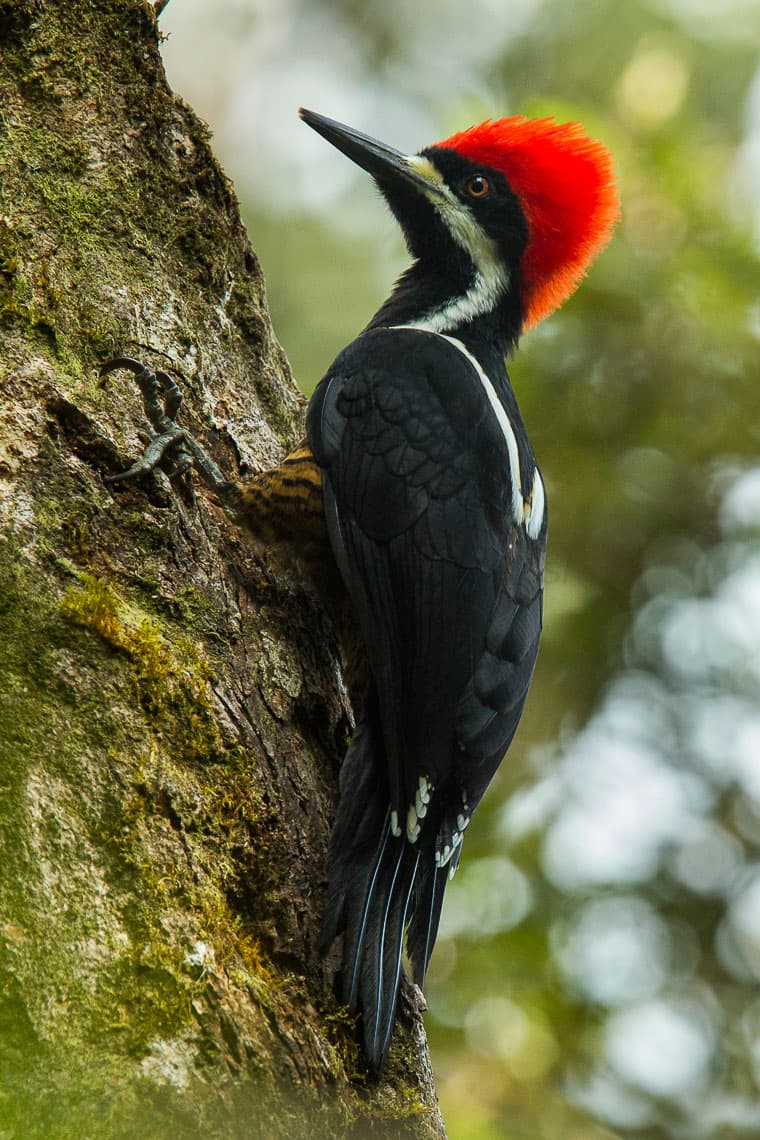
Powerful woodpecker
The powerful woodpecker is a large bird found in the montane forests of Colombia, Ecuador, Peru, and Venezuela. It is characterized by its striking black and white facial markings and the male's red head and crest, while females have black heads. This species is a year-round resident that forages at all forest levels.