
Splendid woodpecker
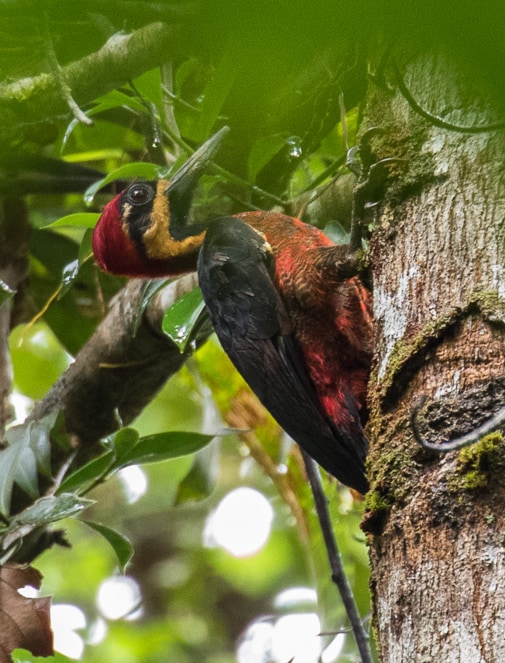
The splendid woodpecker is a striking bird found in Colombia, Ecuador, and Panama, recognized for its predominantly red plumage, black markings, and distinctive white spots on its wings. This species inhabits humid and montane forests, typically foraging near the ground on large tree trunks for beetle larvae and adults. While its exact population size is unknown, it is assessed as Near Threatened due to habitat loss from logging and cultivation.
Key Facts
- ›Found in Panama, Colombia, and Ecuador.
- ›Inhabits humid, wet, and montane forests.
- ›Primarily feeds on adult and larval beetles.
- ›Males and females share a red forehead, crown, and nape, with distinct black and buff markings.
- ›Its song consists of harsh, nasal, squeaky notes, and it has a loud 'stk' call.
- ›Assessed as near Threatened by the IUCN due to population decline and habitat threats.
Colombia, Ecuador, Panama
Red forehead, crown, nape, and hindneck, Thin black line above the eye, Thin buff supercilium behind the eye, Black band from nares through eye to nape, Black chin and upper throat, White spots on wings
Beetles, Other Insects
Hammering, Probing, Forages near the ground on tree trunks, Forages alone or in pairs
- Song: 'A Repetition of Harsh, Nasal, Squeaky But Loud Eer Notes'
- Call: 'A Loud Stk'
- Drumming: 'A Rapid, Heavy Double Rap'
About Splendid woodpecker
The splendid woodpecker (Campephilus splendens), sometimes historically considered a subspecies of the crimson-bellied woodpecker, is a distinctive bird species found across Colombia, Ecuador, and Panama. It is recognized for its striking plumage, which includes a predominantly red head and neck, contrasting with black upperparts and a deep red rump. A key identifying feature is the presence of white spots on its wings.
Habitat and Distribution
This species primarily inhabits the interior of humid, wet, and montane forests, though it can also be observed at forest edges. Its altitudinal range varies by region, from near sea level up to 1,600 meters in Panama, and lower elevations in Colombia and Ecuador.
Diet and Behavior
The splendid woodpecker's diet consists largely of adult beetles and their larvae, supplemented with other insects. Foraging typically occurs near the ground, where individuals hammer and probe the trunks of large trees to access their prey. They are observed foraging either alone or in pairs. The species is a year-round resident within its known range.
Vocalizations and Breeding
Its vocalizations include a song described as a series of harsh, nasal, squeaky, and loud 'eer' notes, along with a sharp 'stk' call. Drumming is characterized by a rapid, heavy double rap. The breeding season appears to span from March to May in Panama, and from September to April in Colombia and Ecuador, though other aspects of its breeding biology remain little known.
Conservation Status
The splendid woodpecker is currently assessed as Near Threatened by the IUCN. While its range is extensive, its population is believed to be declining due to threats such as intensive logging, human settlement, cattle grazing, mining, and the cultivation of coca and palm. It is noted as rare to uncommon across its distribution and is found in protected areas within Colombia and Ecuador.
Source: Wikipedia ↗
Frequently Asked Questions
What are the main physical characteristics of the splendid woodpecker?
The splendid woodpecker measures 33 to 35 cm in length and weighs 225 to 250 g. Both sexes feature a red forehead, crown, nape, and hindneck, along with a thin black line above the eye and a black chin and upper throat. Their lower back and rump are deep red, contrasting with black upperparts and tail, and their wings have distinctive white spots.
Where is the splendid woodpecker geographically located?
This species is found in Panama along the Caribbean slope and from Panamá Province on the Pacific side. Its range extends through western Colombia and into western Ecuador.
What kind of habitat does the splendid woodpecker prefer?
The splendid woodpecker primarily inhabits the interior of humid and wet forests, as well as montane forests. It can also be observed along the edges of these forests.
What does the splendid woodpecker eat?
The diet of the splendid woodpecker consists mainly of adult and larval stages of large beetles. They also consume other insects.
What sounds does the splendid woodpecker make?
The song of the splendid woodpecker is described as a repetition of harsh, nasal, squeaky, yet loud 'eer' notes. Its call is a loud 'stk', and it produces a 'rapid, heavy double rap' when drumming.
What is the conservation status of the splendid woodpecker?
The International Union for Conservation of Nature (IUCN) has assessed the splendid woodpecker as Near Threatened. This status reflects concerns about its population size, which is believed to be decreasing due to threats like logging and habitat conversion.
Related Woodpecker species

Crimson-bellied woodpecker
The crimson-bellied woodpecker is a large woodpecker species found on the eastern slopes of the Andes in South America. It is characterized by its striking red underparts, black and white wings, and a distinctive red crest in both sexes. This species primarily inhabits humid and wet forests, foraging near the ground for beetles.

Cinnamon woodpecker
The cinnamon woodpecker is a medium-sized bird found in Central and South America, inhabiting humid to wet forests. It is characterized by its rufous head with a bushy crest and distinctive black streaks, and its diet primarily consists of ants and termites, supplemented with fruit. This species is a year-round resident and is known for its varied vocalizations and slow, short drumming.
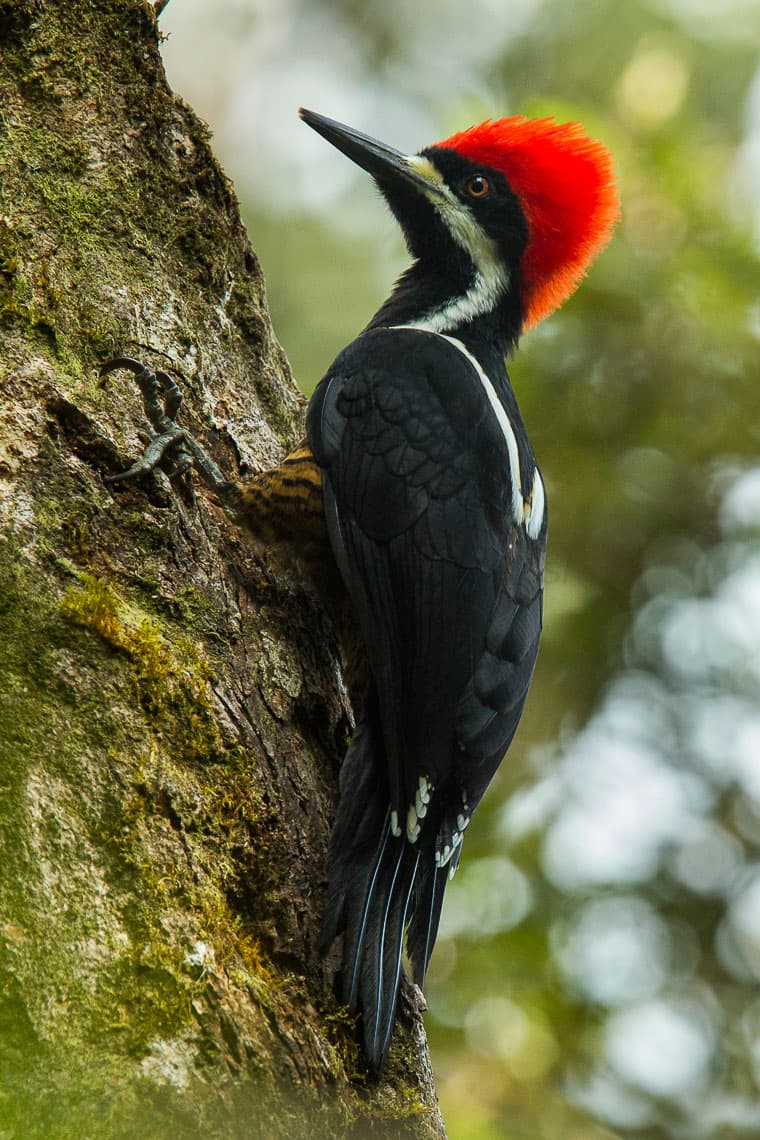
Powerful woodpecker
The powerful woodpecker is a large bird found in the montane forests of Colombia, Ecuador, Peru, and Venezuela. It is characterized by its striking black and white facial markings and the male's red head and crest, while females have black heads. This species is a year-round resident that forages at all forest levels.