
Cuban green woodpecker
The Cuban green woodpecker (Xiphidiopicus percussus), also known as carpintero verde, is the only species in its genus and is a widespread and common woodpecker found exclusively in Cuba. This medium-sized, colorful bird inhabits various forests and woodlands, and is characterized by its olive-green upperparts, yellow streaked underparts, and a distinctive red breast patch.
Key Facts
- ›It is the sole species within the genus Xiphidiopicus.
- ›The Cuban green woodpecker is endemic to Cuba and is the most common woodpecker on the island.
- ›Its plumage includes olive green upperparts, yellow streaked underparts, a red upper breast, and a black chin.
- ›Males have red crowns, while females have black crowns with white stripes.
- ›They primarily feed on large insects but also consume fruits, small frogs, and nectar.
- ›Cuban green woodpeckers nest in tree cavities, with males typically excavating the holes.

Carpintero Verde
Cuba
Woodlands, Dry Forests, Wet Forests, Pine Forests, Mangroves, Lowland Moist Forests, Degraded Former Forest
Olive Green, Yellow, Red, Black, White
Appears Crested, Bright Red Upper Breast, Black Chin, White Face, White Supercilium, Red Crown, Black Crown With White Stripes, Yellow Crissum With Black Barring, Short, Straight Beak, Progressively Darkening Beak
Insects, Fruits, Frogs, Nectar
- Forages for dead insects on dead limbs
- Inserts bill into floral tubes to drink nectar
Cavities of Trees
Short, Harsh "Jhhhorr, Jhhhorr, Jhhhorr", Higher Pitched "Yeh-Yeh-Yeh", Slurred, Two-Note "Ta-Ha"
About Cuban green woodpecker
The Cuban green woodpecker (Xiphidiopicus percussus), known locally as carpintero verde, is a distinctive species of woodpecker endemic to Cuba. It holds the unique position of being the only member of its genus, Xiphidiopicus, and is recognized as the most widespread and common woodpecker on the island. Its presence is a familiar sight across Cuba's diverse woodland environments.
Appearance and Characteristics
This medium-sized bird is notable for its colorful plumage. The upperparts are a shade of olive green, contrasting with yellow, streaked underparts. A prominent feature is its bright red upper breast, complemented by a black chin and a white face and supercilium. Males are distinguished by a red crown, while females sport black crowns marked with white stripes. The area around the cloaca, or crissum, is yellow with black barring. Its beak is short and straight, gradually darkening from dark blue at the base to black at the tip. Females are generally smaller than males and possess shorter bills.
Habitat and Distribution
The Cuban green woodpecker is exclusively found in Cuba, inhabiting a variety of natural settings. These include wet and dry forests, mangroves, open woodlands often featuring palms, pine forests, and even heavily degraded former forest areas. Its adaptability allows it to thrive across different Cuban ecosystems.
Behavior and Diet
Typically observed in pairs, the Cuban green woodpecker is also known for its territorial nature, particularly during the breeding season. It communicates through a combination of drumming and vocal signals, and actively defends its territory against intruders. Its flight pattern is characteristically undulating, similar to other woodpecker species. The diet primarily consists of large insects, but it also readily consumes fruits, small frogs, and flower nectar. In its pursuit of nectar, the woodpecker plays a role as a pollinator.
Reproduction
Reproduction involves nesting in tree cavities, whether in living or dead trees, usually at a height of 4 to 5 meters above the ground. Male Cuban green woodpeckers typically undertake the excavation of the nest-hole and share nesting duties significantly. The breeding season spans from February to August, with a peak in May and June, likely correlating with rainfall. Females lay clutches of 3 to 4 white eggs, and both parents share incubation and the feeding of the chicks, which remain in the nest for approximately 3 to 4 weeks before fledging. They are believed to reach sexual maturity within their first year of life.
Source: Wikipedia ↗
Frequently Asked Questions
What are the main physical characteristics of the Cuban green woodpecker?
The Cuban green woodpecker is a medium-sized, colorful bird with olive green upperparts and yellow, streaked underparts. It typically appears crested, features a bright red upper breast, and has a black chin contrasting with a white face and supercilium. Males have red crowns, while females possess black crowns with white stripes.
Where is the Cuban green woodpecker found?
This species is found exclusively in Cuba and is very common throughout the island. Its natural habitats include wet and dry forests, mangroves, open woodlands with palms, and pine forests.
What does the Cuban green woodpecker eat?
The Cuban green woodpecker is primarily an insectivore, with a diet focused on large insects. It also supplements its diet with fruits, small frogs, and has been documented consuming nectar from flowers, acting as a pollinator in the process.
How does the Cuban green woodpecker reproduce?
They nest in tree cavities, often 4-5 meters above the ground, with males typically excavating the nest-hole. The breeding season runs from February to August, with females laying 3-4 white eggs. Both adults share incubation and feeding duties for the chicks, which stay in the nest for about 3-4 weeks.
What are the vocalizations of the Cuban green woodpecker?
Its call is often described as a short, harsh "jhhhorr, jhhhorr, jhhhorr," or a higher-pitched "yeh-yeh-yeh." They may also produce a slurred, two-note call, "ta-ha," which is used primarily when protecting their nest and chicks from intruders.
Related Woodpecker species
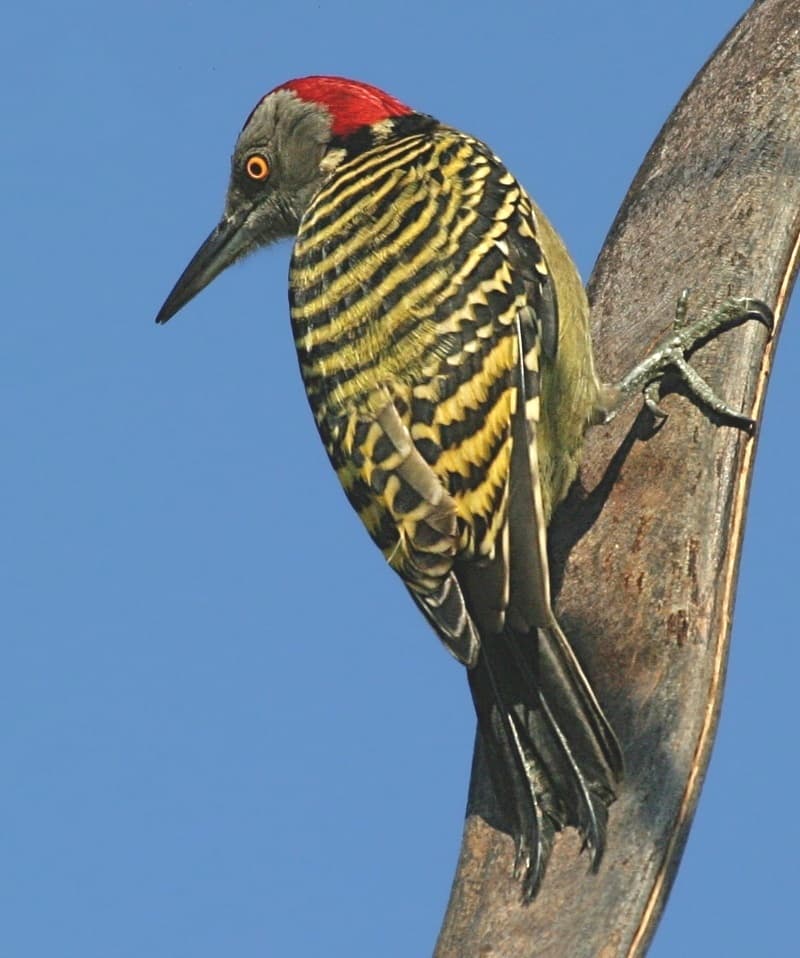
Hispaniolan woodpecker
The Hispaniolan woodpecker is a medium-sized, gold and black barred bird found exclusively on the island of Hispaniola. This species is known for its social behavior and distinctive vocalizations, inhabiting a variety of forest types, plantations, and even urban parks across both Haiti and the Dominican Republic.
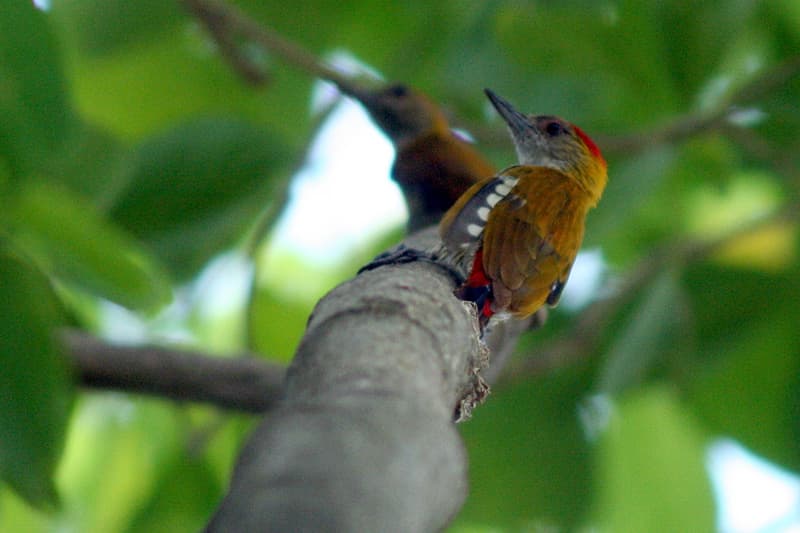
Red-rumped woodpecker
The red-rumped woodpecker is a bird species found in Central and South America, ranging from Costa Rica to Peru and Brazil. It is characterized by its olive-brown plumage with a crimson-red rump and uppertail coverts. This species inhabits a variety of forest types and savannas, and its diet primarily consists of insects.
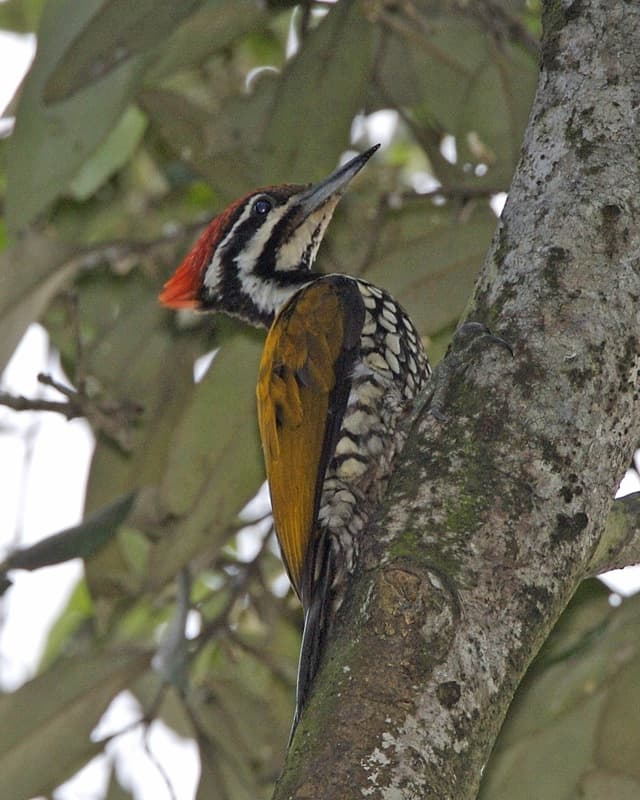
Common flameback
The common flameback, also known as the common goldenback, is a small woodpecker found across South and Southeast Asia. It is characterized by its spotted underside and, in males, a bright red crest, while females have a black crest with white streaks. This species inhabits a variety of environments, from open forests to mangroves, and is primarily an insectivore.