
Eurasian three-toed woodpecker
The Eurasian three-toed woodpecker is a medium-sized woodpecker found across northern Europe and Asia to Japan. It is characterized by its black and white plumage, with males sporting a distinctive yellow crown. This species primarily inhabits coniferous forests, where it forages for insect larvae and other invertebrates.
Key Facts
- ›Found from northern Europe across northern Asia to Japan.
- ›Adults have black and white plumage, with males having a yellow crown.
- ›Nests are excavated in cavities within dead conifer trees, or occasionally live trees or poles.
- ›Feeds mainly on wood-boring beetle larvae and other insects found on conifers.
- ›Generally a permanent resident, though some populations may move seasonally.
- ›Classified as 'Least Concern' by the IUCN due to its wide range and large population.
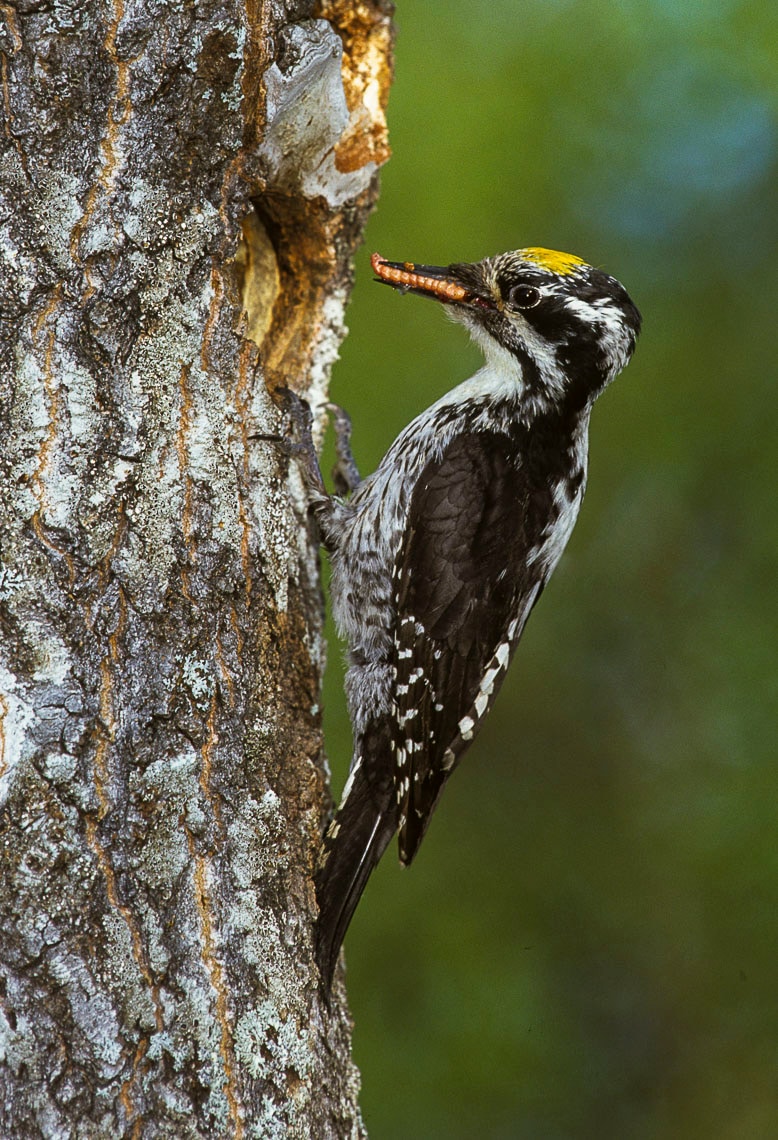
Three-Toed Woodpecker
Europe, Asia
Yellow Crown, Three Toes, Black and White Barred Flanks
Wood-Boring Beetle Larvae, Insects
- Forages on conifers
- Searches for wood-boring beetle larvae
- Moves into areas with insect-infested trees following disturbances like fires or floods
Cavity In A Dead Conifer Tree, Cavity In A Live Tree, Cavity In A Pole
Kik, Chik
About Eurasian three-toed woodpecker
The Eurasian three-toed woodpecker (Picoides tridactylus) is a medium-sized woodpecker found in extensive coniferous forests across the Palearctic region, stretching from northern Europe all the way to Japan. It is also present in mountainous areas like the Alps and the Carpathian Mountains.
Description and Identification
Adult Eurasian three-toed woodpeckers typically measure between 21 and 22 cm in length, making them slightly smaller than the great spotted woodpecker. Their plumage is predominantly black and white. A notable distinguishing feature is the yellow crown present on adult males; females and juveniles of both sexes also possess a yellow crown. Unlike some other woodpecker species, neither sex of the Eurasian three-toed woodpecker has red feathers. The wings and rump are black, contrasting with a white throat and belly. The flanks are adorned with black bars, and the back features white with black barring. The tail is black, with the outer feathers barred with black.
Behavior and Ecology
These woodpeckers excavate new nests each year, typically in cavities within dead conifer trees. They may also utilize live trees or poles for nesting. Their diet primarily consists of wood-boring beetle larvae and other insects found on conifers. Occasionally, they supplement their diet with fruit and tree sap. Eurasian three-toed woodpeckers are known to move into areas affected by insect infestations, often following natural disturbances such as forest fires or floods.
Distribution and Status
The species is generally a permanent resident throughout its range. However, individuals from more northerly regions may migrate south, and those inhabiting high elevations sometimes descend to lower altitudes during the winter months. The Eurasian three-toed woodpecker has a wide distribution and a large population, estimated at millions of adults worldwide. Consequently, it is classified by the IUCN as a species of 'Least Concern', although some population declines were noted in Europe between 1970 and 2000 before stabilizing.
Source: Wikipedia ↗
Frequently Asked Questions
What is the scientific name for the Eurasian three-toed woodpecker?
The scientific name for the Eurasian three-toed woodpecker is Picoides tridactylus. It was formally described by Carl Linnaeus in 1758.
What does the Eurasian three-toed woodpecker look like?
It is a medium-sized woodpecker, approximately 21-22 cm long, with black and white plumage. Adult males are distinguished by a yellow crown, and neither sex has red feathers. Juveniles of both sexes also have a yellow crown.
Where does the Eurasian three-toed woodpecker live?
This species is found across northern Europe and northern Asia, extending to Japan. Its breeding habitat is primarily coniferous forests, with populations also present in the Alps and Carpathian Mountains.
What does the Eurasian three-toed woodpecker eat?
Their diet consists mainly of wood-boring beetle larvae and other insects found on conifers. They may also consume fruit and tree sap.
What is the conservation status of the Eurasian three-toed woodpecker?
The Eurasian three-toed woodpecker is classified as 'Least Concern' by the IUCN. This is due to its extensive geographic range and a large, generally stable global population.
Does the Eurasian three-toed woodpecker migrate?
The bird is normally a permanent resident. However, northern populations may shift south, and those at higher elevations might move to lower altitudes during winter.
Related Woodpecker species
Black-headed woodpecker
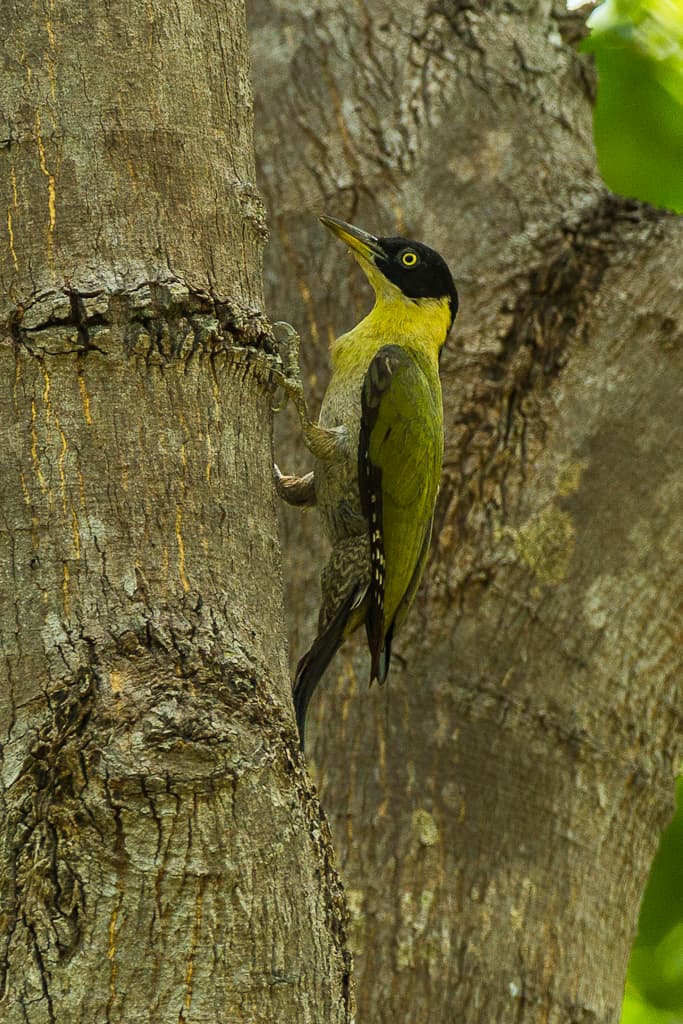
The black-headed woodpecker is a medium-sized bird found in Cambodia, Laos, Myanmar, Thailand, and Vietnam, inhabiting deciduous and coniferous forests. It is characterized by its distinct plumage, including a black face, yellow throat, green wings, and a red lower back, with males possessing a red crown and females a black one. This species is insectivorous, primarily feeding on termites and ants, and is known for its loud, yelping vocalizations.

American three-toed woodpecker
The American three-toed woodpecker is a medium-sized woodpecker found in North American coniferous forests. It is characterized by its black and white plumage, with males displaying a distinctive yellow cap. These birds are strongly associated with insect-infested trees, often following disturbances like forest fires.
Williamson's sapsucker
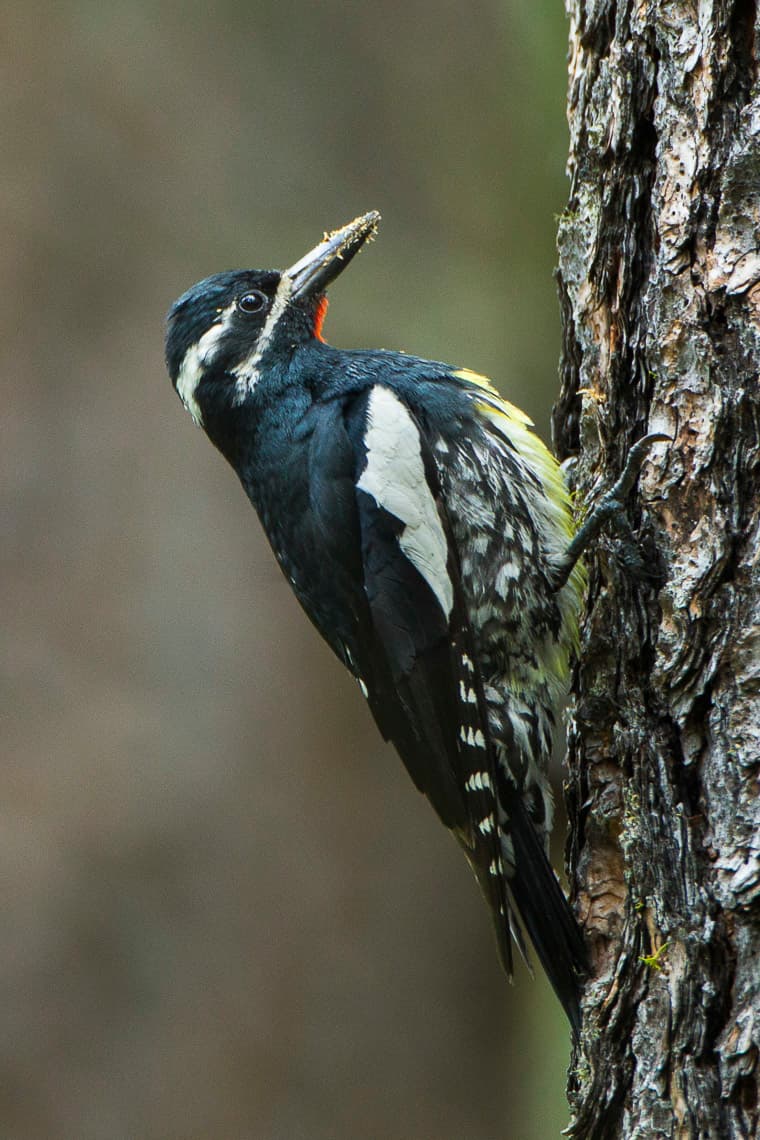
Williamson's sapsucker is a medium-sized woodpecker found in open, conifer-forested areas across western North America, from northern Mexico to British Columbia. It is known for its striking sexual dimorphism, with males being iridescent black with a red chin and yellow belly, while females are predominantly black with a pale yellow breast. These birds primarily feed on sap and insects, and excavate new nesting cavities annually.