
Williamson's sapsucker
Endangered (in Canada, 2005)
Williamson's sapsucker is a medium-sized woodpecker found in open, conifer-forested areas across western North America, from northern Mexico to British Columbia. It is known for its striking sexual dimorphism, with males being iridescent black with a red chin and yellow belly, while females are predominantly black with a pale yellow breast. These birds primarily feed on sap and insects, and excavate new nesting cavities annually.
Key Facts
- ›Breeds in open coniferous forests, favoring ponderosa pine, douglas-fir, and grand fir.
- ›Adult males are black with a red chin and yellow belly; females are mostly black with a pale yellow breast.
- ›Feeds on tree sap, insects (main food during nesting), and berries.
- ›Excavates a new nesting cavity each year, often in mature trees.
- ›Found in western North America, from northern Mexico to British Columbia, with some populations migrating south.
- ›Designated as endangered in Canada in 2005 due to habitat loss from forest harvesting.
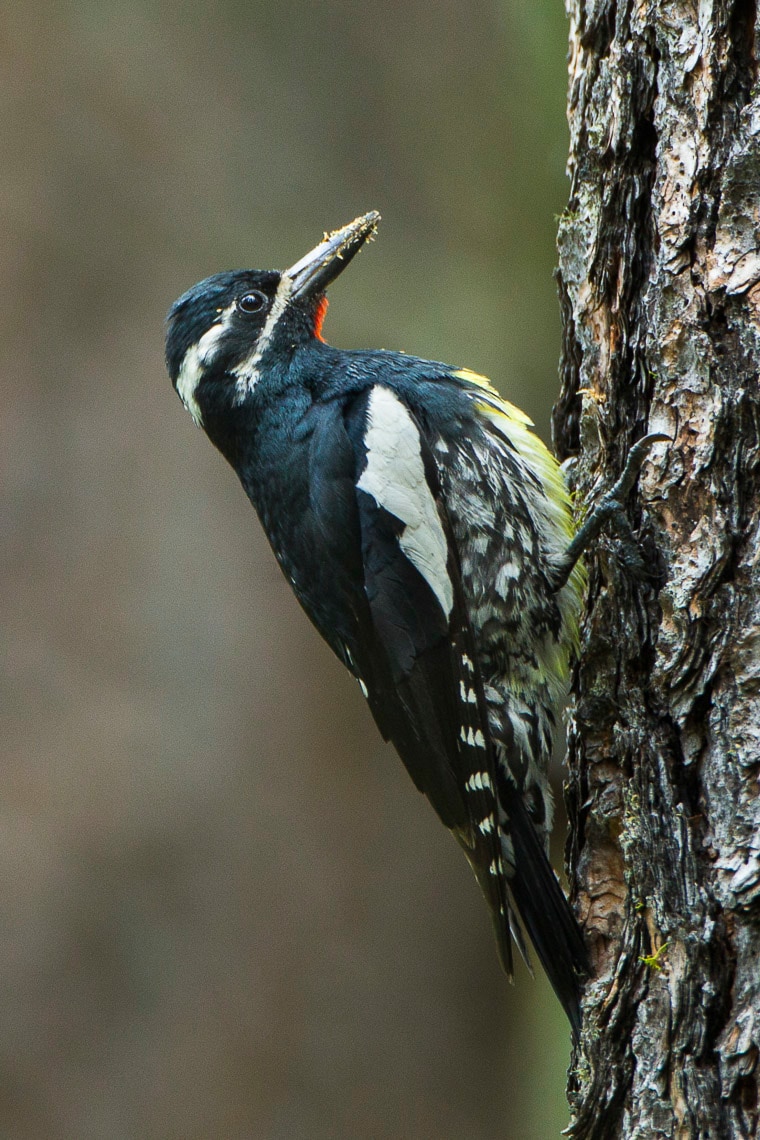
Black-Breasted Woodpecker
North America, Mexico, Canada
Open Forested Areas, Coniferous Forests, Subalpine Forests
- Iridescent black plumage on males
- White stripe behind the eye and on the sides of the head
- Red chin
- Bright yellow belly
- Pale yellow breast
- Brownish head with black streaking
- Fine barring on back, breast, and sides
Tree Sap, Insects, Berries
Drilling Into Trees To Access Sap
Excavated Tree Cavities
Drumming To Establish Territories
About Williamson's sapsucker
Williamson's sapsucker (Sphyrapicus thyroideus) is a distinctive medium-sized woodpecker found in the open, coniferous forests of western North America. Its breeding range spans from northern Mexico up to British Columbia, with populations exhibiting both migratory and resident behaviors. Migrating individuals may travel as far south as central Mexico, often forming small flocks.
Description and Identification
The species displays striking sexual dimorphism. Adult males are characterized by iridescent black plumage across their head, back, sides, and tail, complemented by a bright red chin and a vivid yellow belly. White stripes are prominent behind the eyes and across the sides of the head, while their wings feature large white patches. In contrast, the female presents a significantly different appearance, being mainly black with a pale yellow breast. Her head is brownish and streaked with black, and her back, breast, and sides show fine barring. This notable difference led to the female being initially classified as a separate species, the black-breasted woodpecker, by Cassin.
Habitat and Diet
Williamson's sapsuckers prefer open forested environments dominated by conifers such as ponderosa pine, Douglas-fir, and grand fir. Subalpine fir and western larch can also be important components of their habitat. Their diet is varied, consisting primarily of tree sap, particularly from conifers. During the nesting season, insects become their main food source. Outside of this period, they supplement their diet with berries.
Nesting and Behavior
These woodpeckers excavate a new nesting cavity each year, often utilizing mature trees. They also engage in drumming behaviors, which are used to establish and defend their territories. The species is partially migratory, and migrating birds form small flocks. In some areas, such as south-central British Columbia, they are closely associated with mature larch forests. Unfortunately, habitat loss due to forest harvesting poses a significant threat, contributing to population declines in certain regions. In Canada, Williamson's sapsucker was designated as endangered in 2005 due to these pressures and the rapid disappearance of its habitat. Less than 500 individuals are estimated to breed in Canada.
Taxonomy and Naming
The scientific name for Williamson's sapsucker is Sphyrapicus thyroideus. The species derives its common name from Lieutenant Robert Stockton Williamson, who led a surveying expedition where the first male specimen was collected. The historical classification of males and females as separate species was a notable aspect of its early scientific study. The female was first described in 1852 as Picus thyroideus, while the male was described in 1857 as Picus williamsonii. It was not until 1873 that Henry Henshaw clarified that these were indeed the same species, a finding later summarized in Robert Ridgway's comprehensive work, 'The Birds of North and Middle America'.
Source: Wikipedia ↗
Frequently Asked Questions
What is Williamson's sapsucker?
Williamson's sapsucker is a medium-sized woodpecker belonging to the genus Sphyrapicus. It is characterized by its habitat in open coniferous forests and its striking differences in appearance between males and females.
Where does Williamson's sapsucker live?
This species breeds in western North America, with its range extending from northern Mexico as far north as British Columbia. While some populations are permanent residents, others migrate seasonally, traveling as far south as central Mexico.
What does Williamson's sapsucker eat?
Their diet consists primarily of tree sap, particularly from conifers. During the nesting season, insects become their main food source, and they also consume berries outside of this period.
Why is Williamson's sapsucker considered endangered?
In some parts of its range, particularly in Canada, Williamson's sapsucker is designated as endangered. This status is largely due to habitat loss caused by forest harvesting, which is rapidly diminishing their preferred mature forest environments.
How do Williamson's sapsuckers nest?
These woodpeckers excavate a new nesting cavity each year, typically in mature trees. While they may reuse the same tree, a fresh cavity is created annually for nesting.
Related Woodpecker species

American three-toed woodpecker
The American three-toed woodpecker is a medium-sized woodpecker found in North American coniferous forests. It is characterized by its black and white plumage, with males displaying a distinctive yellow cap. These birds are strongly associated with insect-infested trees, often following disturbances like forest fires.

Eurasian wryneck
The Eurasian wryneck is a migratory woodpecker species found predominantly in temperate regions of Europe and Asia, wintering in tropical Africa and southern Asia. It is characterized by its thrush-like body shape, unique snake-like head-twisting ability used as a defense mechanism, and a diet primarily consisting of ants and other insects.
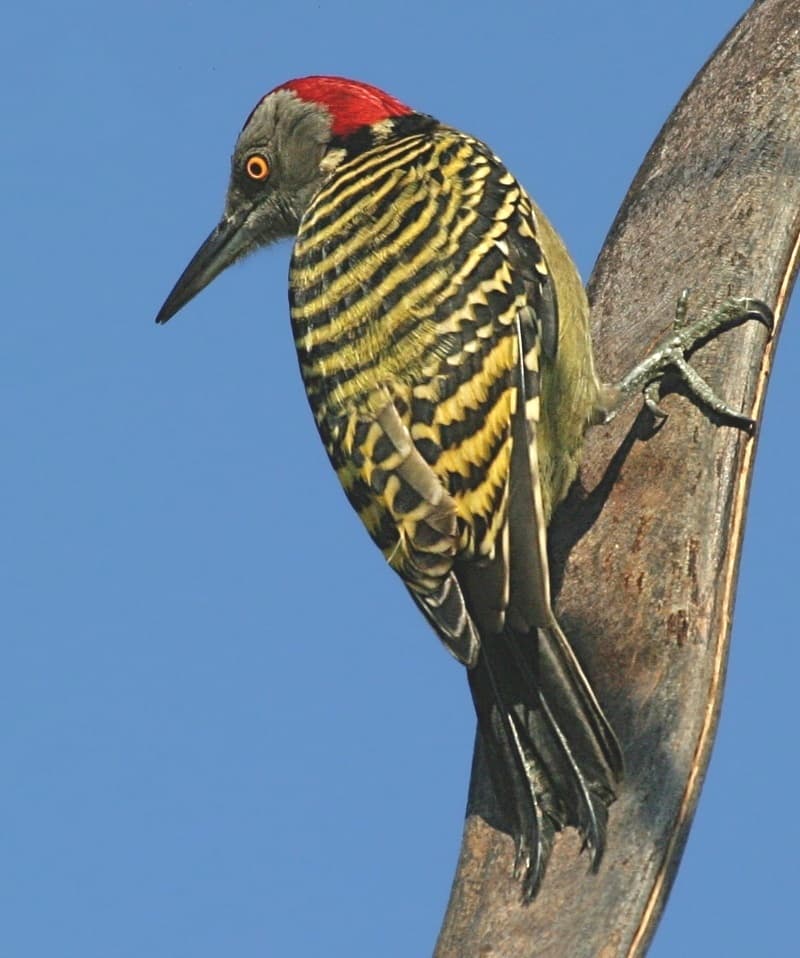
Hispaniolan woodpecker
The Hispaniolan woodpecker is a medium-sized, gold and black barred bird found exclusively on the island of Hispaniola. This species is known for its social behavior and distinctive vocalizations, inhabiting a variety of forest types, plantations, and even urban parks across both Haiti and the Dominican Republic.