
Fernandina's flicker
Fernandina's flicker (Colaptes fernandinae), also known as the Cuban flicker, is a critically endangered species of woodpecker endemic to Cuba. This medium-sized bird is characterized by its buffy cinnamon head, heavily streaked underparts, and distinctive yellow underwings, and is closely associated with palm trees for both foraging and nesting.
Key Facts
- ›Endemic to Cuba, found primarily in lowland open-palm savannah and dry forests.
- ›Feeds mainly on ants, often foraging on the ground, but also consumes other insects, worms, grubs, and seeds.
- ›Nests in palms, often taking over cavities excavated by other woodpecker species.
- ›Breeds between March and June, with courtship involving high-flying chases.
- ›Listed as Endangered on the IUCN Red List due to severe habitat loss.

Cuban Flicker
Cuba
Lowland Open-Palm Savannah, Dry Savanna, Dry Forests, Pastures, Swampy Forest, Forest Edges
Black Malar Stripe, Heavily Streaked With White Malar, Yellow Underwings Visible In Flight
Ants, Other Insects, Worms, Grubs, Seeds
Forages on the ground, Probes the ground, Flicks aside leaf litter, Feeds on ants and termites in palms
- Palms of Genera Copernicia, Sabal, and Roystonea
- JuçAra
- Wild Tamarind
- Cavities Started By West Indian Woodpeckers
Repeated Wicka, Loud Pic-Pic-Pic-Pic-Pic-Pic, Nasal Ch-Ch-Ch
About Fernandina's flicker
Fernandina's flicker, scientifically known as Colaptes fernandinae and also called the Cuban flicker, is a medium-sized woodpecker species endemic to the island of Cuba. This bird is critically endangered, facing severe threats primarily from habitat loss. It is characterized by its buffy cinnamon crown and nape, off-white chin and throat with heavy black streaking, and distinctive yellow underwings that are visible in flight. Males feature a black malar stripe, while females have a malar area heavily streaked with white.
Distribution and Habitat
The Fernandina's flicker is found in various Cuban habitats, including lowland open-palm savannah, dry forests, pastures, and swampy areas. It exhibits a strong association with palm trees, such as Sabal palmetto and Roystonea regia, which are crucial for its survival. Although it was once distributed more widely across the island, it is now confined to isolated locations in nine of Cuba's provinces.
Behavior and Diet
This woodpecker often forages on the ground, primarily feeding on ants, but its diet also includes other insects, worms, grubs, and seeds. It uses its strong bill to probe the earth and dislodge leaf litter. During the wet season, it supplements its diet by feeding on ants and termites found within both live and dead palm trees.
Nesting and Reproduction
Fernandina's flicker is a cavity-nester, typically excavating its nests in palms, often utilizing cavities initiated by other woodpecker species. The breeding season occurs between March and June, with courtship involving aerial chases. Nests are usually located several meters above the ground. Females lay a clutch of three to five white eggs, with young fledging after approximately 22 days. The species can exhibit solitary breeding behavior, though loose colonies have been observed in areas with abundant resources.
Conservation Concerns
The Fernandina's flicker is listed as Endangered on the IUCN Red List due to significant population decline. The primary driver of this decline is ongoing habitat loss, particularly the loss of standing dead palm trees essential for nesting. Threats also include introduced mammals and human activities such as trapping and the felling of palm trees for agricultural purposes or to capture nestlings of other species, which directly impacts the woodpecker's nesting sites. Population estimates vary but indicate a small and scattered number of individuals, making conservation efforts urgent for its survival.
Source: Wikipedia ↗
Frequently Asked Questions
What is Fernandina's flicker known for?
Fernandina's flicker is known for being a critically endangered woodpecker species endemic to Cuba. It is particularly associated with palm trees, which it uses for nesting and foraging, and is one of the most threatened woodpecker species globally.
Where does Fernandina's flicker live?
This species is found exclusively in Cuba, inhabiting lowland open-palm savannah, dry forests, pastures, and swampy forests. It is closely tied to palm trees and was formerly found across the island, but is now restricted to specific locations.
What does Fernandina's flicker eat?
The primary food source for Fernandina's flicker is ants, which it often finds by foraging on the ground. It also consumes other insects, worms, grubs, and seeds, and will seek out ants and termites in both living and dead palm trees.
What are the nesting habits of Fernandina's flicker?
As a cavity nester, Fernandina's flicker excavates nests primarily in palm trees. They often favor nest holes started by other woodpeckers, driving out the original occupants to complete the excavation. Nests are typically located several meters above the ground.
What is the conservation status of Fernandina's flicker?
Fernandina's flicker is listed as Endangered on the IUCN Red List. Its population is declining significantly due to extensive habitat loss, particularly the loss of standing dead palm trees essential for nesting.
Related Woodpecker species
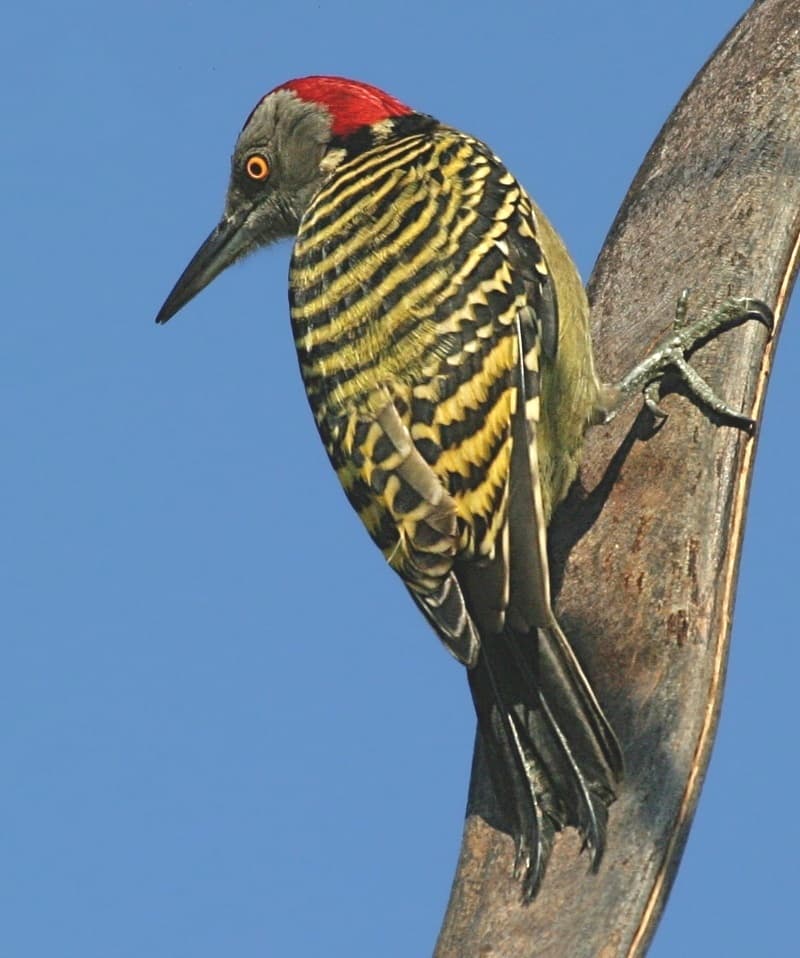
Hispaniolan woodpecker
The Hispaniolan woodpecker is a medium-sized, gold and black barred bird found exclusively on the island of Hispaniola. This species is known for its social behavior and distinctive vocalizations, inhabiting a variety of forest types, plantations, and even urban parks across both Haiti and the Dominican Republic.

Cuban green woodpecker
The Cuban green woodpecker (Xiphidiopicus percussus), also known as carpintero verde, is the only species in its genus and is a widespread and common woodpecker found exclusively in Cuba. This medium-sized, colorful bird inhabits various forests and woodlands, and is characterized by its olive-green upperparts, yellow streaked underparts, and a distinctive red breast patch.
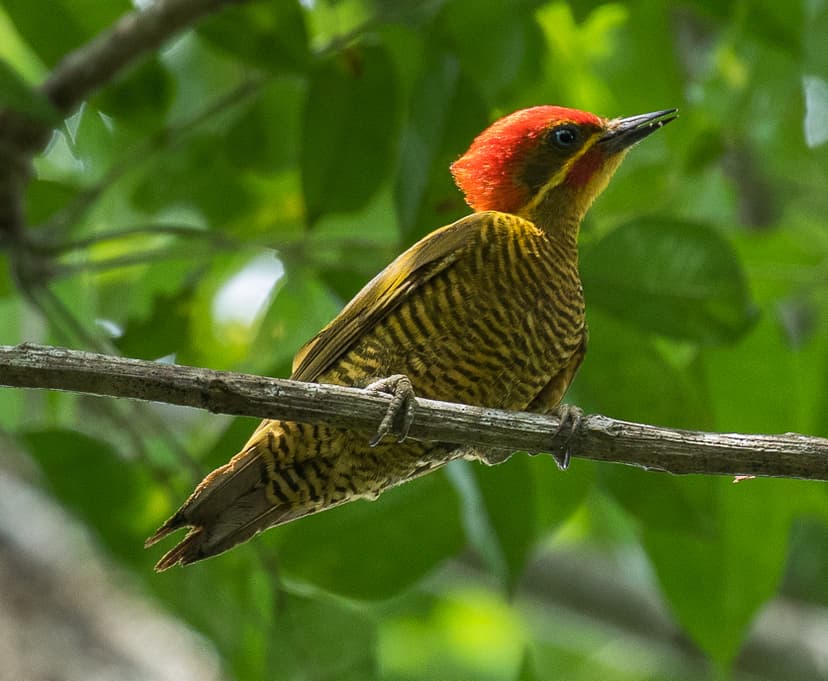
Golden-green woodpecker
The golden-green woodpecker is a South American bird found in a variety of wooded habitats across the continent. Characterized by its size and distinctive head markings that vary between sexes and subspecies, it primarily feeds on ants and termites. This species is generally considered to be of Least Concern, despite a suspected decreasing population trend.