
Fine-spotted woodpecker
The fine-spotted woodpecker is a widespread and common resident breeder found across much of west and central tropical Africa. This species is typically found in open forests, savannahs, and bushland, characterized by its green upperparts with fine pale spots and whitish to yellowish underparts marked with dark spots. Both adult males and females exhibit distinct head markings that differentiate them, aiding in identification.
Key Facts
- ›Found in west and central tropical Africa.
- ›Inhabits open forest, savannah, and bushland.
- ›Measures approximately 22 cm in length.
- ›Feeds primarily on insects, with a specialization in termites.
- ›Nests are built in tree holes, often in oil palms.
- ›Conservation status is listed as 'least concern'.
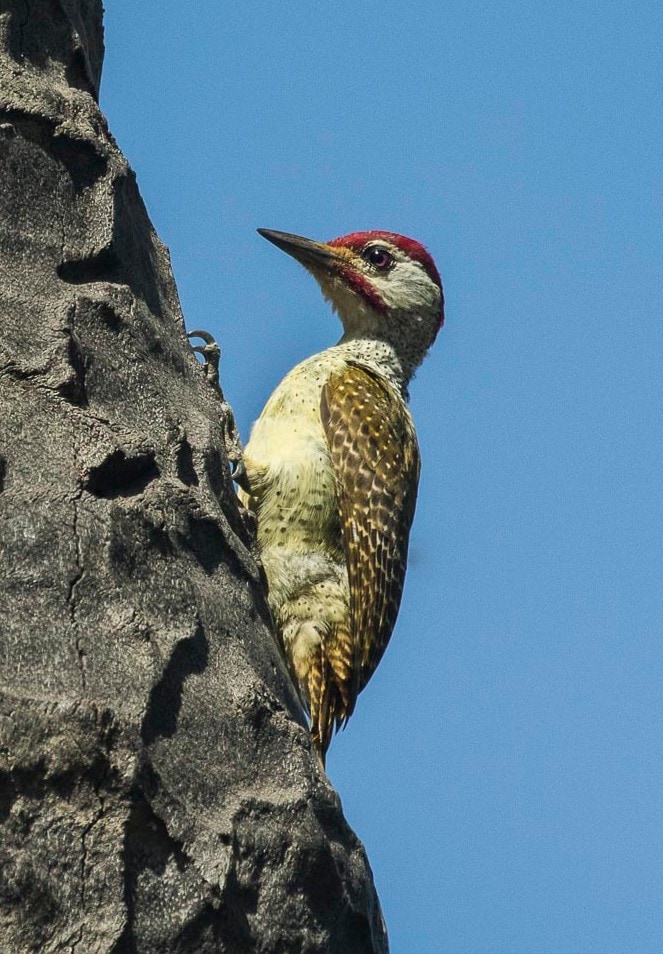
Fine-Spotted Woodpecker
Africa
Open Forest, Savannah, Bushland, Scrub, Grassland With Scattered Trees
- Green upperparts with fine pale spots
- Pale bars on rump and tail
- Whitish or yellowish underparts with fine dark spots
- Red crown and moustachial stripes
- Dark forecrown with red on the rear half
- Straight pointed bill
- Stiff tail
- Zygodactyl feet
Insects, Termites
Picking Insects Off Trees, Picking Insects Off the Ground, Foraging In Small Family Groups, Joining Mixed Flocks of Birds
Tree Hole, Oil Palm
Loud Kip-Kip-Kip-Kiech-Kiech-Kiech
About Fine-spotted woodpecker
The fine-spotted woodpecker (Campethera punctuligera) is a member of the woodpecker family, Picidae. This species is a widespread and common resident breeder found throughout much of west and central tropical Africa. Its preferred habitats include open forests, savannahs, and bushland, as well as scrub and grassland areas dotted with scattered trees.
Description and Identification
This bird measures approximately 22 cm (8.7 inches) in length and possesses the typical woodpecker build. Its upperparts are green, adorned with fine pale spots, with the exception of the rump and tail, which feature pale bars. The underparts are whitish or yellowish and are marked with fine dark spots on the breast, belly, and flanks. The head is whitish with greyer cheeks and chin, also bearing tiny dark spots.
Distinguishing features vary between sexes and ages. Adult males are characterized by a red crown and red moustachial stripes. Females, in contrast, have a dark forecrown with red on the rear half of the crown and lack the red moustaches. Young birds resemble females but have darker green plumage. Like other woodpeckers, the fine-spotted woodpecker has a straight, pointed bill, a stiff tail for support against tree trunks, and zygodactyl feet, with two toes pointing forward and two backward. Its long tongue can be extended to capture insects.
Ecology and Behavior
The fine-spotted woodpecker is an insectivorous species with a particular fondness for termites, often foraging near termite mounds. It also obtains insects by picking them off trees and the ground. These birds frequently forage in small family groups and may associate with mixed flocks of other bird species. Their call is described as a loud "kip-kip-kip-kiech-kiech-kiech."
Nesting and Reproduction
Nesting occurs in tree holes, commonly found in oil palms. A typical clutch size consists of two to three white eggs. The species is classified as a cavity nester.
Conservation Status
The International Union for Conservation of Nature (IUCN) has rated the conservation status of the fine-spotted woodpecker as 'least concern' due to its wide range and common occurrence.
Source: Wikipedia ↗
Frequently Asked Questions
What is the scientific name of the fine-spotted woodpecker?
The scientific name of the fine-spotted woodpecker is Campethera punctuligera. This binomial nomenclature is used to classify the species within the scientific community.
Where can the fine-spotted woodpecker be found?
The fine-spotted woodpecker is a widespread resident breeder found in much of west and central tropical Africa. Its native range includes the Sudan region and adjacent areas.
What does the fine-spotted woodpecker eat?
This species is insectivorous and is a specialist termite feeder. It also picks other insects off trees and the ground.
How are male and female fine-spotted woodpeckers distinguished?
Adult male fine-spotted woodpeckers have a red crown and red moustachial stripes. Females possess a dark forecrown with red on the rear half and lack the red moustaches.
What is the nesting behavior of the fine-spotted woodpecker?
The fine-spotted woodpecker builds its nest in a tree hole, frequently choosing oil palms. A clutch typically consists of two or three white eggs.
Related Woodpecker species
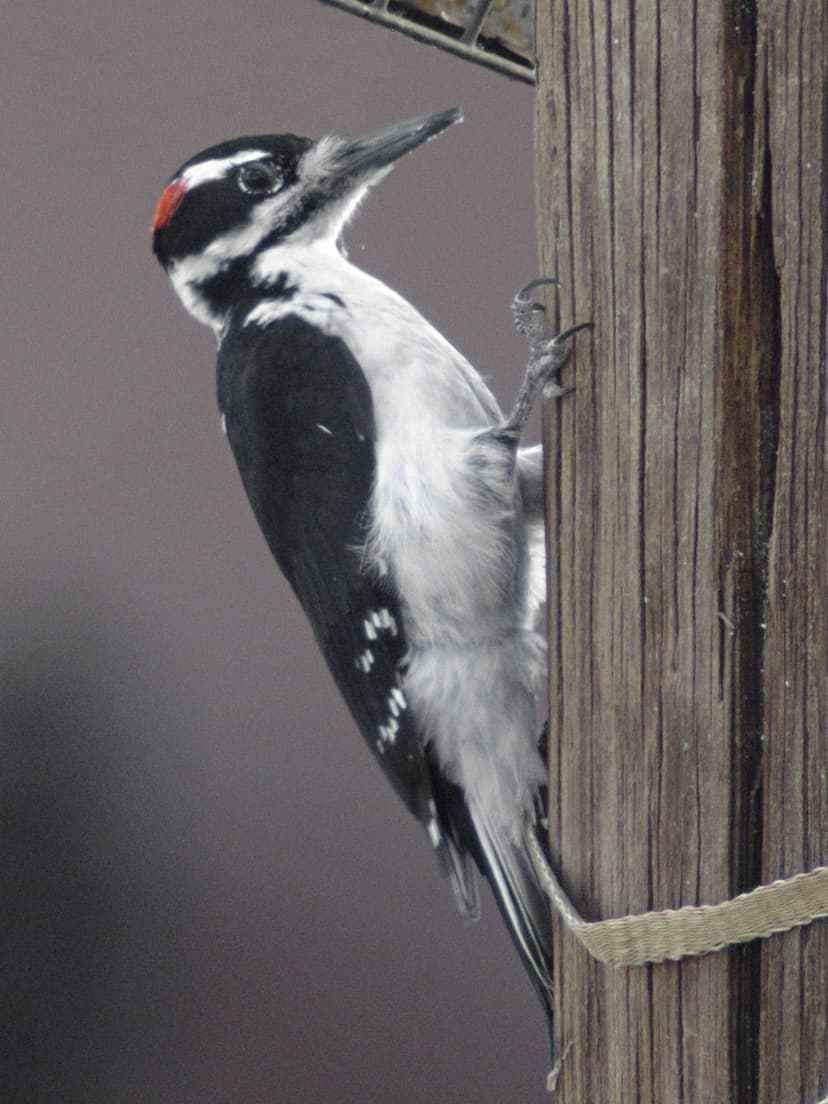
Hairy woodpecker
The Hairy Woodpecker is a medium-sized woodpecker found across a vast range in North America. It is characterized by its black and white plumage, with males distinguished by red patches on the back of their heads. These birds primarily inhabit mature deciduous forests and are known for their insectivorous diet.
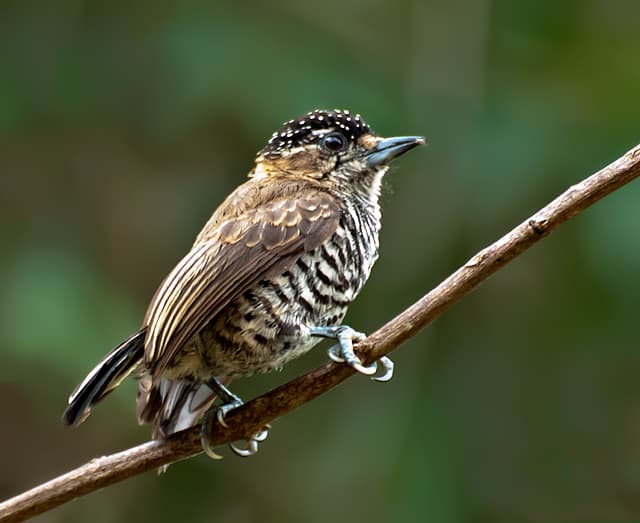
White-barred piculet
The White-barred Piculet is a small bird found across various South American countries, including Argentina, Brazil, and Paraguay. This species is characterized by its distinctive barring on its underparts and a black cap with white spots in males. It inhabits a range of woodland and forest edge environments, feeding primarily on insects and ant larvae.
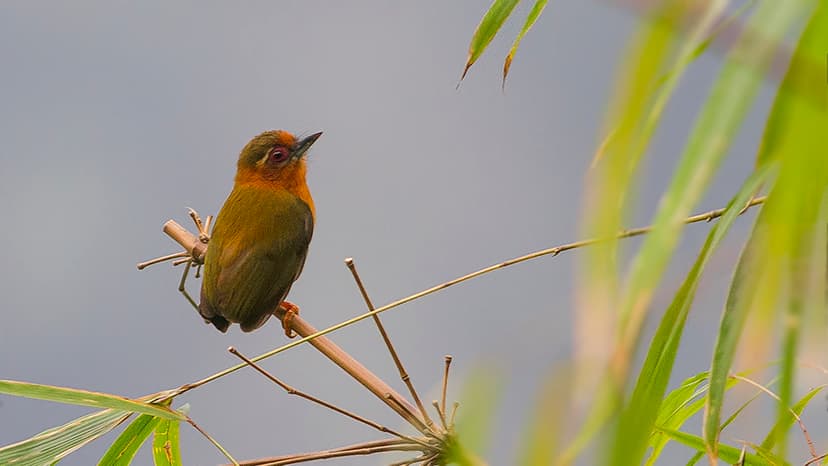
White-browed piculet
The white-browed piculet is a small bird found across Southeast Asia, inhabiting temperate and moist montane forests. It is characterized by its olive-green upperparts, rufous underparts, and a distinctive white streak above its eye. This species primarily feeds on insects and other invertebrates, often foraging in pairs or mixed-species flocks in the forest understory.