
Hairy woodpecker
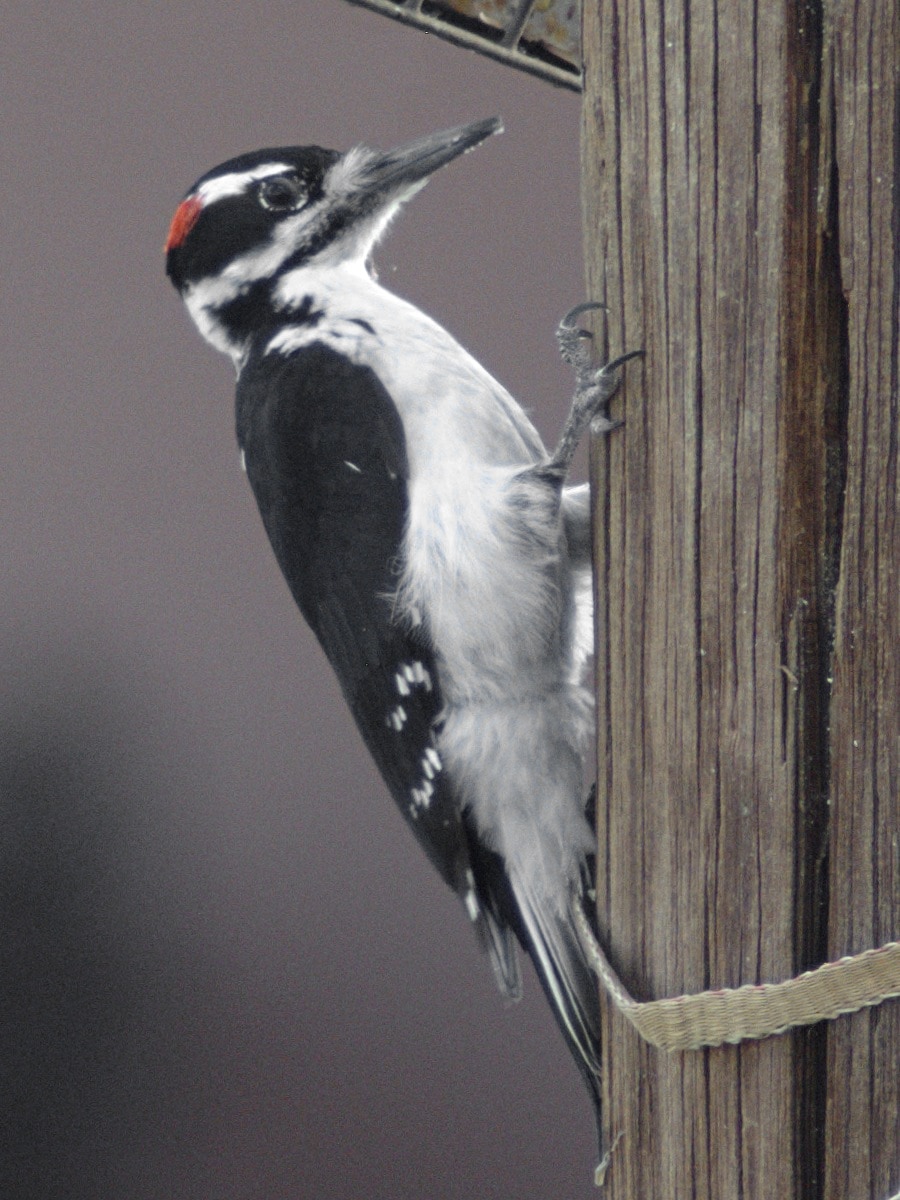
The Hairy Woodpecker is a medium-sized woodpecker found across a vast range in North America. It is characterized by its black and white plumage, with males distinguished by red patches on the back of their heads. These birds primarily inhabit mature deciduous forests and are known for their insectivorous diet.
Key Facts
- ›Found throughout a large area of North America.
- ›Approximately 250 mm (9.8 in) in length with a 380 mm (15 in) wingspan.
- ›Listed by the IUCN as a species of least concern with an estimated population of nearly nine million individuals.
- ›Adults are mainly black on upper parts with white spotting on wings and a white back.
- ›Males have red patches on the back of their head; juveniles may have red on the crown.
- ›Forages on trees, turning over bark or excavating to find insects, and also eats fruits, berries, nuts, and tree sap.
Picus Villosus
North America, Central America, Bahamas
White back, White spotting on wings, White bar above and below the eye, Black tail with white outer feathers, Red patch or patches on the back of the head, Red or orange-red on the crown
Insects, Fruits, Berries, Nuts, Tree Sap
Forage On Trees, Turning Over Bark, Excavating
Hole In A Tree
About Hairy woodpecker
The Hairy Woodpecker (scientific name Leuconotopicus villosus) is a medium-sized woodpecker widely distributed across North America. Its plumage is predominantly black on the upper parts and wings, contrasted by a white back and white spotting on the wings. The throat and belly can range from white to sooty brown, varying by subspecies. Adult males are identifiable by one or two red patches on the back of their head, while juvenile males may exhibit red on their crown.
Distribution and Habitat
This species inhabits mature deciduous forests and is found throughout Canada, the United States, Mexico, and extends south into Central America, reaching Nicaragua and Panama. They also inhabit the Bahamas and are occasionally seen as vagrants in Puerto Rico and the Turks and Caicos Islands. While largely permanent residents, populations in the far north may migrate southward, and those in mountainous regions may descend to lower elevations.
Diet and Behavior
Hairy Woodpeckers primarily feed on insects, which they locate by foraging on trees, turning over bark, or excavating into wood. Their diet is supplemented with fruits, berries, nuts, and sometimes tree sap. These woodpeckers play a role in controlling insect populations, including the European corn borer, a significant agricultural pest.
Reproduction
Mating pairs of Hairy Woodpeckers excavate a hole in a tree to serve as their nesting site. They typically lay an average of four white eggs. The species was first described and illustrated by English naturalist Mark Catesby between 1729 and 1732, and later binomial nomenclature was established by Carl Linnaeus in 1766.
Source: Wikipedia ↗
Frequently Asked Questions
How large is a Hairy Woodpecker?
The Hairy Woodpecker typically measures between 18 to 26 cm (7.1 to 10.2 inches) in length, with a wingspan ranging from 33 to 43 cm (13 to 17 inches). Their weight usually falls between 40 to 95 grams (1.4 to 3.4 ounces).
What is the conservation status of the Hairy Woodpecker?
The Hairy Woodpecker is currently listed by the IUCN as a species of least concern. Its population was estimated to be almost nine million individuals in 2020, indicating a healthy and widespread presence.
How can I tell a Hairy Woodpecker from a Downy Woodpecker?
The Hairy Woodpecker is virtually identical in plumage to the smaller Downy Woodpecker. The best field distinction is the Hairy Woodpecker's longer bill relative to its head size. Additionally, Hairy Woodpeckers lack spots on their white tail feathers, which are present in Downy Woodpeckers.
What do Hairy Woodpeckers eat?
Their diet primarily consists of insects, which they uncover by foraging on trees, turning over bark, or excavating. They also supplement their diet with fruits, berries, nuts, and occasionally tree sap.
Where are Hairy Woodpeckers found?
Hairy Woodpeckers inhabit mature deciduous forests across a broad range in North America, including Canada, the United States, Mexico, and parts of Central America down to Nicaragua and Panama. They are also found in the Bahamas.
Do Hairy Woodpeckers migrate?
These birds are mostly permanent residents. However, individuals in the extreme northern parts of their range may migrate further south, and those in mountainous areas might move to lower elevations.
Related Woodpecker species

Red-crowned woodpecker
The red-crowned woodpecker is a bird species found across Central and South America, including Costa Rica, Panama, Colombia, Venezuela, Guyana, Suriname, and Tobago. It is characterized by its distinctive red crown in males and a varied plumage pattern including black and white barring on its back and wings. This species inhabits a wide range of environments, from mature forests to plantations and gardens.
Fine-spotted woodpecker
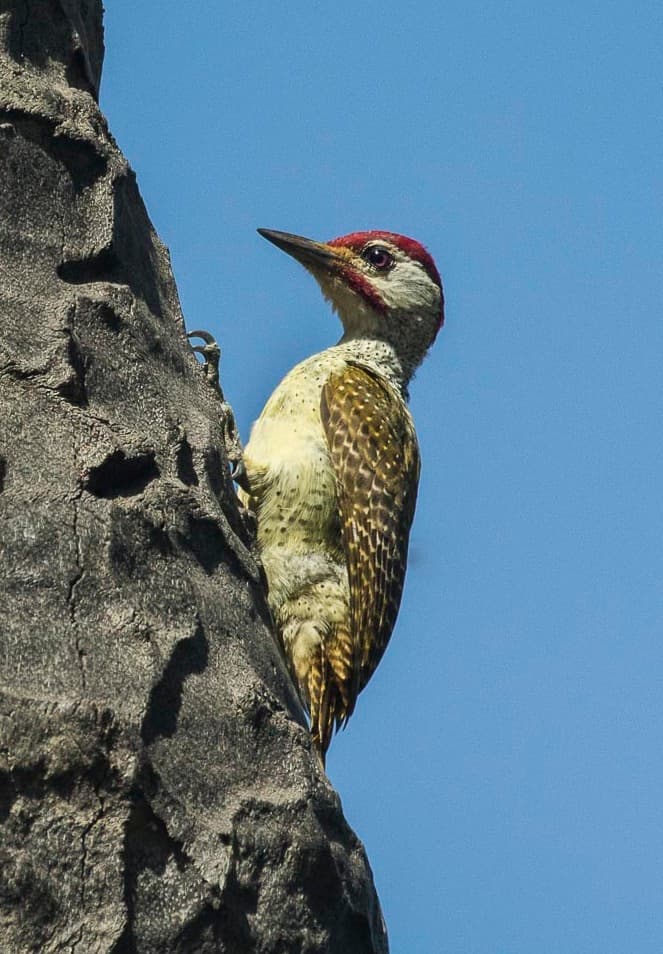
The fine-spotted woodpecker is a widespread and common resident breeder found across much of west and central tropical Africa. This species is typically found in open forests, savannahs, and bushland, characterized by its green upperparts with fine pale spots and whitish to yellowish underparts marked with dark spots. Both adult males and females exhibit distinct head markings that differentiate them, aiding in identification.

Great spotted woodpecker
The great spotted woodpecker is a medium-sized bird characterized by its pied black and white plumage and a distinctive red patch on its lower belly. It inhabits diverse woodlands across the Palearctic region and parts of North Africa. This adaptable species is known for its varied diet, including insect larvae, seeds, and even the eggs and chicks of other birds, and its habit of excavating tree cavities for nesting.