
Gabon woodpecker
The Gabon woodpecker is a small species of woodpecker found in western central Africa, characterized by its plain green upperparts and heavily spotted underparts. It prefers forest edges and secondary growth, typically avoiding dense forests and savannas. The species is known for its foraging behavior, probing and gleaning from bark.
Key Facts
- ›Small woodpecker measuring 16-17 cm in length.
- ›Features plain green upperparts and heavily spotted underparts with a yellowish background.
- ›Males have a red hindcrown and nape, while females lack red on the head.
- ›Inhabits forest edges, tall secondary growth, and wooded edges of farmland.
- ›Forages by probing and gleaning from bark, and by pecking at and prying off bark and soft wood.
- ›Breeding occurs in September-October in the west and June in Uganda.

Western Central Africa, Nigeria, Cameroon, Republic of Congo, Democratic Republic of Congo, Uganda
Forest Edge, Tall Secondary Growth, Wooded Edges of Farmland
Short, broad bill, Plain green upperparts, Heavily spotted underparts, Red hindcrown and nape in males, Red on the center of the crown in juveniles
Insects
Probing Into Bark, Gleaning From Bark, Pecking At Bark, Prising Off Pieces of Bark and Soft Wood
About Gabon woodpecker
The Gabon woodpecker (Dendropicos gabonensis) is a small bird belonging to the family Picidae, native to western central Africa. It is recognized for its distinctive plumage, featuring plain green upperparts and heavily spotted underparts set against a yellowish background. Adult males are particularly identifiable by a red hindcrown and nape, while females lack this red coloration, though juveniles of both sexes exhibit red on the center of their crown.
Distribution and Habitat
This species is distributed across a range that includes countries such as Nigeria, Cameroon, the Republic of Congo, the Democratic Republic of Congo, and western Uganda. The Gabon woodpecker typically inhabits transitional environments, favoring forest edges, tall secondary growth, and the wooded margins of agricultural land. It generally avoids the interior of dense forests and open savannas, preferring areas with a mix of trees and open space, usually found at elevations below 1400 meters.
Behavior and Diet
The Gabon woodpecker employs specific foraging techniques to find its food. It actively probes into bark to uncover insects and gleans them from tree surfaces. Additionally, it is known to peck at and pry off pieces of bark and soft wood, exposing hidden prey. Breeding seasons vary geographically, occurring in September and October in the western parts of its range and in June in Uganda.
Taxonomy
Two subspecies of the Gabon woodpecker are currently recognized: Dendropicos gabonensis reichenowi and the nominate subspecies Dendropicos gabonensis gabonensis. The relationship with the closely related Melancholy woodpecker (Dendropicos lugubris) is noted, with D. g. reichenowi often considered intermediate in appearance between the two.
Source: Wikipedia ↗
Frequently Asked Questions
What are the physical characteristics of the Gabon woodpecker?
The Gabon woodpecker is a small bird, measuring 16-17 cm in length, with a short, broad bill. It has plain green upperparts, a plain dark tail, and heavily spotted underparts with a yellowish background. Adult males are distinguished by a red hindcrown and nape.
Where is the Gabon woodpecker found?
This species is found in western central Africa, with two recognized subspecies. Its range extends from southern Nigeria and Cameroon, south through the Republic of Congo and the Democratic Republic of Congo, reaching western Uganda.
What kind of habitat does the Gabon woodpecker prefer?
The Gabon woodpecker typically inhabits forest edges, tall secondary growth, and the wooded peripheries of farmland. It generally stays below 1400 meters in elevation and avoids dense forests and savannas.
How does the Gabon woodpecker find its food?
Its foraging behavior involves probing into bark to extract insects and gleaning them from surfaces. It also pecks at and pries off pieces of bark and soft wood to access food.
Are there any distinguishing features between male and female Gabon woodpeckers?
Yes, adult males possess a red hindcrown and nape, which are absent in adult females. Both sexes of juveniles, however, have red on the center of their crown.
Related Woodpecker species
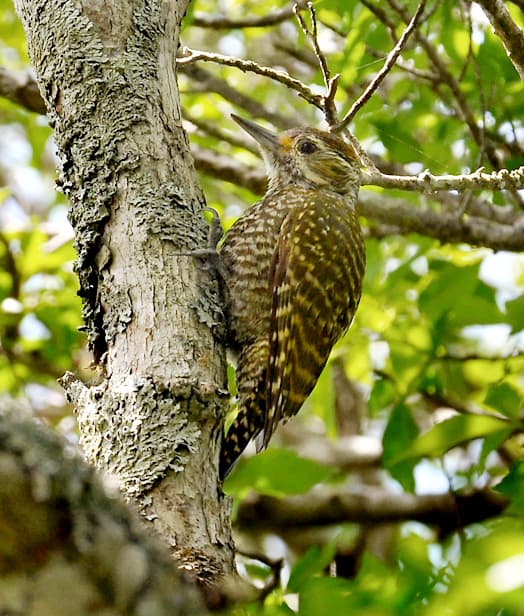
White-spotted woodpecker
The white-spotted woodpecker is a species found in Argentina, Brazil, Paraguay, and Uruguay, inhabiting various wooded landscapes. It is characterized by its olive-green upperparts with yellowish bars and streaked olive underparts, with males and females differing primarily in head plumage. This species is known for its varied vocalizations and its habit of excavating nest cavities.
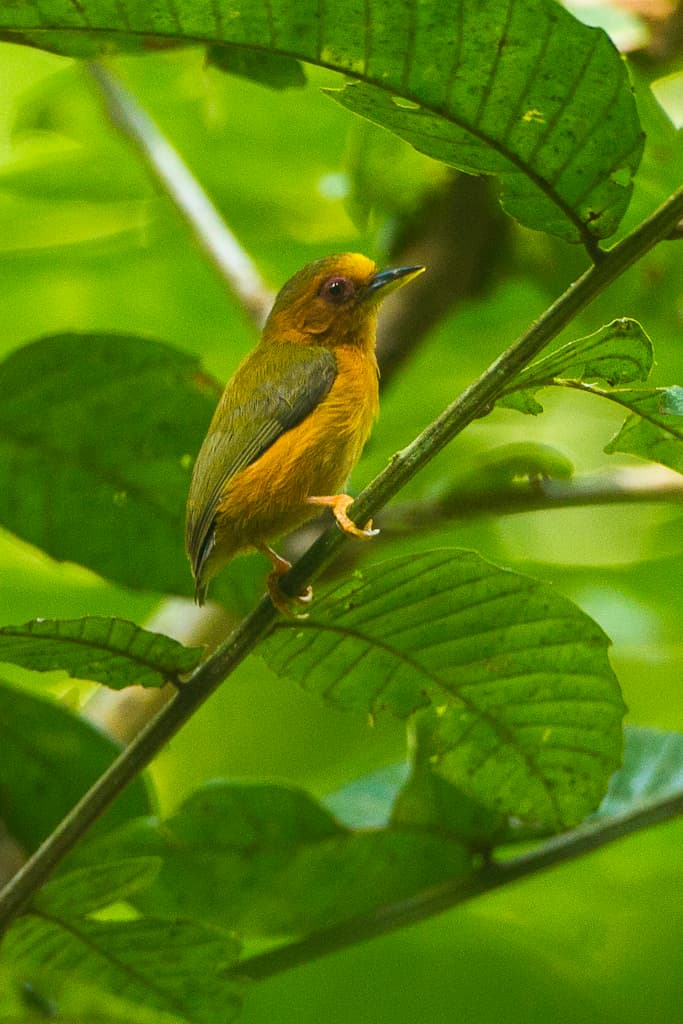
Rufous piculet
The rufous piculet is one of the world's smallest woodpeckers, native to the lowland and montane forests of Southeast Asia. This distinctive bird is characterized by its rufous underparts, green-bronze upperparts, and a unique three-toed foot. It is a resident species, typically found foraging in the lower strata of dense, humid forests.

Crimson-bellied woodpecker
The crimson-bellied woodpecker is a large woodpecker species found on the eastern slopes of the Andes in South America. It is characterized by its striking red underparts, black and white wings, and a distinctive red crest in both sexes. This species primarily inhabits humid and wet forests, foraging near the ground for beetles.