
Golden-fronted woodpecker
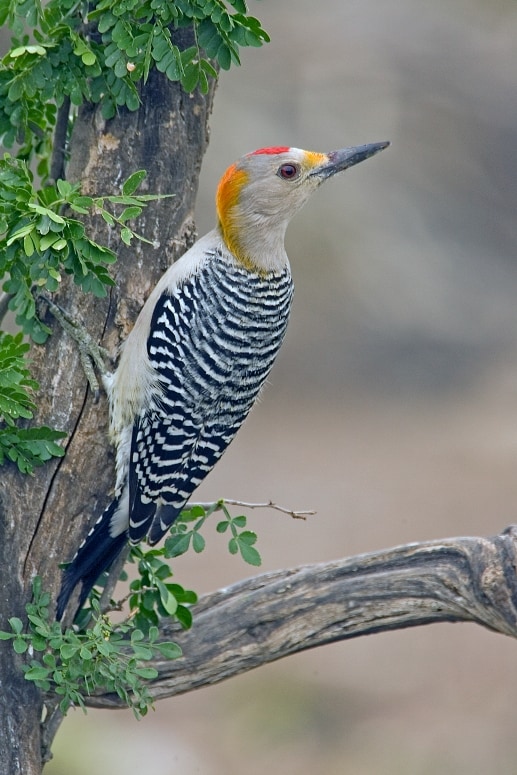
The golden-fronted woodpecker is a species found in the southern United States, Mexico, and parts of Central America. It is characterized by its barred black and white upperparts, gray underparts, and distinctive head markings, with males having a red crown and golden nape, while females have a grayish crown. This adaptable bird inhabits a variety of landscapes, including mesquite brushlands, riparian woodlands, and urban areas.
Key Facts
- ›Found in the southern United States, Mexico, and Central America.
- ›Males have a red crown and golden nape; females have a grayish crown.
- ›Diet consists of arthropods, fruit, nuts, and corn, and occasionally predates eggs of other birds.
- ›Nests are excavated in tree trunks or limbs, utility poles, fence posts, and nest boxes.
- ›Clutches typically contain four or five eggs, with both sexes incubating.
- ›Considered Least Concern by the IUCN with a stable population.
Velasquez's Woodpecker
North America, Central America
Mesquite Brushlands, Riparian Woodlands, Urban Parks, Suburban Areas
- Red crown and golden orange to yellow nape in males
- Grayish crown and paler yellow nape in females
- Barred black and white upperparts
- Smoke gray to drab gray underparts
- Yellow patch on the belly
Arthropods, Fruit, Nuts, Corn, Bird Eggs
Gleaning, Pecking, Probing, Aerial Flycatching
Tree Trunks, Tree Limbs, Utility Poles, Fence Posts, Nest Boxes
Loud Harsh Kirrr Call, Hard Tig Tig Call, Short and Relatively Slow Drumming
About Golden-fronted woodpecker
The golden-fronted woodpecker (Melanerpes aurifrons) is a striking bird species belonging to the woodpecker family, Picidae. Its range extends across the southern United States, primarily Texas, throughout Mexico, and into parts of Central America. Known for its adaptability, it thrives in diverse environments, from arid mesquite brushlands and riparian woodlands to human-modified landscapes like urban parks and suburban areas.
Description and Identification
Adult golden-fronted woodpeckers measure between 22 to 26 cm in length and weigh 65 to 102 grams. A key distinguishing feature lies in the plumage of their heads: males sport a vibrant red crown and a golden-orange to yellow nape, separated by a distinct gap. Females, in contrast, have a grayish crown and a paler yellow nape, though both sexes share gray on the rest of their heads. Their upperparts are characterized by a bold pattern of black and white barring, with primarily black tails and flight feathers accented by white. The underparts are typically smoke gray to drab gray, often with fine blackish bars on the flanks and a characteristic yellow patch on the belly. Juveniles are duller, with less pronounced head colors and indistinct barring.
Behavior and Ecology
The golden-fronted woodpecker is a year-round resident, demonstrating territorial behavior even outside the breeding season. Its diet is omnivorous, comprising adult and larval arthropods, aerial insects, a substantial amount of fruit and nuts, and notably, corn. They have also been observed predating the eggs of other bird species. Foraging commonly occurs in trees, typically on larger limbs and below 6 meters in height, though they will also forage on open ground. Their feeding methods include gleaning, pecking, probing, and less frequently, aerial flycatching.
Reproduction
Breeding in Texas typically occurs between March and July, with pairs often raising two broods annually. Both sexes actively participate in excavating nest cavities, which can be found in live or dead trees, utility poles, fence posts, and even nest boxes, usually situated between 2 and 9 meters above the ground. Clutches usually consist of four or five eggs, and incubation duties are shared by both parents. The incubation period lasts 12 to 14 days, with fledging occurring approximately 30 days after the hatchlings emerge.
Vocalizations
Their calls are described as a loud, harsh 'kirrr' or a hard 'tig tig,' often repeated in succession. The drumming sound produced by the golden-fronted woodpecker is noted for being short and relatively slow.
Conservation Status
The golden-fronted woodpecker is classified as Least Concern by the IUCN, with a stable population trend. Its ability to adapt to human-altered environments contributes to its continued presence across its range.
Source: Wikipedia ↗
Frequently Asked Questions
What is the scientific name for the golden-fronted woodpecker?
The scientific name for the golden-fronted woodpecker is Melanerpes aurifrons. This binomial name was given to the species in 1829 by German naturalist Johann Georg Wagler.
Where is the golden-fronted woodpecker found?
The golden-fronted woodpecker is native to southwestern Oklahoma and central Texas, extending south through Mexico to Jalisco, San Luis Potosí, and Hidalgo. It also occurs in parts of Central America, including Guatemala, Belize, and Nicaragua.
What does the golden-fronted woodpecker eat?
Its diet is varied, including adult and larval arthropods, aerial insects, a significant amount of fruit and nuts, and corn. The species has also been observed preying on the eggs of other birds.
How does the golden-fronted woodpecker reproduce?
Both male and female golden-fronted woodpeckers excavate nest cavities in trees, utility poles, fence posts, or nest boxes. They typically lay clutches of four or five eggs, which are incubated by both parents. Young fledge approximately 30 days after hatching.
What is the conservation status of the golden-fronted woodpecker?
The golden-fronted woodpecker is listed as Least Concern by the IUCN. Its population is considered stable, and it has demonstrated an ability to adapt to human-modified environments, including urban and suburban areas.
Related Woodpecker species

Yellow-bellied sapsucker
The yellow-bellied sapsucker is a medium-sized woodpecker found in Canada and the northeastern United States, known for its distinctive feeding habits of drilling sap wells. Its plumage features a mix of black, white, and yellow, with males displaying a red forehead. These birds play a role in forest ecosystems, though their feeding can sometimes damage trees.
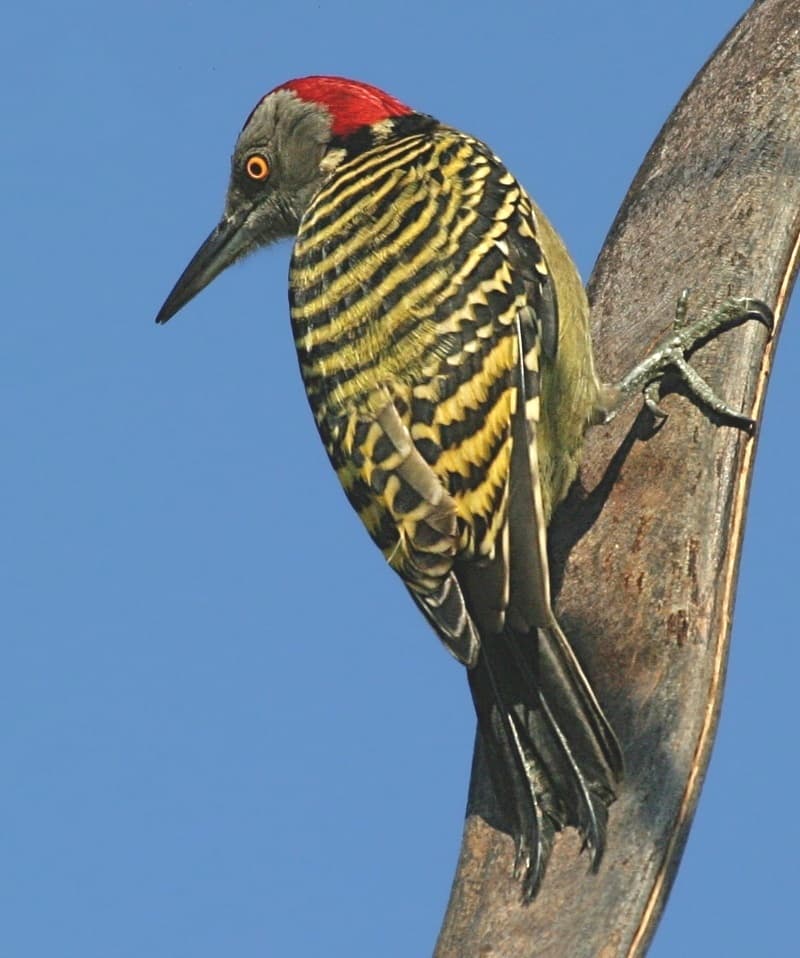
Hispaniolan woodpecker
The Hispaniolan woodpecker is a medium-sized, gold and black barred bird found exclusively on the island of Hispaniola. This species is known for its social behavior and distinctive vocalizations, inhabiting a variety of forest types, plantations, and even urban parks across both Haiti and the Dominican Republic.

Hoffmann's woodpecker
Hoffmann's woodpecker is a bird species found from Honduras south to Costa Rica, inhabiting dry forests, open areas, and human-modified landscapes like shade coffee plantations. Adults are distinguished by their plumage, with males having a red crown and yellow nape, while females have a dull white crown and pale yellow nape. Their diet consists primarily of arthropods extracted from wood, supplemented by fruits, nectar, and occasionally bird eggs.