
Yellow-bellied sapsucker
The yellow-bellied sapsucker is a medium-sized woodpecker found in Canada and the northeastern United States, known for its distinctive feeding habits of drilling sap wells. Its plumage features a mix of black, white, and yellow, with males displaying a red forehead. These birds play a role in forest ecosystems, though their feeding can sometimes damage trees.
Key Facts
- ›Breeds in Canada and the northeastern United States, wintering in the eastern United States, West Indies, and Central America.
- ›Feeds primarily on arthropods, tree sap, fruits, and cambium, drilling characteristic sap wells in trees.
- ›Nests in large cavities excavated in live deciduous trees, often with rotten heartwood.
- ›Males typically have a red forehead, while females have a lighter shade of red or sometimes yellow.
- ›The species is monotypic, meaning no subspecies are recognized.
- ›Considered Least Concern by the IUCN due to its large range, despite a decreasing population trend.

Yellow-Bellied Sapsucker
North America, Central America, West Indies
Deciduous Forests, Mixed Coniferous Forests, Open Woodland, Suburban Areas, Pastures, Clearings
Yellowish Underparts, Red Forehead, Black Stripe Through Ear-Coverts, White Stripe Above Eye, Drills Sap Wells In Trees
Arthropods, Tree Sap, Fruits, Cambium, Bast, Buds
Drilling sap wells in horizontal rows, Enlarging holes vertically to yield more sap, Lapping sap from drilled holes, Consuming cambium from hole edges, Foraging alone or in small groups
- Cavities excavated in live deciduous trees
- Trees with rotten heartwood
- Populus tremuloides trees with Fomes fomentarius conks
Nasal "Neaaah", "Owee-Owee", "Wee-Wee-Wee-Wee", "Kwee-Urk", Low "Week Week", "Wurp Wurp", Scratchy "Quirk Quirk", Soft Mew Call, Shrill "Quarr"
About Yellow-bellied sapsucker
The yellow-bellied sapsucker (Sphyrapicus varius) is a medium-sized woodpecker native to North America, recognized for its unique feeding behavior and distinct plumage. It breeds in the forests of Canada and the northeastern United States, migrating south for the winter to regions including the eastern United States, the West Indies, and Central America.
Description and Characteristics
Measuring between 19 to 21 centimeters in length, the yellow-bellied sapsucker has a wingspan ranging from 34 to 40 centimeters and an average weight of about 50.3 grams. Males are distinguished by a bright red forehead, while females often have a lighter red or yellow forehead. Their plumage is a mosaic of black and white on the back and wings, with a characteristic yellowish tint to the underparts. A notable feature is the drilling of rows of small, evenly spaced holes in tree bark, from which they consume sap, bast, and cambium. They also feed on arthropods, fruits, and buds, with sap being a crucial food source, especially during the late summer and autumn.
Behavior and Ecology
Feeding Habits
The sapsucker's most distinctive behavior is its method of feeding. It drills small, horizontal rows of holes, often about 0.5 centimeters apart, through the bark to access the sap. These holes are then enlarged to create columns that yield sap. While sap is a primary food, they also consume the cambium from the edges of these holes, which is particularly important during winter. The species exhibits a preference for certain tree species, including aspens, maples, and birches, for sap extraction.
Breeding and Nesting
Yellow-bellied sapsuckers are monogamous and nest in pairs, excavating cavities in live deciduous trees, often those with decaying heartwood. The excavation process, primarily done by the male, can take 15 to 28 days. Nests are typically situated between 3 and 14 meters above the ground. The breeding season runs from April to July, during which they lay a clutch of four to seven white, spotless eggs. Both parents share incubation and brooding duties, ensuring the survival of their young until they fledge approximately 25 to 29 days after hatching.
Vocalizations
Communication among yellow-bellied sapsuckers includes a variety of calls, such as nasal "neaaah" sounds and "kwee-urk" calls, used for attracting mates and defining territory. Family members exchange soft "week week" calls, and alarm is signaled by a mewing sound. They also engage in drumming on resonant dead trees, which is believed to be a form of long-distance communication rather than an indicator of nesting or feeding site quality.
Relationship with Humans and Conservation
Impact on Trees
Due to their feeding habits, yellow-bellied sapsuckers can sometimes be considered pests, as their sap wells can injure trees and potentially lead to mortality, especially in susceptible species like paper birch and red maple. However, the damage is often species-dependent, with some conifers showing minimal impact.
Conservation Status
The yellow-bellied sapsucker is classified as Least Concern by the IUCN. Despite a declining population trend, its vast range of approximately 7,830,000 square kilometers and large population size contribute to its stable status. In the United States, they are protected under the Migratory Bird Treaty Act.
Source: Wikipedia ↗
Frequently Asked Questions
What is the scientific name of the yellow-bellied sapsucker?
The scientific name of the yellow-bellied sapsucker is Sphyrapicus varius. This binomial name was given by Carl Linnaeus in the twelfth edition of his Systema Naturae, citing earlier illustrations by Mark Catesby.
Where does the yellow-bellied sapsucker live?
The yellow-bellied sapsucker breeds in Canada and the northeastern United States, including eastern Alaska. They migrate to winter in the eastern United States, the West Indies, and Central America.
What does a yellow-bellied sapsucker eat?
The diet of the yellow-bellied sapsucker is varied, consisting mainly of arthropods, tree sap, fruits, and cambium. During the nesting season, insects are a significant part of their diet, while sap becomes more prominent in late summer and autumn.
How does the yellow-bellied sapsucker feed on trees?
Yellow-bellied sapsuckers drill rows of small holes into tree bark to access sap, which they then lap up. They also consume the cambium from the edges of these holes and feed on insects attracted to the sap.
What are the nesting habits of the yellow-bellied sapsucker?
These woodpeckers excavate large cavities in live deciduous trees, often preferring those with rotten heartwood. Both sexes participate in excavating the nest, which can be located between 2 to 20 meters above the ground.
What is the conservation status of the yellow-bellied sapsucker?
The yellow-bellied sapsucker is listed as Least Concern by the IUCN. This status is due to its extensive geographic range, which covers approximately 7,830,000 square kilometers.
Related Woodpecker species
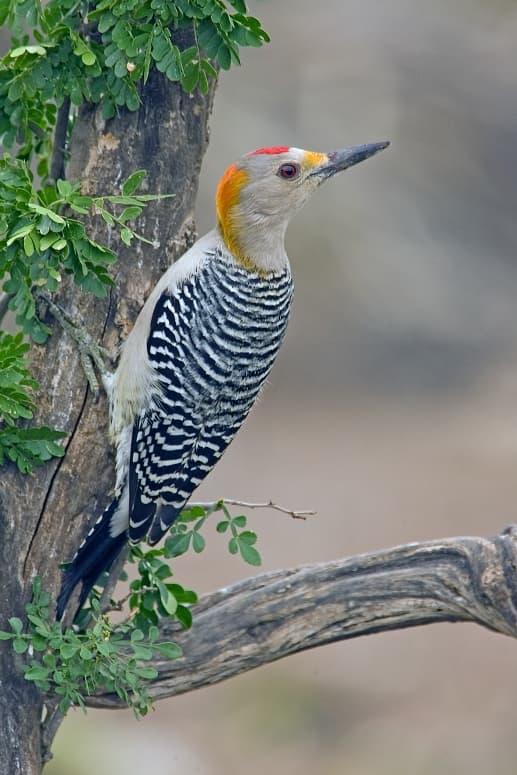
Golden-fronted woodpecker
The golden-fronted woodpecker is a species found in the southern United States, Mexico, and parts of Central America. It is characterized by its barred black and white upperparts, gray underparts, and distinctive head markings, with males having a red crown and golden nape, while females have a grayish crown. This adaptable bird inhabits a variety of landscapes, including mesquite brushlands, riparian woodlands, and urban areas.
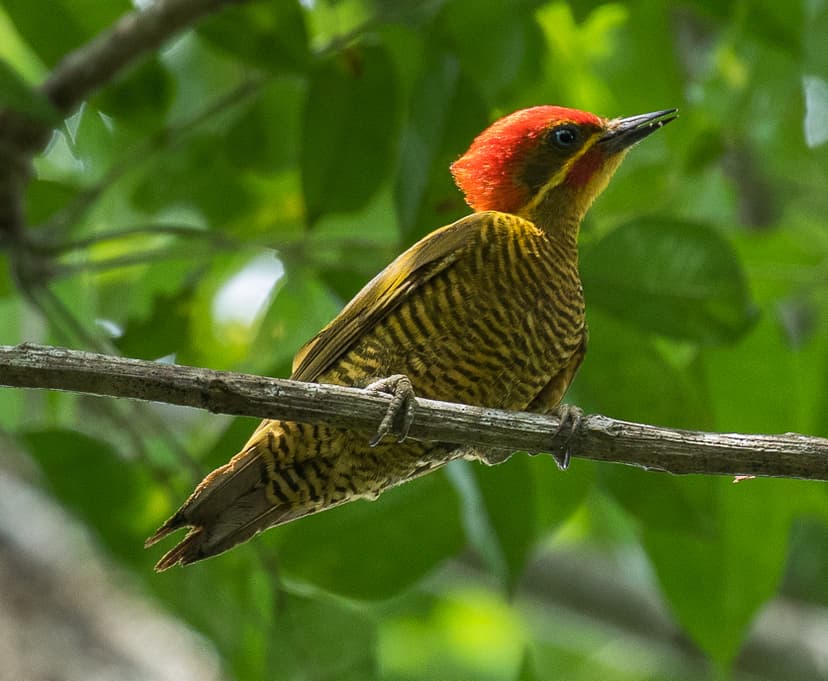
Golden-green woodpecker
The golden-green woodpecker is a South American bird found in a variety of wooded habitats across the continent. Characterized by its size and distinctive head markings that vary between sexes and subspecies, it primarily feeds on ants and termites. This species is generally considered to be of Least Concern, despite a suspected decreasing population trend.

Fernandina's flicker
Fernandina's flicker (Colaptes fernandinae), also known as the Cuban flicker, is a critically endangered species of woodpecker endemic to Cuba. This medium-sized bird is characterized by its buffy cinnamon head, heavily streaked underparts, and distinctive yellow underwings, and is closely associated with palm trees for both foraging and nesting.