
Hoffmann's woodpecker
Hoffmann's woodpecker is a bird species found from Honduras south to Costa Rica, inhabiting dry forests, open areas, and human-modified landscapes like shade coffee plantations. Adults are distinguished by their plumage, with males having a red crown and yellow nape, while females have a dull white crown and pale yellow nape. Their diet consists primarily of arthropods extracted from wood, supplemented by fruits, nectar, and occasionally bird eggs.
Key Facts
- ›Found from Honduras south to Costa Rica, with one record from El Salvador.
- ›Inhabits dry and deciduous forests, shade coffee plantations, urban parks, and gardens.
- ›Diet includes arthropods, fruits, nectar, and occasionally bird eggs.
- ›Breeding season spans at least January to July, with typically two broods raised.
- ›Nest cavities are excavated in soft dead wood, living palms, or fence posts.
- ›Assessed by the IUCN as Least Concern with a population believed to be increasing.

Honduras, Nicaragua, Costa Rica, El Salvador
Dry Forests, Deciduous Forests, Shade Coffee Plantations, Urban Parks, House Gardens
- Adult males have a bright red crown and bright yellow or orange nape.
- Adult females have a dull white crown and a pale yellow nape.
- Back and upper rump are barred black and white.
- Central belly is bright yellow.
Arthropods, Fruits, Nectar, Bird Eggs
- Extracts arthropods from decaying trunks and branches
- Observed feeding on the ground
Soft Dead Wood, Living Palms, Fence Posts
Churrr, Querulous, Grating, Woick-A Woick-A Woick-A, Wicka Wicka Wicka
About Hoffmann's woodpecker
Hoffmann's woodpecker, scientifically known as Melanerpes hoffmannii, is a species of bird belonging to the Picidae family. It is endemic to Central America, with its range extending from Honduras southward through Nicaragua to Costa Rica, and a single record from El Salvador.
Distribution and Habitat
This woodpecker thrives in a variety of environments, from dry and deciduous forests to more open areas. It has adapted well to human-modified landscapes, frequently being observed in shade coffee plantations, urban parks, and residential gardens. Its elevational range varies across its distribution, from sea level in Honduras to over 2,100 meters in Costa Rica.
Physical Characteristics
Hoffmann's woodpeckers measure between 18 to 21 cm in length and weigh between 62 to 84 grams. While the plumage of both sexes is similar, they differ in head patterns. Adult males exhibit a bright red crown and a yellow or orange nape, contrasted with a dull white forecrown and supercilium. Females, conversely, have a dull white crown and a pale yellow nape. Both sexes share a drab yellowish-gray face and throat, a back barred black and white, and a bright yellow central belly. Their flight feathers are black with white barring and spotting, and their tail is predominantly black with white markings.
Behavior and Diet
Hoffmann's woodpeckers are year-round residents and are typically observed foraging from the forest understory to the canopy, sometimes even on the ground. Their diet primarily consists of arthropods, which they skillfully extract from decaying wood. They also supplement their diet with fruits and nectar from flowers, and occasionally prey on the eggs of other birds.
Reproduction
The breeding season for Hoffmann's woodpecker is extensive, spanning at least from January to July, and pairs typically raise two broods annually. Both male and female birds actively excavate nest cavities in soft dead wood, living palm trees, or fence posts, usually positioned between 1 and 6 meters above the ground. Both parents share incubation duties and the feeding of nestlings. The clutch size usually ranges from two to three eggs.
Vocalizations
The species is known for its distinct calls. The most common vocalization is a 'churrr' sound, made by both sexes. They also produce a grating call, often described as 'woick-a woick-a woick-a' or 'wicka wicka wicka.' While they typically drum on dead wood, they have also been recorded drumming on metal structures.
Conservation Status
Hoffmann's woodpecker is classified as Least Concern by the International Union for Conservation of Nature (IUCN). The species possesses a large geographic range and an estimated population of at least 50,000 mature individuals, which is believed to be increasing. While deforestation due to human colonization can limit nesting substrates, no immediate overarching threats have been identified for the species.
Source: Wikipedia ↗
Frequently Asked Questions
What is the scientific name for Hoffmann's woodpecker?
The scientific name for Hoffmann's woodpecker is Melanerpes hoffmannii. This binomial nomenclature is used to classify the species within the scientific community.
Where can Hoffmann's woodpecker be found?
Hoffmann's woodpecker is distributed from southwestern Honduras, through Nicaragua on the Pacific slope, and down to central Costa Rica. There is also a single recorded instance of this species in El Salvador.
What does Hoffmann's woodpecker eat?
The primary food source for Hoffmann's woodpecker consists of arthropods, which they extract from decaying tree trunks and branches. They also consume a variety of fruits and nectar from large flowers, and will occasionally eat the eggs of other bird species.
What are the nesting habits of Hoffmann's woodpecker?
Both male and female Hoffmann's woodpeckers excavate nest cavities in soft dead wood, living palm trees, or fence posts. These cavities are typically situated between 1 and 6 meters above the ground, and both parents actively defend the nest site.
What are the calls of Hoffmann's woodpecker?
The most common vocalization of the Hoffmann's woodpecker is a 'churrr' sound, produced by both sexes. They also emit a grating call described as 'woick-a woick-a woick-a' or 'wicka wicka wicka'.
What is the conservation status of Hoffmann's woodpecker?
Hoffmann's woodpecker is listed as Least Concern by the IUCN. The species has a large range, a significant estimated population, and its numbers are believed to be increasing.
Related Woodpecker species
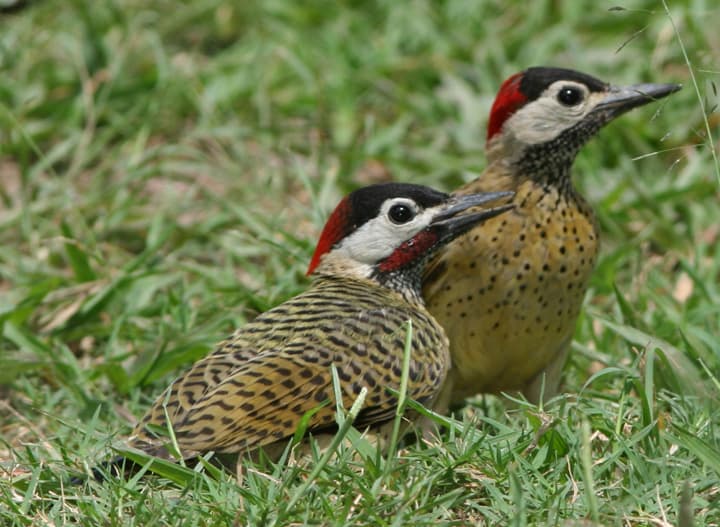
Spot-breasted woodpecker
The spot-breasted woodpecker (Colaptes punctigula) is a bird species found across much of mainland South America and Panama. It is characterized by its distinctive black and white spotted throat and is known for its varied vocalizations and adaptable habitat preferences, inhabiting humid lowland landscapes including forests, savannas, and plantations.
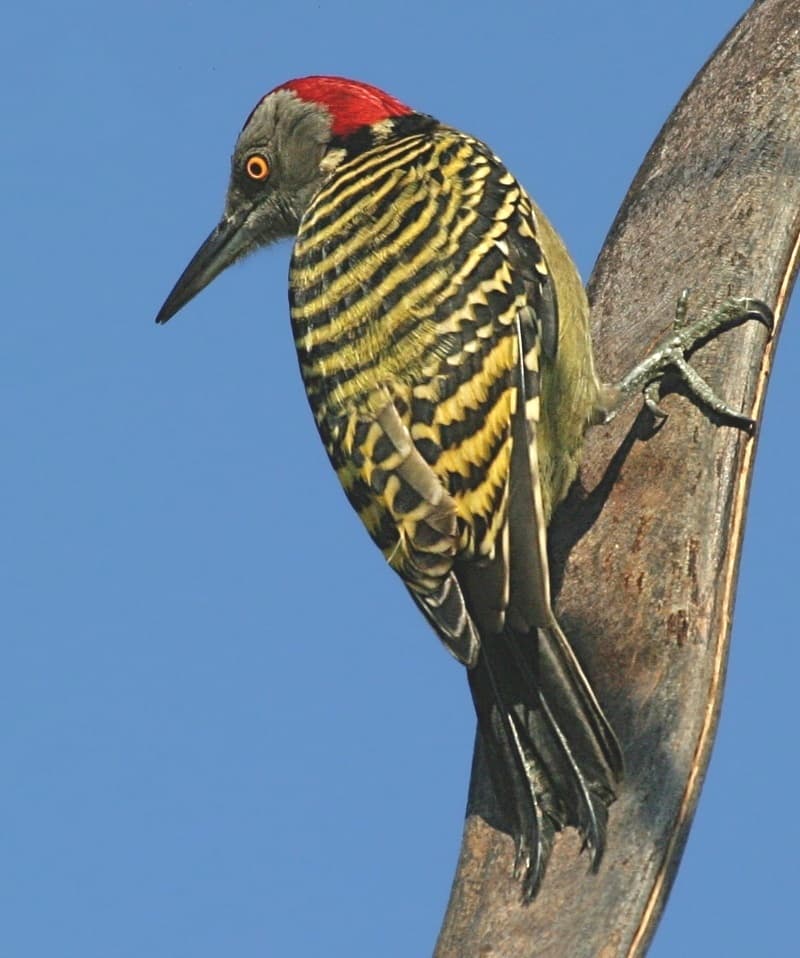
Hispaniolan woodpecker
The Hispaniolan woodpecker is a medium-sized, gold and black barred bird found exclusively on the island of Hispaniola. This species is known for its social behavior and distinctive vocalizations, inhabiting a variety of forest types, plantations, and even urban parks across both Haiti and the Dominican Republic.
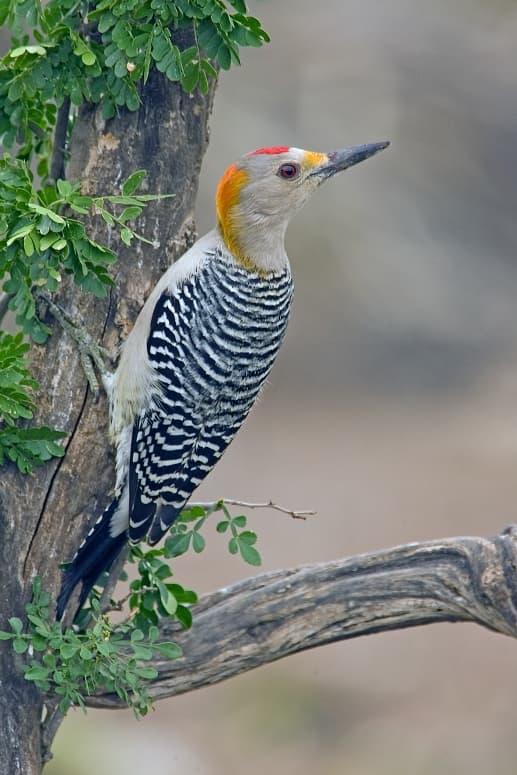
Golden-fronted woodpecker
The golden-fronted woodpecker is a species found in the southern United States, Mexico, and parts of Central America. It is characterized by its barred black and white upperparts, gray underparts, and distinctive head markings, with males having a red crown and golden nape, while females have a grayish crown. This adaptable bird inhabits a variety of landscapes, including mesquite brushlands, riparian woodlands, and urban areas.