
Grey-breasted woodpecker
The grey-breasted woodpecker is a species endemic to the interior of southwestern Mexico. It inhabits subtropical or tropical lowland forests and high-altitude shrublands, often roosting communally on cacti. This bird is characterized by its greyish plumage, a pale red cheek patch, and a short black line over the eye.
Key Facts
- ›Endemic to the interior of southwestern Mexico.
- ›Inhabits subtropical/tropical lowland forests and high-altitude shrublands.
- ›Roosts communally on cacti.
- ›Feeds on cactus fruit, insects like cicadas and termites, and occasionally flies.
- ›Fledglings have darker necks and breasts and a noticeably darker red crown patch than adults.
- ›Classified as a species of least concern for extinction.
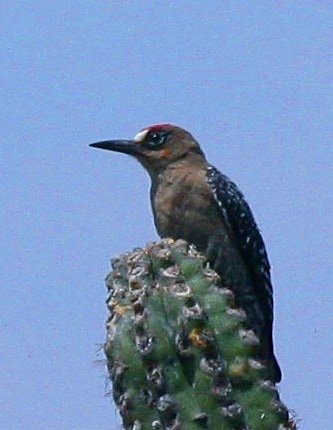
Mexico
- Pale red on cheek
- Short black line over eye
- Darker and grayer below and on head compared to Gila woodpecker
- Red crown patch
Cactus Fruit, Insects, Flies
Work Together To Scan For Food, Forage Amiably Without Outward Aggression
Cacti
Loud and Aggressive Rattle, 'Chuck' Sound By Females, 'Yak' Sound With Heavy Inflection
About Grey-breasted woodpecker
The grey-breasted woodpecker (Melanerpes hypopolius) is a species of bird belonging to the family Picidae. It is found exclusively in the interior of southwestern Mexico, inhabiting areas within Guerrero, Morelos, and Puebla. Its natural environments include subtropical or tropical moist lowland forests and high-altitude shrublands.
Description and Behavior
This woodpecker is similar in appearance to the Gila woodpecker, but it is distinguished by its paler red cheek and a much darker, grayer underside and head. Males possess a round red crown patch. A notable behavioral trait is their communal roosting habits, particularly on cacti. They forage for food, including cactus fruit and various insects such as cicadas and termites, often working together in a peaceful manner.
Young and Vocalizations
Fledglings of the grey-breasted woodpecker exhibit some differences from adults, including darker necks and breasts and a significantly darker red crown patch. Unlike some other species in their genus, they do not typically beg for attention or food from parents when not hidden. Recorded vocalizations include a loud rattle, a 'chuck' sound made by females near nests, and a 'yak' sound with a heavy inflection.
Conservation Status
The population of the grey-breasted woodpecker is estimated to be slightly less than 50,000 individuals within its native range. Based on current population figures, it is classified as a species of least concern for extinction.
Source: Wikipedia ↗
Frequently Asked Questions
What is the scientific name of the grey-breasted woodpecker?
The scientific name of the grey-breasted woodpecker is Melanerpes hypopolius. This binomial nomenclature is used to classify the species within the scientific community.
Where can the grey-breasted woodpecker be found?
This species is found in the interior of southwestern Mexico, specifically in areas such as Guerrero, Morelos, and Puebla. Its natural habitats include subtropical and tropical lowland forests and high-altitude shrublands.
What does the grey-breasted woodpecker eat?
Their diet primarily consists of cactus fruit, but they also forage for various insects like cicadas and termites. They have been observed catching flies on occasion as well.
How do grey-breasted woodpecker fledglings differ from adults?
Fledglings have plumage that differs from adults, featuring darker necks and breasts. Their red crown patch is also significantly darker than that of adult birds, making it easily noticeable.
What are some distinctive vocalizations of the grey-breasted woodpecker?
Recorded vocalizations include a loud and aggressive-sounding rattle. Females have been observed making a 'chuck' sound when observers approach nests, and a 'yak' sound with a heavy inflection has also been noted.
Related Woodpecker species
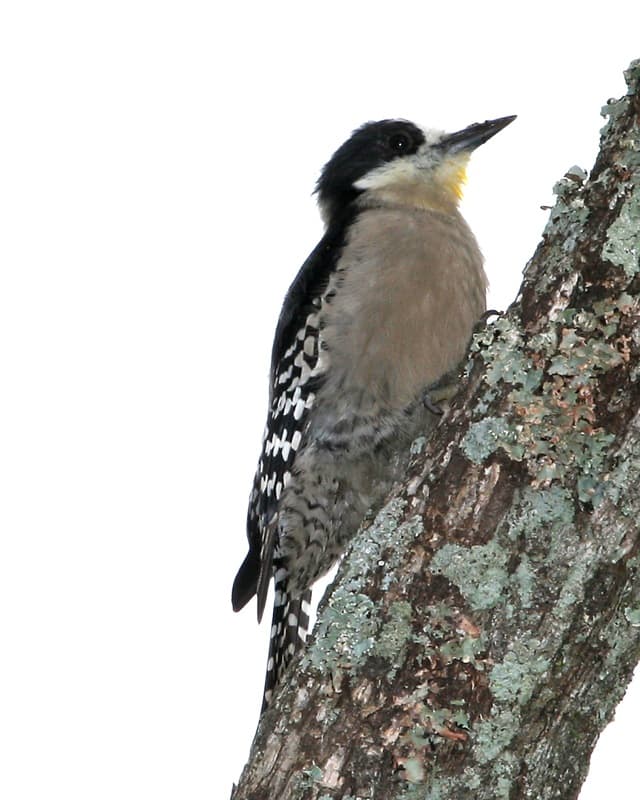
White-fronted woodpecker
The white-fronted woodpecker (Melanerpes cactorum) is a South American bird found in dry forests, shrublands, and savannahs. This species is characterized by its glossy black upperparts with a distinctive white line down the back, and white cheeks and throat, typically measuring around 17 cm in length.

Golden-naped woodpecker
The golden-naped woodpecker is a bird species found in Costa Rica and western Panama, inhabiting subtropical or tropical moist lowland forests and degraded former forest areas. It is closely related to the beautiful woodpecker and is characterized by its yellow nape and distinctive markings on its crown, with males and females exhibiting slight differences. This species is currently listed as "least concern" by the IUCN.
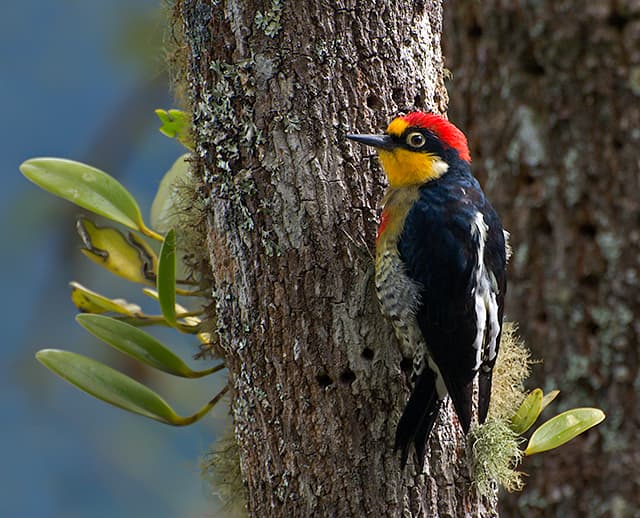
Yellow-fronted woodpecker
The yellow-fronted woodpecker is a colorful bird found in eastern South America, specifically in Brazil, Paraguay, and northeastern Argentina. It inhabits subtropical and tropical lowland forests, as well as degraded former forest areas. This species is characterized by its distinctive yellow fore-crown and throat, with males having a red crown and nape.