
Grey-headed woodpecker
The grey-headed woodpecker (Picus canus), also known as the grey-faced woodpecker, is a Eurasian species found across central and eastern Europe and large parts of the Palaearctic, extending to the Pacific Ocean. It prefers deciduous forests with dead trees and primarily feeds on ants. Despite its large distribution, its population is in decline in many areas.
Key Facts
- ›Prefers deciduous forests with a high proportion of dead trees.
- ›Primarily feeds on ants, but also consumes caterpillars, larvae, berries, and fruit.
- ›Nests are typically excavated into dead or severely damaged trees.
- ›Its territorial song is a melodic series of declining pitch utterances.
- ›Population numbers are declining in many areas, though its IUCN status is Least Concern due to its wide distribution.
- ›Can be distinguished from the European green woodpecker by its shorter neck, slimmer bill, and slightly rounder head.

Grey-Faced Woodpecker
Europe, Asia, Palaearctic
Deciduous Forest, Riparian Forest, Forest With Dead Trees
Grey Head, Red Forecrown, Black Line Across Lores, Narrow Black Moustache Stripe, Shorter Neck Than Green Woodpecker, Slimmer Bill Than Green Woodpecker, Slightly Rounder Head Than Green Woodpecker
Ants, Ant Larvae, Termites, Caterpillars, Beetle Larvae, Berries, Fruit
- Excavates into dead or damaged trees for nests
- Forages for ants and other insects
Dead Trees, Severely Damaged Trees
- Melodic territorial song of declining pitch
- Sharp 'kuek' sounds
- Sequence of 'kek' sounds
- Quieter, croaky, shorter territorial song from females
About Grey-headed woodpecker
The grey-headed woodpecker, scientifically known as Picus canus and sometimes called the grey-faced woodpecker, is a widespread Eurasian species belonging to the woodpecker family, Picidae. It shares its European range with the European green woodpecker and the Iberian green woodpecker, with which it is closely related. Its distribution extends significantly across central and eastern Europe and throughout much of the central and eastern Palaearctic, reaching as far as the Pacific Ocean and south to the Himalayas and the Malay Peninsula.
Habitat and Diet
This species exhibits a preference for deciduous forests that contain a substantial amount of dead trees, making it more habitat-specific than the European green woodpecker. Its diet is predominantly composed of ants, although it is not as exclusively dependent on them as the green woodpecker. Other food sources include termites, caterpillars, various beetle larvae, spiders, and in autumn and winter, it incorporates significant amounts of berries and other fruits into its diet. The grey-headed woodpecker's foraging strategy places it between highly specialized ant-eaters and more generalist woodpeckers.
Physical Description and Behavior
Adult grey-headed woodpeckers measure between 25–26 cm in length with a wingspan of 38–40 cm, weighing approximately 125 grams. Males of the nominate subspecies feature a grey head with a distinctive red forecrown, a black line across the lores, and a narrow black moustache stripe. Their upperparts are green, and their underparts are pale grey. Females lack the red forecrown but have fine black streaks on their crown. They possess a shorter neck, a slimmer bill, and a slightly rounder head compared to the European green woodpecker. Their territorial song is a melodic series of utterances with a declining pitch, often described as sounding melancholic. They also produce sharp 'kuek' calls, which can serve as predator warnings, and aggressive 'kek' sequences. Drumming activity is varied, and they are known to use well-resonating sites, including man-made structures like metal masts, for drumming.
Reproduction and Conservation
Grey-headed woodpeckers typically nest in cavities excavated into dead or severely damaged trees. The breeding season occurs in May, with clutches usually containing five to ten eggs. Both parents incubate the eggs and care for the young, which hatch after 15–17 days and fledge in 24–25 days. While many populations, particularly in northwestern Europe, have experienced declines, the species is listed as Least Concern by the IUCN. This status is largely attributed to its extensive distribution. The primary threat to the species is habitat destruction, specifically the loss of undisturbed, ancient forests and riparian forests essential for breeding.
Source: Wikipedia ↗
Frequently Asked Questions
What is the scientific name for the grey-headed woodpecker?
The scientific name for the grey-headed woodpecker is Picus canus. This binomial name was formally described by Johann Friedrich Gmelin in 1788, with 'canus' being the Latin word for 'grey'.
What is the typical size of a grey-headed woodpecker?
The grey-headed woodpecker measures approximately 25–26 cm (9.8–10.2 inches) in length, with a wingspan of 38–40 cm (15–16 inches). They weigh around 125 grams (4.4 oz), making them roughly the size of a Eurasian collared dove.
What does the grey-headed woodpecker eat?
The primary diet of the grey-headed woodpecker consists of ants and their immatures, making up a large portion of their food, especially in spring and summer. They also supplement their diet with caterpillars, beetle larvae, berries, and other fruits during autumn and winter.
Where can grey-headed woodpeckers be found?
Grey-headed woodpeckers inhabit wide parts of central, northern, and eastern Europe, as well as a broad belt across Asia to the Pacific coast. Their range extends south to the Himalayas and the Malay Peninsula.
What are the nesting habits of the grey-headed woodpecker?
Grey-headed woodpeckers excavate their nests into dead or severely damaged trees. They typically breed in May, with both parents involved in raising the young.
What is the conservation status of the grey-headed woodpecker?
The grey-headed woodpecker is listed as Least Concern by the IUCN. This rating is primarily due to its large distribution, despite population declines observed in many areas, particularly at the northwestern edges of its range.
Related Woodpecker species
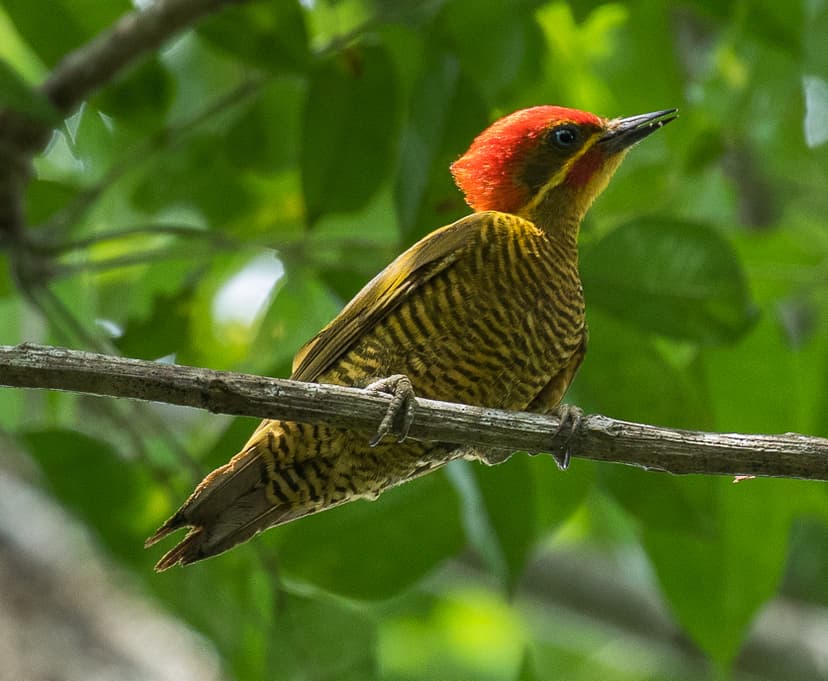
Golden-green woodpecker
The golden-green woodpecker is a South American bird found in a variety of wooded habitats across the continent. Characterized by its size and distinctive head markings that vary between sexes and subspecies, it primarily feeds on ants and termites. This species is generally considered to be of Least Concern, despite a suspected decreasing population trend.

Guayaquil woodpecker
The Guayaquil woodpecker is a large woodpecker species found in southwestern Colombia, Ecuador, and northwestern Peru. It is characterized by its black and buff barred upperparts, prominent white neck stripes, and in adult males, a striking red head. This species primarily inhabits dry to humid deciduous forests and mature secondary forests.
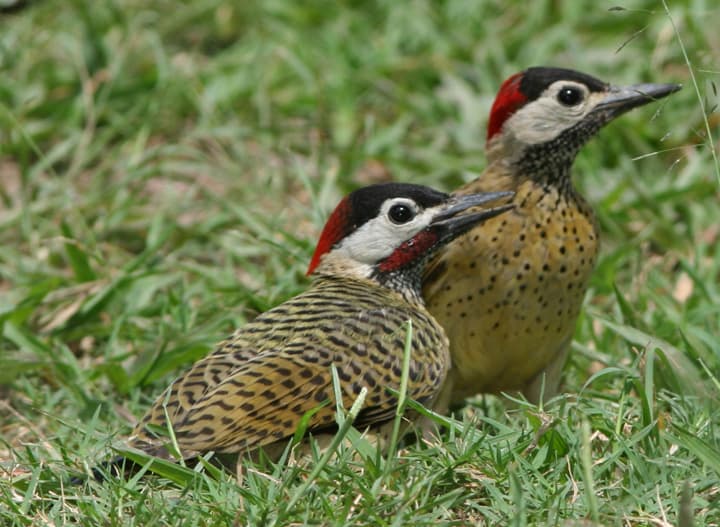
Spot-breasted woodpecker
The spot-breasted woodpecker (Colaptes punctigula) is a bird species found across much of mainland South America and Panama. It is characterized by its distinctive black and white spotted throat and is known for its varied vocalizations and adaptable habitat preferences, inhabiting humid lowland landscapes including forests, savannas, and plantations.