
Red-crowned woodpecker
The red-crowned woodpecker is a bird species found across Central and South America, including Costa Rica, Panama, Colombia, Venezuela, Guyana, Suriname, and Tobago. It is characterized by its distinctive red crown in males and a varied plumage pattern including black and white barring on its back and wings. This species inhabits a wide range of environments, from mature forests to plantations and gardens.
Key Facts
- ›Found in Costa Rica, Panama, Colombia, Venezuela, Guyana, Suriname, and Tobago.
- ›Males have a bright red crown, while females have a paler crown.
- ›Diet consists of fruits, berries, insects, spiders, and nectar.
- ›Forages in the middle and lower strata of its habitat.
- ›Nests are excavated in tree trunks, branches, or cacti, typically between 3 and 23 meters high.
- ›Classified as Least Concern by the IUCN with a stable population.

Red-Crowned Woodpecker
Central America, South America, Caribbean
Mature Deciduous Forests, Secondary Forests, Coastal Scrublands, Mangroves, Plantations, Gardens
Bright Red Crown, Pale Crown, Black and White Barred Back and Wings, Reddish To Orange-Red Belly Patch
Fruits, Berries, Insects, Spiders, Nectar
Probing, Gleaning, Hammering, Reaching For Fruit
Tree Trunks, Tree Branches, Cacti, Fence Posts
- Wavering and protracted calls with an abrupt terminal note
- 'WíCka, WíCka' in display
- Chattering calls
- Drumming during breeding season
- Soft tapping near nest hole
About Red-crowned woodpecker
The red-crowned woodpecker (Melanerpes rubricapillus) is a species of bird belonging to the woodpecker family, Picidae. Its range extends across a significant portion of Central and South America, including countries such as Costa Rica, Panama, Colombia, Venezuela, Guyana, Suriname, and the island of Tobago.
Description and Identification
The species measures between 16 to 18.5 cm in length and weighs 40 to 65 grams. A key distinguishing feature is the plumage difference between sexes. Adult males are characterized by a bright red crown, while females possess a paler crown. Both sexes share a pale yellow to whitish forehead, alongside grayish-buff cheeks, chin, and throat. Their upperparts, including the mantle and back, are marked with alternating black and white bars, contrasting with an unbarred white rump. The flight feathers are black with white barring, and the tail is black with white bars on the central and outermost feathers. The underparts are typically buffish-gray to gray-buff, often with an olive or yellowish wash, and a distinct reddish to orange-red patch on the central belly. Lower flanks and undertail coverts are black-barred. Their bills are longish and blackish, iris color ranges from red to brown, the bare skin around the eye is gray-brown, and their legs are gray. Juveniles are generally duller and browner than adults, with paler nape and hindneck coloration, less contrasting upperpart bars, and often lightly streaked underparts.
Four subspecies are recognized: M. r. rubricapillus, M. r. subfusculus, M. r. seductus, and M. r. paraguanae. These subspecies exhibit subtle variations in size, underpart coloration, and forehead and nape hues.
Distribution and Habitat
The red-crowned woodpecker is a year-round resident throughout its extensive range. It occupies a wide variety of habitats, encompassing both wet and dry landscapes. These include the interiors, clearings, and edges of mature deciduous forests, as well as secondary forests, coastal scrublands, mangroves, plantations, and gardens. The species is found at elevations ranging from sea level up to approximately 1,700 meters, occasionally reaching as high as 1,900 meters in Venezuela.
Behavior and Ecology
Feeding Habits
The diet of the red-crowned woodpecker is diverse, with fruits and berries forming a significant component, including cultivated varieties like papayas and bananas. Insects and spiders also constitute a substantial part of their food intake, though they consume fewer larvae of wood-boring beetles compared to many other woodpecker species. They are also known to feed on nectar from flowers. Foraging occurs at all levels of the habitat, but they show a preference for the middle and lower strata. They are typically observed alone or in pairs. Their feeding techniques involve probing, gleaning, and hammering for insects, and reaching for fruits, which they pierce or peck open if too large to swallow whole. They are known to visit feeders and can be considered a local nuisance in plantations and gardens due to their fruit-eating habits.
Breeding
The breeding season for the red-crowned woodpecker varies regionally, occurring from February to July in Costa Rica and Panama, May to June in Colombia, May to November in Venezuela, and March to July in Tobago. Pairs often stay together year-round and may raise two broods annually. Both sexes participate in excavating the nest hole, typically located in a large tree trunk or branch, or a large cactus. Fence posts are also utilized. Nests are usually situated between 3 and 23 meters above the ground. A clutch typically consists of three or four eggs, but usually, only two young fledge. Incubation lasts for 10 days, with both parents sharing the duty. Nestlings are cared for by both parents for 31 to 33 days until fledging, and the fledglings continue to receive parental care for at least another month.
Vocalizations
The typical call of the red-crowned woodpecker is described as wavering and protracted, often ending with an abrupt note, such as 'churr, churr, krr-r-r-r'. During display, they emit a 'wícka, wícka' sound, and they also produce chattering calls. Both sexes drum during the breeding season and tap more softly near their nest holes.
Conservation Status
The International Union for Conservation of Nature (IUCN) has assessed the red-crowned woodpecker as Least Concern. The species possesses a large geographic range and an estimated population of at least half a million mature individuals, which is believed to be stable. No immediate threats have been identified, and the species is considered common in most of its range, even abundant in Costa Rica and Panama. It is also present in several protected areas. It is noted that forest clearance, which creates more open woodland, may even benefit this species, leading to increased numbers in such areas.
Source: Wikipedia ↗
Frequently Asked Questions
What is the scientific name of the red-crowned woodpecker?
The scientific name of the red-crowned woodpecker is Melanerpes rubricapillus. It belongs to the subfamily Picinae within the woodpecker family, Picidae.
What are the distinguishing features of the red-crowned woodpecker?
Adult males are identifiable by their bright red crown, while females have a paler crown. Both sexes feature a black and white barred back and wings, with a reddish to orange-red patch on the central belly. Their bill is longish and blackish, and their iris is red to brown.
What is the habitat of the red-crowned woodpecker?
This species inhabits a diverse array of landscapes, including mature deciduous forests, secondary forests, coastal scrublands, mangroves, plantations, and gardens. They are found from sea level up to elevations of 1,900 meters in Venezuela.
What does the red-crowned woodpecker eat?
Their diet is varied, including a significant amount of fruits and berries, such as papayas and bananas. They also consume various insects and spiders, and supplement their diet with nectar from flowers.
How does the red-crowned woodpecker nest?
Both male and female red-crowned woodpeckers excavate nest holes, usually in large tree trunks or branches, or in large cacti. Fence posts are also utilized as nesting sites. Nests are typically situated between 3 and 23 meters above the ground.
What is the conservation status of the red-crowned woodpecker?
The red-crowned woodpecker is listed as Least Concern by the IUCN. Its large range and stable population of at least half a million mature individuals indicate no immediate conservation threats.
Related Woodpecker species
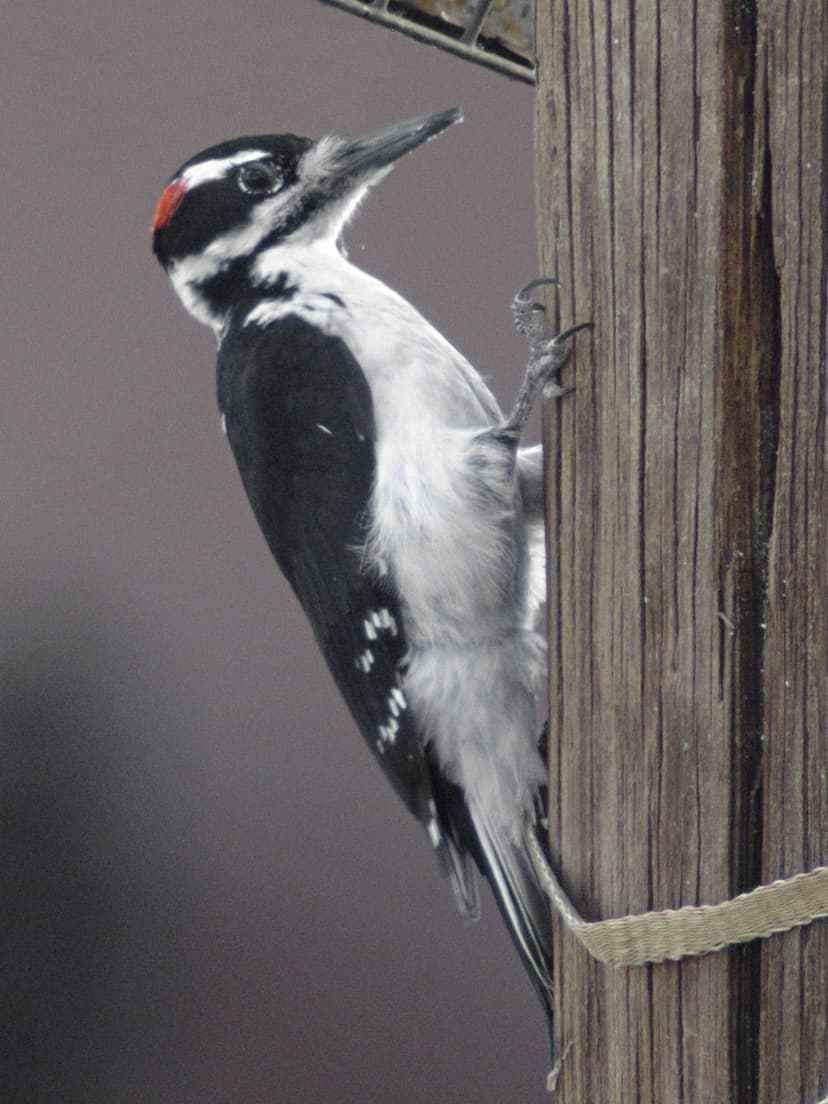
Hairy woodpecker
The Hairy Woodpecker is a medium-sized woodpecker found across a vast range in North America. It is characterized by its black and white plumage, with males distinguished by red patches on the back of their heads. These birds primarily inhabit mature deciduous forests and are known for their insectivorous diet.
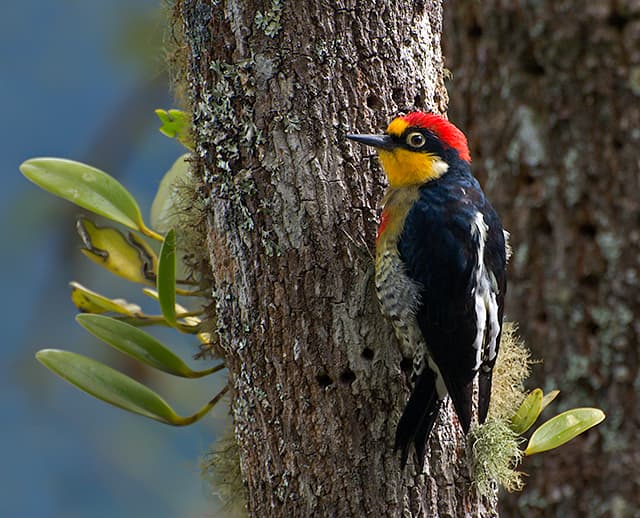
Yellow-fronted woodpecker
The yellow-fronted woodpecker is a colorful bird found in eastern South America, specifically in Brazil, Paraguay, and northeastern Argentina. It inhabits subtropical and tropical lowland forests, as well as degraded former forest areas. This species is characterized by its distinctive yellow fore-crown and throat, with males having a red crown and nape.

Golden-naped woodpecker
The golden-naped woodpecker is a bird species found in Costa Rica and western Panama, inhabiting subtropical or tropical moist lowland forests and degraded former forest areas. It is closely related to the beautiful woodpecker and is characterized by its yellow nape and distinctive markings on its crown, with males and females exhibiting slight differences. This species is currently listed as "least concern" by the IUCN.