
Jamaican woodpecker
The Jamaican woodpecker is a striking bird endemic to Jamaica, distinguishable by its black and white barred plumage and red accents. This species inhabits a wide array of wooded environments across the island, from sea level to high mountains. Its diet is a mix of insects and fruits, and it is a year-round resident known for its distinctive calls and drumming.
Key Facts
- ›Endemic to the island nation of Jamaica.
- ›Diet consists of approximately 50% insects and 50% fruits.
- ›Breeding season generally spans from December to August, with potential for multiple broods.
- ›Nests are excavated in dead branches, trunks, or utility poles.
- ›Assessed by the IUCN as Least Concern.
- ›Considered very common throughout Jamaica despite a believed decreasing population trend.

Jamaica
Lower Montane Rainforest, Wet and Misty Forests, Mangroves, Wooded Pastures, Citrus Plantations, Coconut Plantations, Gardens, Mesophytic Secondary Forest
Red from forecrown to hindneck, Gray crown with red on hindcrown and hindneck, Whitish to buff forehead, Black and white barred upperparts, Black flight feathers with narrow white bars, Yellowish lores, White cheeks, chin, and throat, Red iris, Bare gray to brown skin around the eye
Insects, Fruits, Snails, Lizards
Forages Near the Forest Crown, Hunts Lower and In the Canopy, Forages On Trees, Forages In Bromeliads, Snatching Fruit, Probing, Pecking, Gleaning, Hawking For Insects
Dead Branch, Dead Trunk, Utility Pole
- Loud 'Kaaa', Sometimes Repeated
- Single 'Kao' Calls In Mild Alarm
- 'Wee-Cha Weecha' In Intraspecific Encounters
- 'Krirr, Krirr' and 'Whirr-Whirr' During Breeding Season
- Loud Drumming
- Soft Tapping Near the Nest Hole
About Jamaican woodpecker
The Jamaican woodpecker (Melanerpes radiolatus) is a distinctive bird species found exclusively on the island of Jamaica. It belongs to the woodpecker family, Picidae, and is recognized for its striking plumage and its vital role within the island's wooded ecosystems.
Description and Identification
The Jamaican woodpecker measures approximately 24 to 26 cm in length and weighs between 92 and 131 grams. Adult males and females share similar plumage, with the primary differences appearing on the head. Males display a red crown extending from the forecrown to the hindneck, while females have a gray crown with red restricted to the hindcrown and hindneck. Both sexes have a whitish to buff forehead. Their upperparts are predominantly black with fine white barring, which can sometimes have a greenish hue. The flight feathers are black with narrow white bars, and the tail is black with white barring and spots. The lores are yellowish, and the cheeks, chin, and throat are white. The underparts are generally olive-gray to olive-buff, with yellow or reddish coloration on the central belly, and black with white bars on the lower flanks and undertail coverts. Their bill is long and black, their iris is red, and the bare skin around the eye is gray to brown, with slaty black legs.
Distribution and Habitat
This species is endemic to Jamaica, inhabiting a wide variety of wooded environments across the island. Its preferred habitats include lower montane rainforests, wet and misty forests, mangroves, wooded pastures, citrus and coconut plantations, and gardens. It reaches its highest population densities in mesophytic secondary forests and can be found from sea level to the island's highest mountain elevations.
Behavior and Ecology
The Jamaican woodpecker is a year-round resident and does not undertake seasonal migrations. Its diet is remarkably balanced, consisting of roughly half animal matter and half vegetable matter. Animal prey mainly comprises various insects, but also includes snails and occasional lizards. Vegetable food primarily consists of fruits, particularly those from Cecropia and Ficus species. Foraging typically occurs near the forest crown, though they will also hunt lower in the canopy. They forage on trees, often in bromeliads, and are less likely to hunt on large trunks. Food is collected through snatching fruits and by probing, pecking, gleaning, and hawking for insects.
Breeding and Vocalizations
The breeding season generally spans from December to August, though nesting can occur in any month. Pairs frequently produce two broods per year, and sometimes three. Male woodpeckers undertake most of the excavation of nest holes, which are typically located in dead branches, dead trunks, or utility poles, usually between 5 and 15 meters above the ground. The clutch size ranges from three to five eggs, and both sexes participate in incubation. The incubation period lasts for 13 days, with fledging occurring approximately one month after hatching. Both parents continue to provision the young for up to a month after they have fledged.
The Jamaican woodpecker has a characteristic vocal repertoire. Its most common call is a loud 'kaaa', sometimes repeated. Other vocalizations include single 'kao' calls emitted in mild alarm, 'wee-cha weecha' sounds during interactions with other individuals of the same species, and 'krirr, krirr' and more intimate 'whirr-whirr' calls during the breeding season. Both sexes also engage in loud drumming and softer tapping near the nest hole.
Conservation Status
The International Union for Conservation of Nature (IUCN) has assessed the Jamaican woodpecker as Least Concern. Despite possessing a very large range, its population size is not precisely known and is believed to be decreasing. Currently, no immediate threats have been identified. The species is considered very common throughout Jamaica. However, concerns exist regarding the enforcement of protective laws for forest areas.
Source: Wikipedia ↗
Frequently Asked Questions
What does the Jamaican woodpecker eat?
The Jamaican woodpecker's diet is balanced between animal and vegetable matter. It primarily consumes insects and fruits, with a particular fondness for those from Cecropia and Ficus trees.
Where does the Jamaican woodpecker live?
This species is found exclusively on the island of Jamaica. It inhabits various wooded areas, including rainforests, mangroves, plantations, and gardens, from sea level up to the highest mountains.
When is the breeding season for the Jamaican woodpecker?
The breeding season typically occurs between December and August, although nesting can happen in any month. Pairs are known to raise two or even three broods in a single year.
What are the nesting habits of the Jamaican woodpecker?
Nests are excavated by the male in dead branches, trunks, or utility poles, usually between 5 to 15 meters above the ground. Both parents share incubation and provisioning of the young.
What is the conservation status of the Jamaican woodpecker?
The Jamaican woodpecker is listed as Least Concern by the IUCN. While its population size is unknown and believed to be decreasing, no immediate threats have been identified.
What sounds does the Jamaican woodpecker make?
Its most common vocalization is a loud 'kaaa', sometimes repeated. Other calls include single 'kao' sounds in alarm, 'wee-cha weecha' during intraspecific encounters, and 'krirr, krirr' or 'whirr-whirr' during the breeding season. Both sexes also drum.
Related Woodpecker species

Black-cheeked woodpecker
The black-cheeked woodpecker is a medium-sized woodpecker found from Mexico south to Ecuador. It is characterized by its distinctive black "cheeks" extending from the eye down the neck, with males and females differing in head plumage. This species inhabits a variety of forest types and clearings, feeding on arthropods, fruits, and nectar.
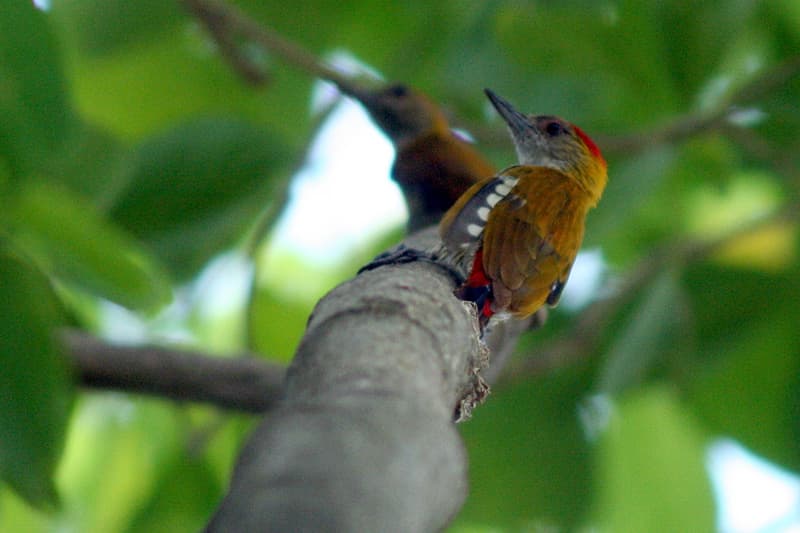
Red-rumped woodpecker
The red-rumped woodpecker is a bird species found in Central and South America, ranging from Costa Rica to Peru and Brazil. It is characterized by its olive-brown plumage with a crimson-red rump and uppertail coverts. This species inhabits a variety of forest types and savannas, and its diet primarily consists of insects.
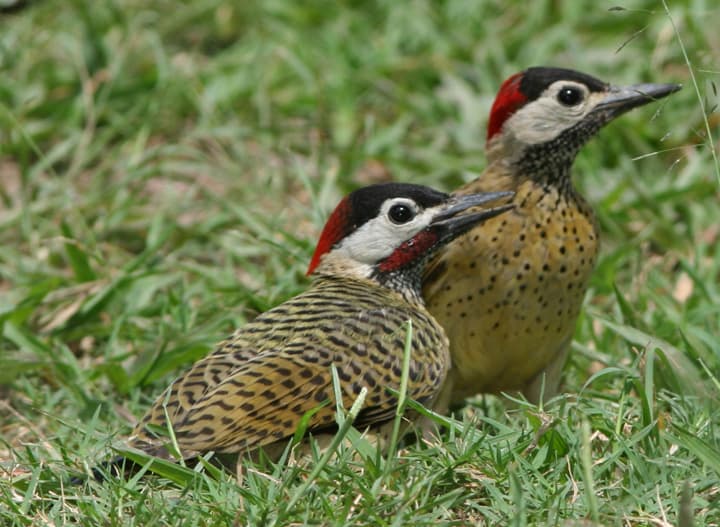
Spot-breasted woodpecker
The spot-breasted woodpecker (Colaptes punctigula) is a bird species found across much of mainland South America and Panama. It is characterized by its distinctive black and white spotted throat and is known for its varied vocalizations and adaptable habitat preferences, inhabiting humid lowland landscapes including forests, savannas, and plantations.