
Ochre-backed woodpecker
The ochre-backed woodpecker is a species found exclusively in Brazil, inhabiting humid forests, savannas, and orchards. Adults are characterized by their buffy to ochre heads and crests, with variable black markings on cinnamon-buff upperparts, and sooty underparts. They are known for their arboreal ant diet and distinctive calls.
Key Facts
- ›Endemic to Brazil.
- ›Diet primarily consists of ants and termites, supplemented by fruits and berries.
- ›Forages in pairs or small groups from the MID-level to canopy, and occasionally on the ground.
- ›Breeds between April and June, excavating nest cavities in trees or arboreal ant nests.
- ›Assessed as Least Concern by the IUCN, though its population is believed to be decreasing.
- ›Considered a poorly known species requiring further field study.

Ochre-Backed Woodpecker
Brazil
Ochre, Cinnamon-Buff, Orange-Ochre, Black, Sooty, Red
Long pointed crest, Dull red malar area and cheek, Streaky black malar, Black markings on upperparts varying in shape, Wide cinnamon-buff bars on flight feathers
Arboreal Ants, Carpenter Ants, Termites, Fruits, Berries
Gleaning, Probing, Pecking, Hammering, Forages At Middle Level To Canopy, Forages On the Ground, Feeds In Pairs Or Small Groups
Excavated Nest Cavity In A Tree, Arboreal Ant Nest
Loud 'Tsew Tsew', 'Wee-Wee-Week', Series of 'Wheep' Notes, Raucous 'Wicka' Or 'WíCket WíCket', Weak Roll Evenly Paced Drum
About Ochre-backed woodpecker
The ochre-backed woodpecker (Celeus ochraceus) is a bird species endemic to Brazil, belonging to the woodpecker family Picidae. Previously considered a subspecies, it is now recognized as a distinct species, though it remains monotypic. This woodpecker is characterized by its size, measuring approximately 25 to 27 cm in length, and its distinctive plumage.
Description and Identification
Adult ochre-backed woodpeckers feature a buffy to cinnamon-tinged ochre head, which includes a prominent long, pointed crest. Their upperparts display cinnamon-buff to orange-ochre coloration adorned with black markings that can vary in shape. The flight feathers are predominantly black, with notable cinnamon-buff barring on the secondaries and barring and tips on the tertials. Their underparts are typically sooty, often edged with buff-cinnamon, and the rear flanks and undertail coverts show wide cinnamon to buff bars. Males are distinguished by a broad dull red malar area and cheek, while females exhibit a streaky black malar. The bill is horn-colored or bluish-gray to blackish with a paler mandible, the iris is red or red-brown, and the legs are blue-gray. Juveniles are duller versions of the adults with more brownish-black on their heads.
Distribution and Habitat
The ochre-backed woodpecker has a disjunct distribution within Brazil. One population resides along the southern edge of the Amazon River, extending from western Pará to the Atlantic coast. Another population is found further south, ranging from eastern Maranhão down to Espírito Santo and westward into Goiás. The species inhabits the interior and edges of humid forests, as well as gallery forests, savannas, caatinga, and orchards.
Behavior and Ecology
This species is a year-round resident throughout its range. Its diet primarily consists of arboreal ants, carpenter ants, and termites, with fruits and berries also forming a significant part of its intake. Foraging typically occurs from the middle strata of the forest up to the canopy, though they also forage on the ground. They capture insects using methods such as gleaning, probing, pecking, and hammering. Ochre-backed woodpeckers are usually observed feeding in pairs or small groups.
Breeding and Vocalizations
The breeding season for the ochre-backed woodpecker spans from April to June. They excavate nest cavities in trees or within arboreal ant nests. Little else is documented regarding their breeding biology. Their vocalizations include a loud "tsew tsew," a "wee-wee-week," a series of "wheep" notes, and a "raucous 'wicka' or 'wícket wícket.'" Their drumming is described as a weak, evenly paced roll repeated at varying intervals.
Conservation Status
The International Union for Conservation of Nature (IUCN) has assessed the ochre-backed woodpecker as Least Concern. Despite possessing a large geographic range, its population size is not precisely known and is believed to be decreasing. No immediate threats have been identified, but the species is considered poorly known, with a need for further field studies and surveys.
Source: Wikipedia ↗
Frequently Asked Questions
What does the ochre-backed woodpecker eat?
The ochre-backed woodpecker's diet is primarily composed of arboreal ants, carpenter ants, and termites. They also consume lesser but significant amounts of fruits and berries.
Where does the ochre-backed woodpecker live?
This species is endemic to Brazil, with populations found along the south side of the Amazon River and further south from eastern Maranhão to Espírito Santo and Goiás. They inhabit humid forests, savannas, caatinga, and orchards.
What are the distinctive features of the ochre-backed woodpecker?
Adults have a buffy to cinnamon-tinged ochre head and a long pointed crest. Their upperparts are cinnamon-buff to orange-ochre with black markings, and their underparts are sooty with buff-cinnamon feather edges. Males have a red malar area, while females have a streaky black malar.
When does the ochre-backed woodpecker breed?
The breeding season for the ochre-backed woodpecker occurs between April and June. They excavate their nest cavities in trees or arboreal ant nests.
What is the conservation status of the ochre-backed woodpecker?
The ochre-backed woodpecker is listed as Least Concern by the IUCN. Despite a large range, its population size is unknown and believed to be declining, with no immediate threats identified.
What sounds does the ochre-backed woodpecker make?
Its vocalizations include a loud 'tsew tsew,' a 'wee-wee-week,' a series of 'wheep' notes, and a 'raucous 'wicka' or 'wícket wícket'.' The species also produces a weak drum roll.
Related Woodpecker species

Blond-crested woodpecker
The Blond-crested Woodpecker is a striking bird found in the forests, savannas, and orchards of Argentina, Brazil, and Paraguay. This species is characterized by its pale creamy buff to yellowish white head and long, pointed crest, contrasting with its black mantle and underparts. It primarily feeds on ants and termites, often foraging in pairs or small groups.
Little woodpecker
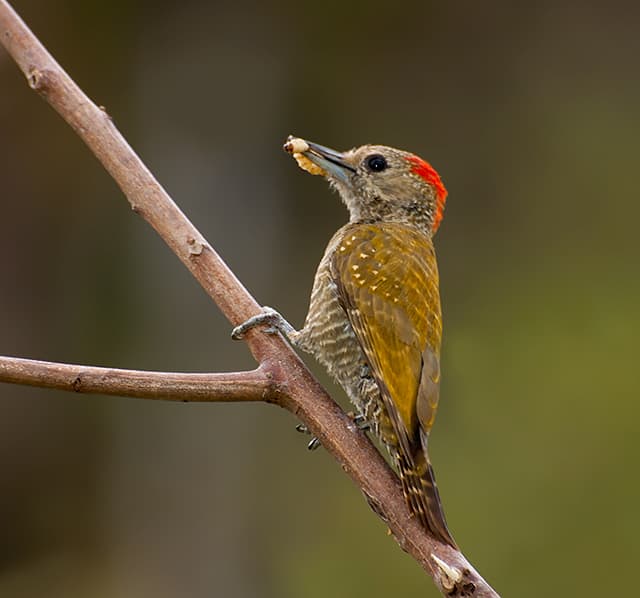
The little woodpecker (Veniliornis passerinus) is a small South American bird found in a wide variety of wooded habitats, generally avoiding dense forest interiors. Males and females share similar plumage, with males displaying red on their heads. This adaptable species is widespread across the continent and is currently listed as Least Concern.
Cream-backed woodpecker
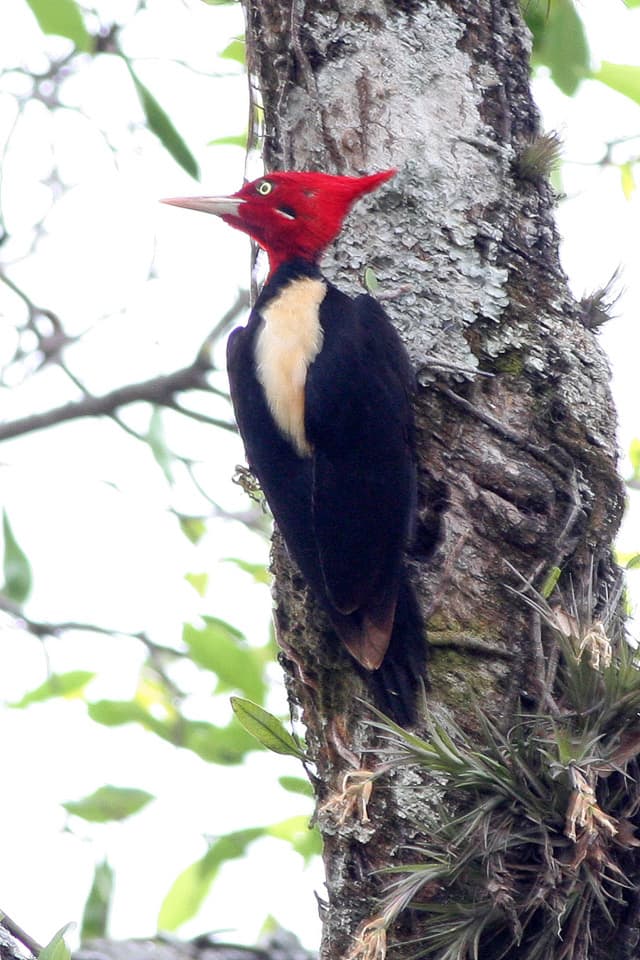
The cream-backed woodpecker is a striking bird found in the open landscapes of South America, including Argentina, Bolivia, Brazil, Paraguay, and Uruguay. Characterized by its mostly black body and a distinctive creamy band across its face, it primarily feeds on beetle larvae. This species is also known for its unique vocalizations and its habit of excavating nest holes in trees and palms.