
Ochre-collared piculet
The ochre-collared piculet is a small woodpecker species found in Argentina, Brazil, and Paraguay. It is characterized by its cinnamon-buff collar and has a black cap with red tips (in males) and white spots. This species primarily inhabits lowland rainforests, secondary growth, and thickets.
Key Facts
- ›Found in southeastern Brazil, eastern Paraguay, and northeastern Argentina.
- ›Measures between 9 to 10 cm in length and weighs 10 to 12.5 g.
- ›Adult males have a black cap with red forehead tips and small white spots.
- ›Adult females lack the red markings on the forehead.
- ›Diet includes ants and insect larvae, foraged on thin branches.
- ›Assessed by the IUCN as Least Concern, with a large range but unknown population size and trend.
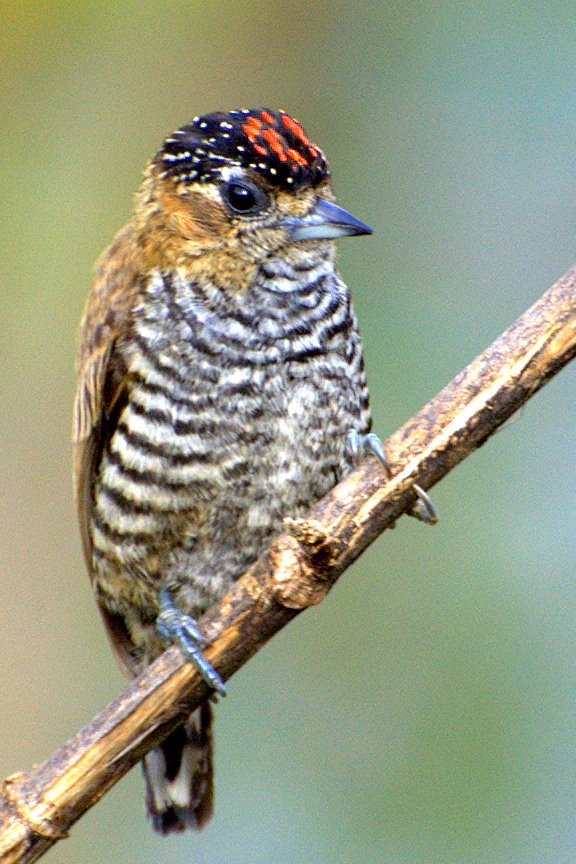
Ochre-Collared Piculet
Argentina, Brazil, Paraguay
Lowland Rainforest, Bamboo Thickets, Secondary Growth, Thickets, Tall Scrub, Parks, Gardens
- Cinnamon-buff collar on hindneck
- Black cap with red tips on forehead feathers and white spots
- White stripe behind the eye
- Paler bars on upperparts
- White markings on tail feathers
Ants, Insect Larvae
Forages On Thin Branches, Typically Forages Low In the Forest
Holes In Trees
High-Pitched Whistle, 'Tsirrrr, Si-Si-Si...', Dry, Toneless Trill 'Trrrrrruh'
About Ochre-collared piculet
The ochre-collared piculet, scientifically known as Picumnus temminckii, is a small bird belonging to the woodpecker family, Picidae. This species is found in the southeastern regions of Brazil, extending through eastern Paraguay, and into northeastern Argentina's Misiones Province. It is characterized by a distinctive cinnamon-buff collar on its hindneck, which gives the species its common name.
Physical Description and Identification
Adult ochre-collared piculets measure between 9 to 10 cm in length and weigh between 10 to 12.5 grams. Males possess a black cap adorned with red-tipped forehead feathers and small white spots, while females lack these red markings. Both sexes feature a buff-brown face with a white stripe behind the eye. Their upperparts are generally brown, sometimes showing faint paler bars, and their underparts are whitish with buffing on the flanks and lower belly. The iris is brown, the bill is black with a grayish base, and the legs are grayish.
Habitat and Distribution
The ochre-collared piculet primarily inhabits lowland rainforests, often featuring dense undergrowth with bamboos, vines, and tangled vegetation. They are also adaptable, being found in secondary growth areas, thickets, tall scrub, and even in more developed settings like parks and gardens. Their altitudinal range extends from sea level up to 800 meters (2,600 feet).
Behavior and Ecology
This species is considered a year-round resident throughout its known range. Its diet, though not extensively studied, is known to include ants and insect larvae, which it forages for on thin branches, typically at low heights within the forest. The breeding season appears to encompass at least the months of October through December. Observations have noted nests as holes in trees, with males observed attending them. Vocalizations include a high-pitched whistle described as 'tsirrrr, si-si-si...' and a dry, toneless trill, 'trrrrrruh'.
Conservation Status
The ochre-collared piculet is currently listed as Least Concern by the IUCN. While its population size and specific trends are not well documented, the species benefits from a very large geographic range. No immediate threats have been identified, and it is known to occur within several national parks, indicating a degree of protection and local commonality.
Source: Wikipedia ↗
Frequently Asked Questions
What is the scientific name of the ochre-collared piculet?
The scientific name of the ochre-collared piculet is Picumnus temminckii. It belongs to the subfamily Picumninae within the woodpecker family Picidae.
Where can the ochre-collared piculet be found?
The ochre-collared piculet is distributed across southeastern Brazil, eastern Paraguay, and northeastern Argentina, specifically in Misiones Province.
What are the main physical characteristics of the ochre-collared piculet?
This piculet is small, measuring 9 to 10 cm long. Adult males are distinguished by a black cap with red-tipped forehead feathers and white spots, while females lack the red on the forehead. Both sexes share a distinctive cinnamon-buff collar on their hindneck.
What does the ochre-collared piculet eat?
While its diet is not extensively studied, the ochre-collared piculet is known to consume ants and insect larvae. It forages for these food sources on thin branches, typically at lower forest levels.
What is the conservation status of the ochre-collared piculet?
The International Union for Conservation of Nature (IUCN) has assessed the ochre-collared piculet as Least Concern. Although its population size and trend are not precisely known, it possesses a very large geographic range and faces no identified immediate threats.
Related Woodpecker species
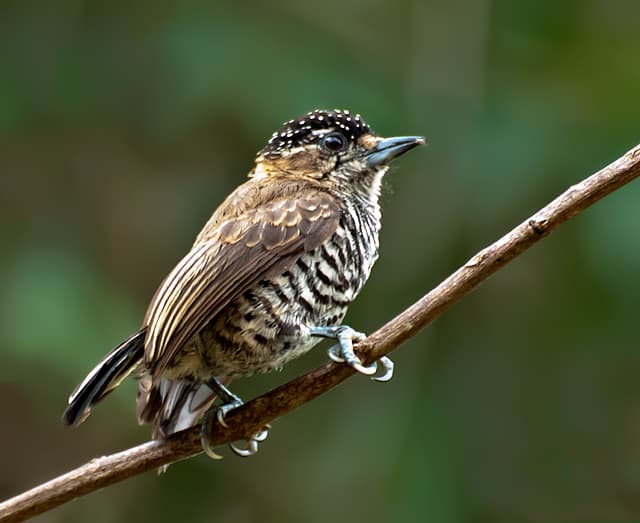
White-barred piculet
The White-barred Piculet is a small bird found across various South American countries, including Argentina, Brazil, and Paraguay. This species is characterized by its distinctive barring on its underparts and a black cap with white spots in males. It inhabits a range of woodland and forest edge environments, feeding primarily on insects and ant larvae.
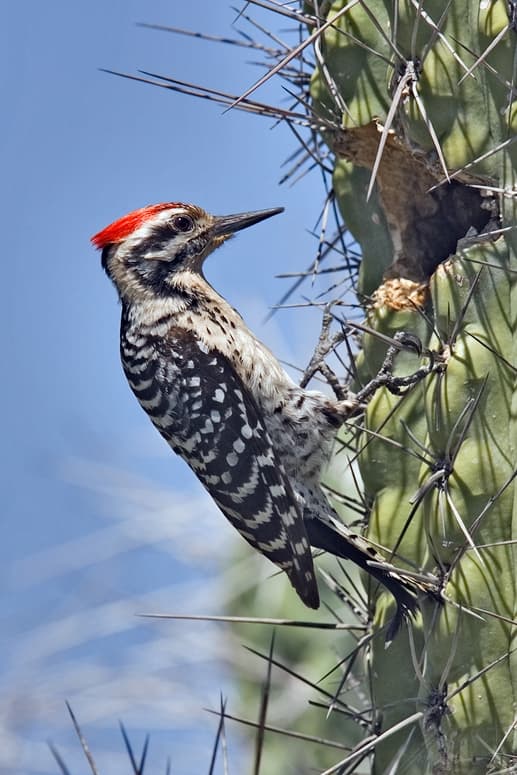
Ladder-backed woodpecker
The ladder-backed woodpecker is a small North American bird recognized by its black and white barred plumage, resembling ladder rungs on its back. It inhabits dry, brushy areas and thickets across the southwestern United States, Mexico, and parts of Central America. This species is known for its unique nesting habits and a diet that includes insects and cactus fruit.
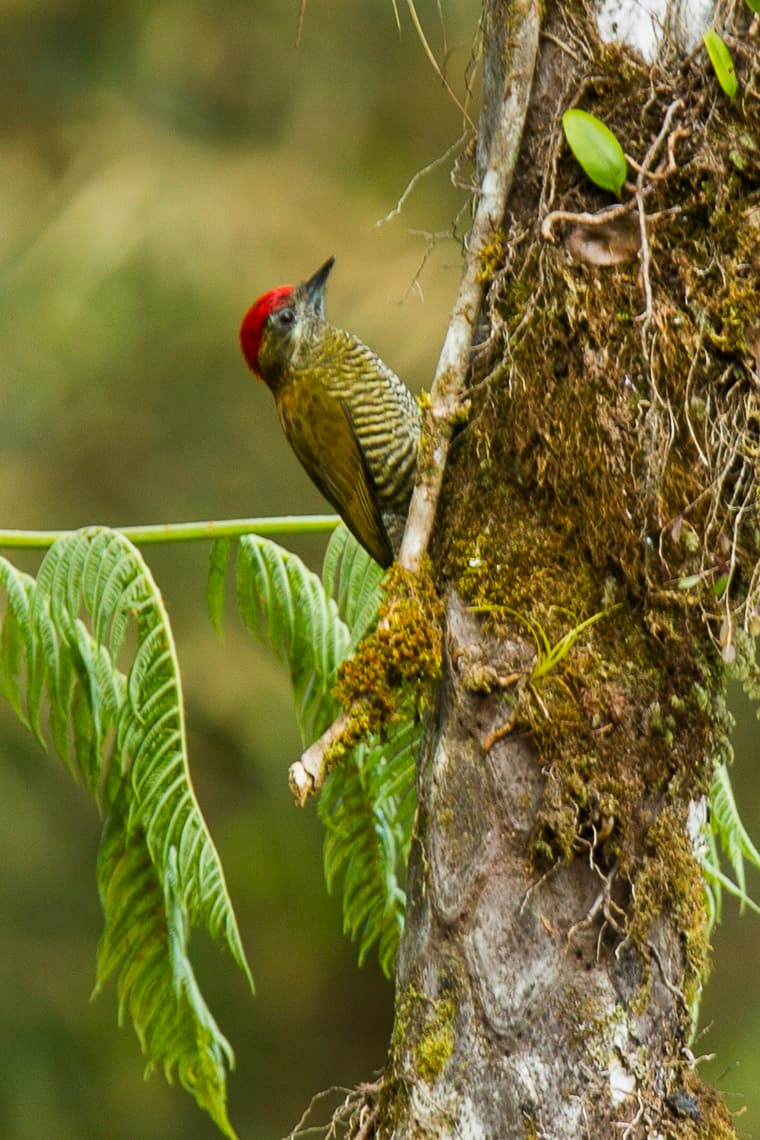
Bar-bellied woodpecker
The bar-bellied woodpecker (Veniliornis nigriceps) is a species of bird found in the montane forests of Bolivia, Colombia, Ecuador, and Peru. This species is characterized by its olive-brown plumage with distinctive dark olive bars on its underparts, and differences in head coloration between males and females. It inhabits humid to wet forests, often favoring areas with dense undergrowth and bamboo.