
Rusty-necked piculet
The rusty-necked piculet is a small woodpecker species, approximately 10 cm in length, inhabiting the seasonally flooded várzea forests along the Brazilian-Bolivian border, specifically the Rio Guaporé region. It is distinguished by the male's unique black crown with reddish-orange tips and the female's solid black crown, with both sexes exhibiting rusty buff to buff-brown on the sides and back of their neck and a pale stripe behind the eye.
Key Facts
- ›Approximately 10 cm (3.9 inches) in length.
- ›Found along the Rio Guaporé, the border between Bolivia and Brazil.
- ›Inhabits seasonally flooded Várzea forests.
- ›Adult males have a distinctive black crown with reddish-orange feather tips.
- ›Females have solid black crowns.
- ›Considered Least Concern by the IUCN, but has a limited range and an unknown, possibly decreasing, population.

Rusty-Necked Piculet
South America
VáRzea Forest, Seasonally Flooded Forest
- Male's black crown with reddish-orange feather tips
- Female's solid black crown
- Pale stripe behind the eye
- Rusty buff on sides and back of neck
About Rusty-necked piculet
The rusty-necked piculet (Picumnus fuscus) is a small bird belonging to the woodpecker family, Picidae, specifically within the subfamily Picumninae. This species is recognized for its limited geographic distribution, found exclusively along the Brazilian-Bolivian border. Its primary habitat consists of the seasonally flooded várzea forests adjacent to the Rio Guaporé, an important tributary of the Amazon River.
Physical Characteristics
Measuring approximately 10 cm (3.9 inches) in length, the rusty-necked piculet exhibits distinct sexual dimorphism in its plumage. Adult males are characterized by a unique head pattern, featuring a black crown adorned with wide, reddish-orange tips on the feathers of the hindcrown. In contrast, females possess a uniformly black crown. Both sexes share a buffish-brown face with a rufous tinge and a pale stripe extending behind the eye. The sides and back of their neck are a rusty buff to buff-brown color. Their upperparts are typically brown to brownish-green, with flight feathers being dark brown and secondaries and tertials featuring yellowish buff edges. The tail is dark brown, with the innermost pair of feathers having largely white inner webs and the outer pairs displaying a narrow white bar near their tips. The chin and throat feathers are buff-brown, sometimes with faint barring, and their underparts are mainly pale buffish, often with a cinnamon or rusty wash on the sides of the breast and flanks. Their iris is brown, the orbital ring grayish, the bill is black with a paler base, and their legs are grayish-brown.
Distribution and Ecology
The rusty-necked piculet is geographically restricted to the Rio Guaporé region, which serves as a natural border between Bolivia's Beni Department and Brazil's Mato Grosso state. It is a year-round resident within its known range. Despite its established presence, much remains unknown about its ecological behaviors. Specifically, there is no documented information regarding its foraging techniques or diet, nor are there any details available about its breeding biology. The vocalizations of the rusty-necked piculet have also not been described.
Conservation Status
Historically assessed as Near Threatened by the IUCN, the rusty-necked piculet was downlisted to Least Concern in 2012. However, this classification is tempered by the species' very limited range and an unknown population size that is believed to be in decline. The most significant immediate threat identified is the growing human settlement along the Rio Guaporé, which could impact its specialized habitat.
Source: Wikipedia ↗
Frequently Asked Questions
What does a rusty-necked piculet look like?
The rusty-necked piculet is about 10 cm long. Adult males have a unique head pattern with a black crown featuring reddish-orange tips on the hindcrown feathers, while females have solid black crowns. Both sexes have a buffish-brown face with a pale stripe behind the eye and rusty buff on the sides and back of their neck.
Where can I find a rusty-necked piculet?
This species is found along the Rio Guaporé, which forms the border between Bolivia's Beni Department and Brazil's Mato Grosso state. They inhabit the seasonally flooded várzea forests in this specific region.
What is the conservation status of the rusty-necked piculet?
The rusty-necked piculet is currently listed as Least Concern by the IUCN. However, it has a very limited geographic range and an unknown population size that is believed to be decreasing, with increased human settlement along the Rio Guaporé being an identified threat.
What do rusty-necked piculets eat?
Unfortunately, nothing is known about the specific foraging techniques or diet of the rusty-necked piculet. Research into their feeding habits has not yet been documented.
When do rusty-necked piculets breed?
There is no information available regarding the breeding biology of the rusty-necked piculet. Details about their nesting behaviors, clutch size, or breeding season are not recorded in available literature.
Related Woodpecker species

Mottled piculet
The mottled piculet is a small bird found in the Atlantic Forest and related habitats across southeastern Brazil, Uruguay, and northeastern Argentina. It is characterized by its olive-brown plumage with buff or rusty tinges, and males display a red patch on their forehead. This species primarily feeds on insect larvae found in dense vegetation.
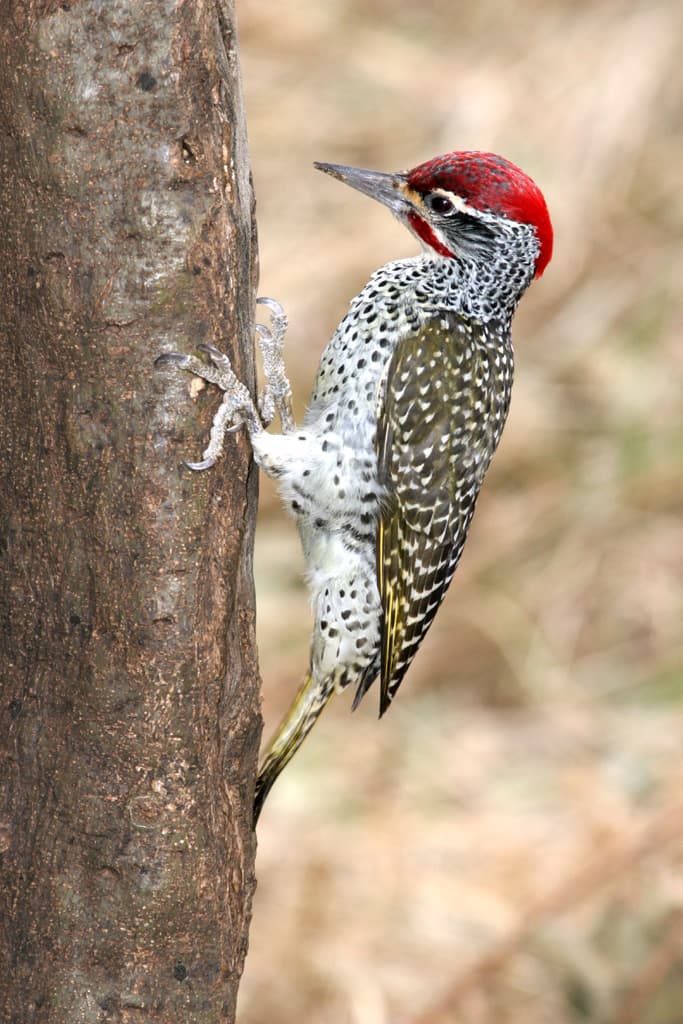
Nubian woodpecker
The Nubian woodpecker is a medium-sized bird found across Central and Eastern Africa, inhabiting open savannah woodlands and bushy areas. It is distinguished by its plumage, with males having a red crown and nape, while females have a black crown speckled with white. This species is common and its population is considered stable.
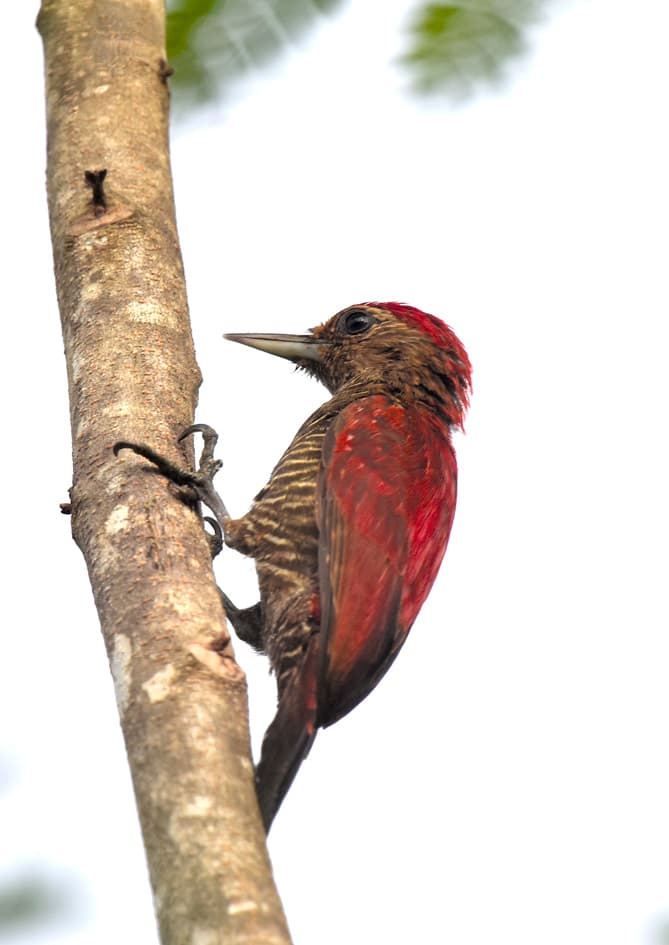
Blood-colored woodpecker
The blood-colored woodpecker is a small bird found in Guyana and Suriname, inhabiting coastal lowlands like mangroves and swamp forests. It is characterized by its crimson-red upperparts and distinctive head plumage, with males having a crimson crown and females a brown crown with white tips. This species is a year-round resident, known for its varied diet and unique nesting habits.