
Strickland's woodpecker
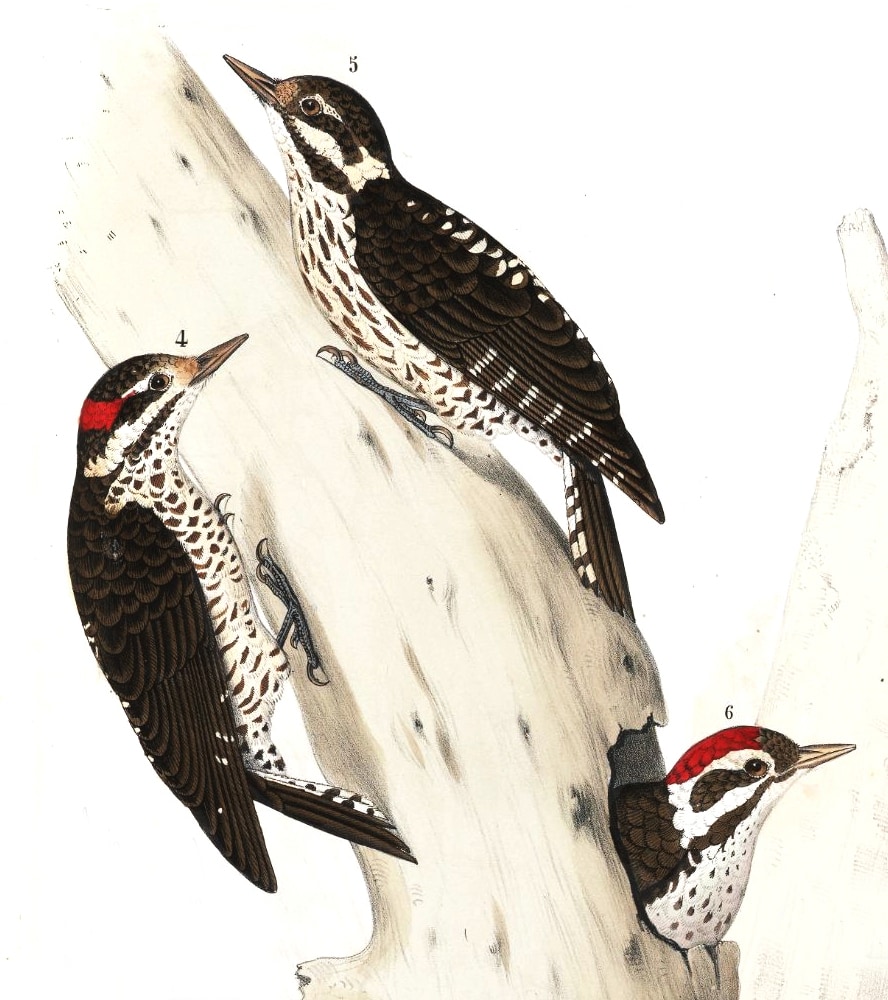
Strickland's woodpecker is a medium-sized bird endemic to Mexico, primarily found in pine forests and mixed pine-oak slopes. This shy species is characterized by its brown and white plumage, distinctive white wing bars, and facial stripes, with males possessing a red patch on their nape.
Key Facts
- ›Endemic to Mexico, found in pine and mixed pine-oak forests.
- ›Measures approximately 7 to 8 inches in length.
- ›Plumage is predominantly brown and white with speckled underparts.
- ›Males have a red patch on the nape, absent in females.
- ›Nests are excavated in dead tree trunks.
- ›Lays three to four white eggs on a bed of wood chips.
Mexico
Pine Forests, Mixed Pine-Oak Slopes
Three White Bars On Wings, Two White Stripes Across Face, Red Patch On Nape
Cavity excavated from a dead tree trunk
About Strickland's woodpecker
Strickland's woodpecker, scientifically known as Leuconotopicus stricklandi, is a medium-sized avian species endemic to Mexico. This shy bird typically inhabits pine forests and mixed pine-oak slopes at elevations ranging from approximately 4,500 to 7,000 feet.
Description and Identification
Adult Strickland's woodpeckers measure about 7 to 8 inches in length. Their plumage is predominantly brown on the upperparts, featuring a dark rump, and white on the underparts, which are speckled with numerous brown spots. A key identifying characteristic is the presence of three white bars on their wings. They also possess two white stripes across their face that merge with another white bar on their neck. A notable sexual dimorphism exists, with males displaying a distinctive red patch on the nape of their head, a feature absent in females.
Habitat and Range
The geographic range of Strickland's woodpecker is generally confined to a narrow east-west band across central Mexico, extending from the state of Michoacán eastward to Veracruz. Their preferred habitat consists of relatively quiet and secluded pine forests and the slopes of mixed pine-oak woodlands.
Nesting Behavior
This species excavates its nests within the cavities of dead tree trunks. The female typically lays a clutch of three to four white eggs, which are laid on a bed of wood chips. While the basic nesting structure and clutch size are known, specific details regarding nesting periods and duration are not widely documented.
Taxonomy
Alfred Malherbe first described Strickland's woodpecker in 1845, naming it in honor of the British scientist Hugh Edwin Strickland. Historically, the Arizona woodpecker was considered a subspecies of this bird, but it has since been recognized as a separate species. Some ornithological authorities, such as the American Ornithological Society, continue to classify Strickland's woodpecker within the genus Picoides.
Source: Wikipedia ↗
Frequently Asked Questions
What is the scientific name of Strickland's woodpecker?
The scientific name of Strickland's woodpecker is Leuconotopicus stricklandi. Some taxonomic authorities continue to place this species in the genus Picoides.
Where is Strickland's woodpecker found?
Strickland's woodpeckers are found in central Mexico, with a range extending from Michoacán to Veracruz. They inhabit pine forests and mixed pine-oak slopes at elevations between 4,500 and 7,000 feet.
What does Strickland's woodpecker look like?
This medium-sized woodpecker is mainly brown and white. It has brown upperparts, a dark rump, and white underparts speckled with brown spots. Distinctive features include three white bars on its wings and two white stripes on its face.
What is the difference between male and female Strickland's woodpeckers?
Male Strickland's woodpeckers can be distinguished by a red patch on the nape of their head, which is absent in females of the species.
How does Strickland's woodpecker nest?
Strickland's woodpeckers excavate their nests in cavities within dead tree trunks. The female lays three to four white eggs on a bed of wood chips within the nest cavity.
Related Woodpecker species
White-headed woodpecker
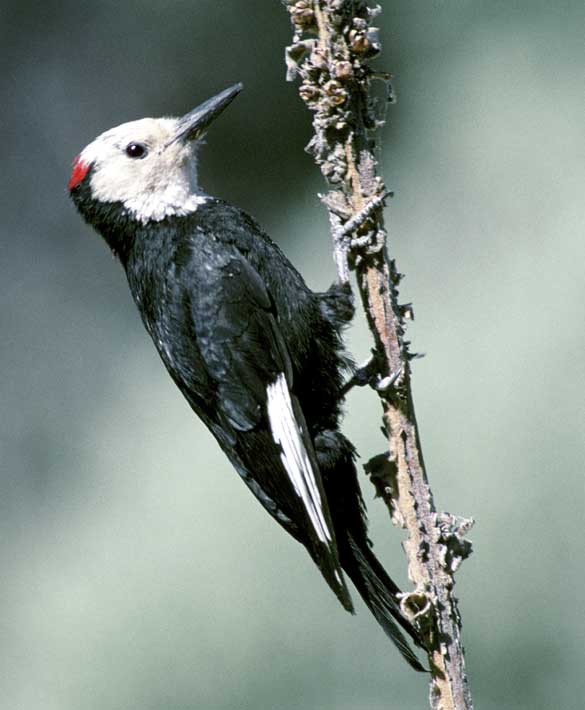
The White-headed Woodpecker is a non-migratory species found in the mountainous pine forests of western North America, ranging from British Columbia to southern California. It is distinguished by its entirely black body and striking white head, with males also featuring a red spot on the back of their heads.

Cuban green woodpecker
The Cuban green woodpecker (Xiphidiopicus percussus), also known as carpintero verde, is the only species in its genus and is a widespread and common woodpecker found exclusively in Cuba. This medium-sized, colorful bird inhabits various forests and woodlands, and is characterized by its olive-green upperparts, yellow streaked underparts, and a distinctive red breast patch.
Common flameback
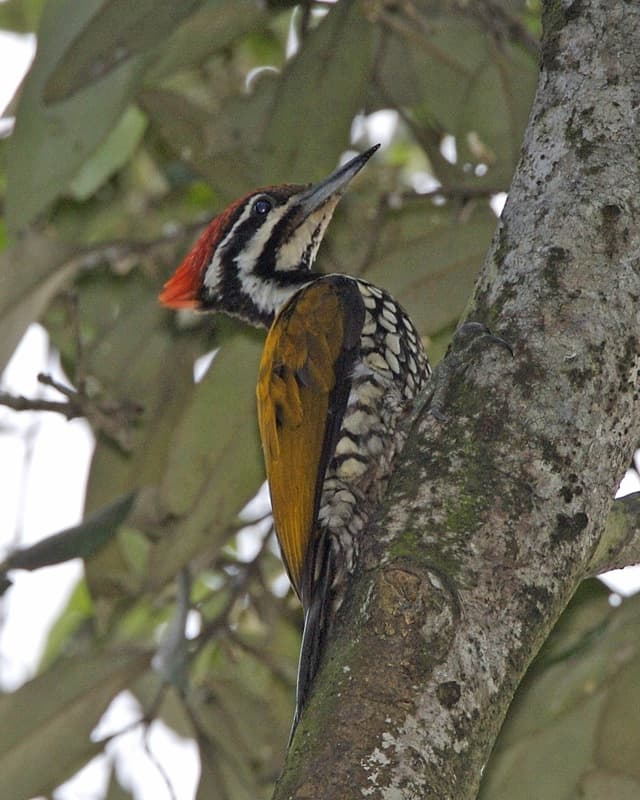
The common flameback, also known as the common goldenback, is a small woodpecker found across South and Southeast Asia. It is characterized by its spotted underside and, in males, a bright red crest, while females have a black crest with white streaks. This species inhabits a variety of environments, from open forests to mangroves, and is primarily an insectivore.