
White-headed woodpecker
The White-headed Woodpecker is a non-migratory species found in the mountainous pine forests of western North America, ranging from British Columbia to southern California. It is distinguished by its entirely black body and striking white head, with males also featuring a red spot on the back of their heads.
Key Facts
- ›Resides in pine forests of western North American mountains.
- ›Distinguished by a black body and a white head.
- ›Males possess a red spot on the back of their heads.
- ›Forms nests in dead trees or snags.
- ›Reproduces once per year.
- ›Found from British Columbia through southern California.
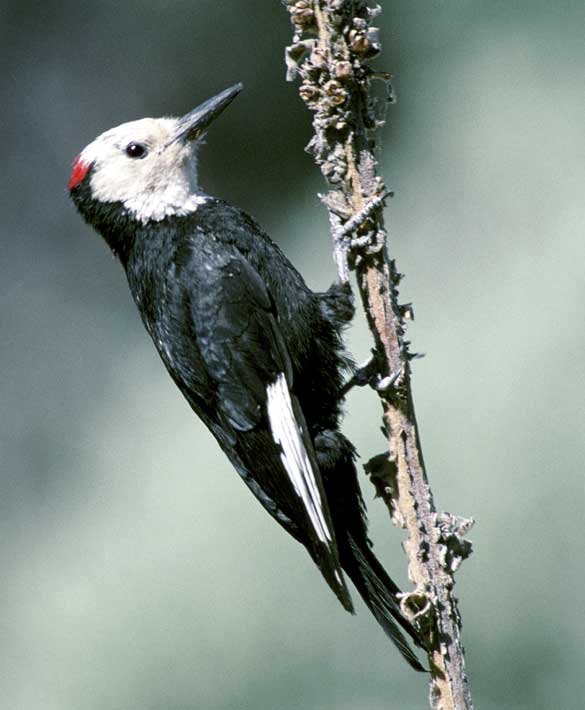
White-Headed Woodpecker
North America
Pine Forests, Mountainous Regions
White Head, Black Body, Red Spot On Back of Head, White Crescent In Flight
- Feeding on large, spiny cones of Coulter pines
Dead Trees, Snags
About White-headed woodpecker
The White-headed Woodpecker (Leuconotopicus albolarvatus) is a distinctive woodpecker species inhabiting the pine forests nestled within the mountains of western North America. Its range extends across a significant portion of this region, from British Columbia in the north down to southern California. This non-migratory bird is most easily identified by its striking contrast of a completely black body against a pure white head. Adding to its unique appearance, males of the species sport a small red patch at the back of their heads.
Distribution and Habitat
This species is found in mountainous areas, favoring pine forests as its primary habitat. They are known to construct their nests within dead trees or snags, utilizing these structures for reproduction. The White-headed Woodpecker reproduces once annually, ensuring the continuation of its populations within these specific ecological niches.
Taxonomy and Subspecies
The majority of the White-headed Woodpecker's range is occupied by the nominate subspecies. However, in the southern parts of its distribution, a distinct subspecies known as L. a. gravirostris is found. This southern variant is characterized by a longer bill, especially prominent in males, and a longer tail. These birds are specifically located on the mountaintops from the San Gabriel Mountains to San Diego County. Birds found on Mount Pinos exhibit intermediate characteristics. Genetic studies using mtDNA cytochrome b and ATP synthase subunit 6 sequences support this taxonomic arrangement, indicating that the Mount Pinos population is more closely related to L. a. gravirostris. The development of a larger bill in the southern subspecies is believed to be an evolutionary adaptation that allows them to more effectively feed on the large, spiny cones of the Coulter pine (Pinus coulteri).
Source: Wikipedia ↗
Frequently Asked Questions
What are the key physical characteristics of the White-headed Woodpecker?
The White-headed Woodpecker is approximately 20 cm (7.9 inches) long with an entirely black body and a distinctive white head. Males also have a red spot on the back of their head. In flight, their white primary feathers form a noticeable crescent.
Where is the White-headed Woodpecker found?
This species is found in the mountainous regions of western North America, with its range extending from British Columbia southward through California. They inhabit pine forests within these mountain ranges.
What is the habitat of the White-headed Woodpecker?
The White-headed Woodpecker primarily inhabits pine forests located in mountainous areas. They are known to create their nests in dead trees or snags within these forested environments.
Are there different subspecies of the White-headed Woodpecker?
Yes, the nominate subspecies occupies most of the range. A southern subspecies, L. a. gravirostris, found in mountains from southern California, is characterized by a longer bill, particularly in males, which is thought to be an adaptation for feeding on large pine cones.
How does the White-headed Woodpecker reproduce?
The White-headed Woodpecker reproduces once per year. They typically form their nests in dead trees or snags within their forest habitat.
Related Woodpecker species
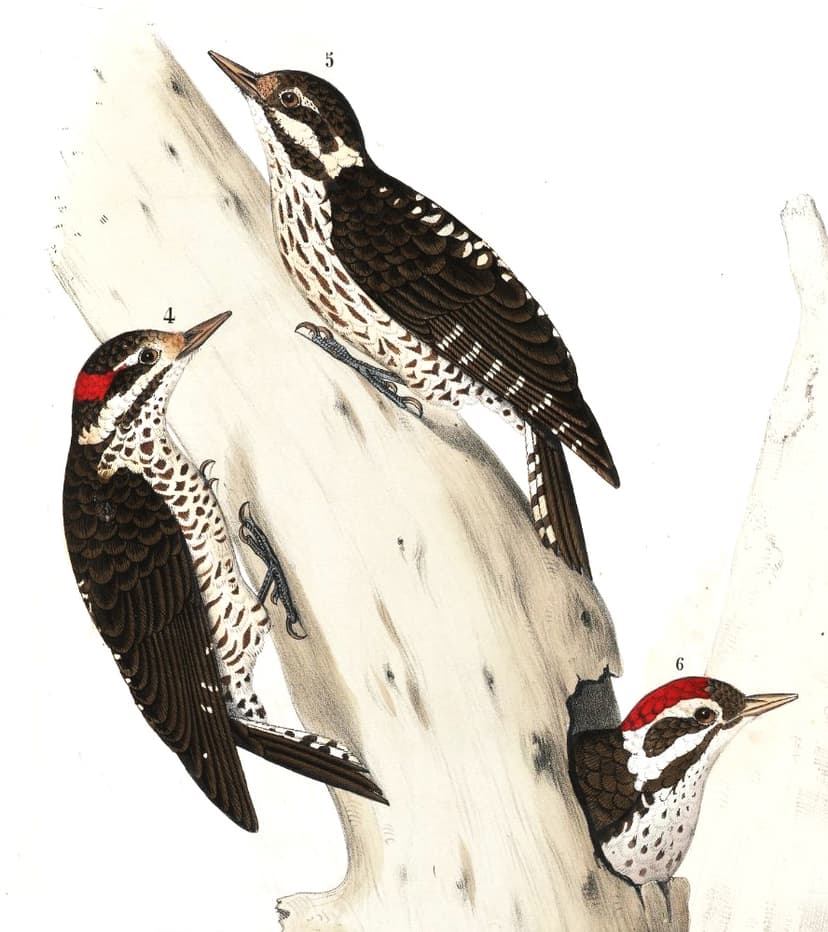
Strickland's woodpecker
Strickland's woodpecker is a medium-sized bird endemic to Mexico, primarily found in pine forests and mixed pine-oak slopes. This shy species is characterized by its brown and white plumage, distinctive white wing bars, and facial stripes, with males possessing a red patch on their nape.
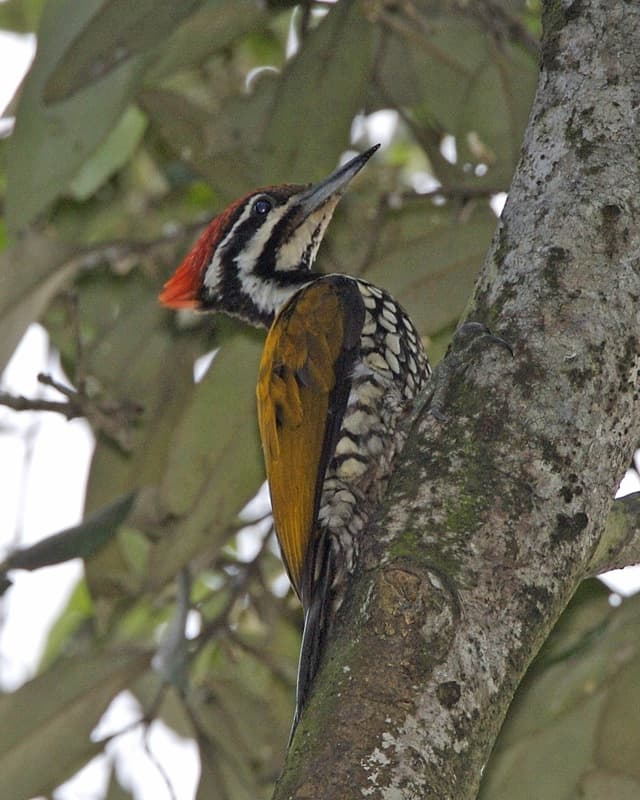
Common flameback
The common flameback, also known as the common goldenback, is a small woodpecker found across South and Southeast Asia. It is characterized by its spotted underside and, in males, a bright red crest, while females have a black crest with white streaks. This species inhabits a variety of environments, from open forests to mangroves, and is primarily an insectivore.

Cuban green woodpecker
The Cuban green woodpecker (Xiphidiopicus percussus), also known as carpintero verde, is the only species in its genus and is a widespread and common woodpecker found exclusively in Cuba. This medium-sized, colorful bird inhabits various forests and woodlands, and is characterized by its olive-green upperparts, yellow streaked underparts, and a distinctive red breast patch.