
Waved woodpecker
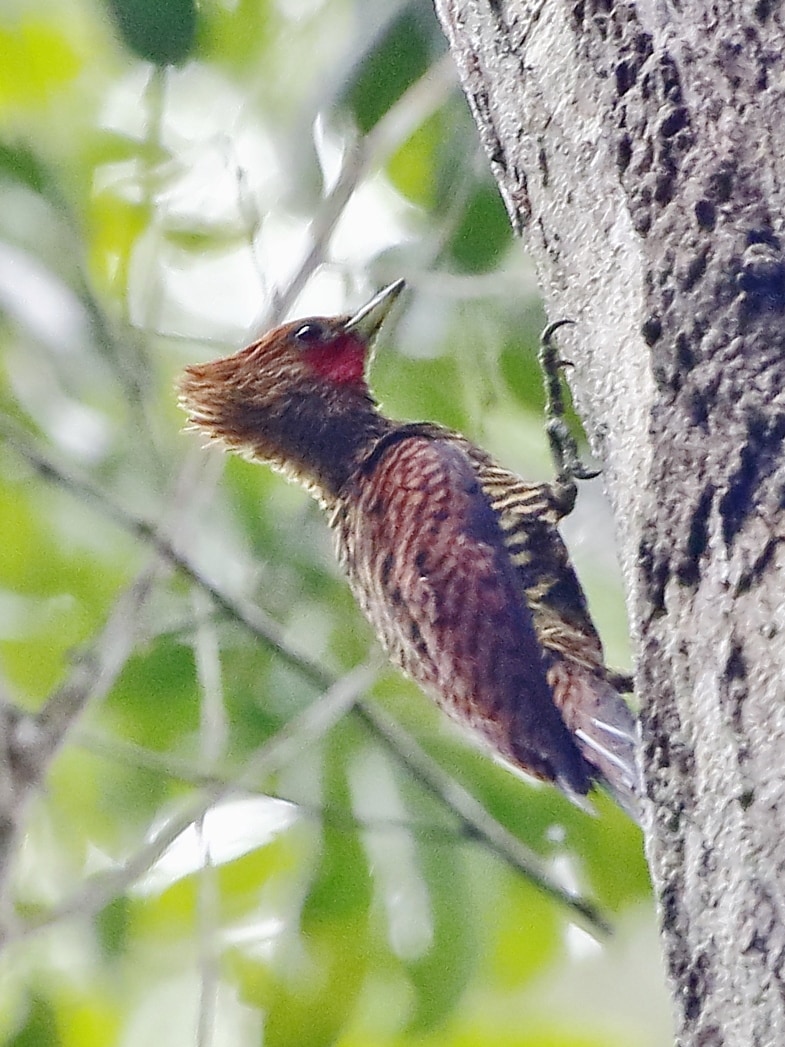
The Waved Woodpecker (Celeus undatus) is a species found across much of northern South America, inhabiting various wooded landscapes from rainforest edges to savannas. It is characterized by its rufous-chestnut plumage, often marked with wavy black bars, and a distinctive crest. Primarily feeding on ants and termites, this species excavates its nest cavities in trees.
Key Facts
- ›Found in Bolivia, Brazil, Colombia, Ecuador, French Guiana, Guyana, Peru, Suriname, and Venezuela.
- ›Primarily feeds on ants and termites, but also consumes sap, seeds, fruits, and berries.
- ›Inhabits a variety of wooded areas including rainforests, secondary forests, and savannas.
- ›Excavates nest cavities in living or dead trees, typically at considerable heights above the ground.
- ›Its population is believed to be decreasing due to habitat loss from deforestation.
- ›Assessed by the IUCN as 'Least Concern' despite population declines.
Variable Woodpecker, Red-Cheeked Wood-Pecker
South America
Rainforest, Secondary Forest, Treed Savanna, VáRzea Forest, Terra Firme Forest
Bushy Crest, Wavy Black Barring On Underparts, Red Band On Male's Head
Ants, Termites
Pecking, Probing, Gleaning, Forages on tree trunks, branches, and vines
Living Trees, Dead Trees
High, Nasal 'FuweéT-Eeuh', Soft, Whispered 'Kowahair', Rising In Pitch, Curry-Kuuu, Doit-Gua, Wuwee? Kuuu, FuweéT-Tjeeuh, Loud and Metallic 'Pring-Pring!' Notes
About Waved woodpecker
The Waved Woodpecker, scientifically known as Celeus undatus, is a bird species belonging to the woodpecker family, Picidae. This species is distributed across a wide area in northern South America, with confirmed sightings in countries including Bolivia, Brazil, Colombia, Ecuador, French Guiana, Guyana, Peru, Suriname, and Venezuela.
Description and Characteristics
Adult Waved Woodpeckers typically measure between 23 to 26 centimeters in length and weigh between 61 to 87 grams. A distinctive feature is their head, which is often a light chestnut-rufous with a noticeable crest, though this can vary in shade and may display black bars. Males possess a prominent red band extending from behind the bill to the ear coverts, a feature absent in females. Both sexes share a cinnamon-buff chin and throat marked with black spots or bars. Their upperparts are generally rufous-chestnut adorned with wide black bars, and the flight feathers are black with cinnamon-rufous barring. The underparts are rufous, with the breast featuring irregular wavy black bars and the belly displaying more regular patterns. The bill is short and typically dull yellow to yellow-green, the iris is red-brown to red, and the legs are green-gray.
Distribution and Habitat
The Waved Woodpecker inhabits a variety of wooded environments. Its preferred habitats include the interior and edges of rainforests, terra firme and várzea forests, as well as secondary forests and savannas that contain trees. While it is generally found at elevations between 100 and 900 meters, it can be observed locally at higher altitudes, up to 1,140 meters.
Behavior and Diet
This species is a year-round resident within its established range. Its diet primarily consists of ants and termites, which it obtains by pecking, probing, and gleaning from tree trunks, branches, and vines. The Waved Woodpecker also consumes sap, seeds, fruits, and berries, and may forage alone, in pairs, or join mixed-species feeding flocks.
Reproduction
The breeding season for the Waved Woodpecker varies geographically, occurring between late February and April in Venezuela, and from late May to August in the Guianas. They excavate their nest cavities in living or dead trees, typically at heights of 4 to 30 meters above the ground. Specific details regarding clutch size, incubation periods, and fledgling development are not well-documented.
Vocalizations
The vocalizations of the Waved Woodpecker are varied. The song of some subspecies has been described as a high, nasal 'fuweét-eeuh,' accompanied by a soft, whispered 'kowahair' that rises in pitch. Both sexes also engage in drumming. Other vocalizations have been rendered as 'curry-kuuu', 'doit-gua', 'wuwee? kuuu', and 'fuweét-tjeeuh', with some calls being loud and metallic.
Conservation Status
The International Union for Conservation of Nature (IUCN) has assessed the Waved Woodpecker as 'Least Concern.' Despite its large range, the species' population is believed to be declining due to habitat loss resulting from deforestation for agriculture and ranching. While uncommon and not extensively studied, it is known to occur in some protected areas.
Source: Wikipedia ↗
Frequently Asked Questions
What is the scientific name of the Waved Woodpecker?
The scientific name of the Waved Woodpecker is Celeus undatus. This binomial name was first established by Carl Linnaeus in 1766.
What are the main food sources for the Waved Woodpecker?
The primary diet of the Waved Woodpecker consists of ants and termites. They also supplement their diet with sap, seeds, fruits, and berries.
Where does the Waved Woodpecker typically build its nests?
Waved Woodpeckers excavate their nest cavities in living or dead trees. These nests are usually situated at heights ranging from 4 to 30 meters above the ground.
What is the conservation status of the Waved Woodpecker?
The Waved Woodpecker is currently assessed by the IUCN as 'Least Concern'. However, its population is believed to be decreasing due to ongoing habitat loss.
What kind of habitats does the Waved Woodpecker prefer?
This species inhabits a range of wooded environments. These include the interior and edges of rainforests, terra firme and várzea forests, secondary forests, and savannas with trees.
How large is the Waved Woodpecker?
The Waved Woodpecker typically measures between 23 to 26 centimeters in length and weighs between 61 to 87 grams.
Related Woodpecker species

Red-necked woodpecker
The red-necked woodpecker is a large bird found across much of mainland South America, primarily within the Amazon Basin. It is characterized by its striking red head and neck, black upperparts, and bright red underparts. This species inhabits various forest types and woodland areas, foraging on tree trunks for insect larvae and some fruit.
Golden-green woodpecker
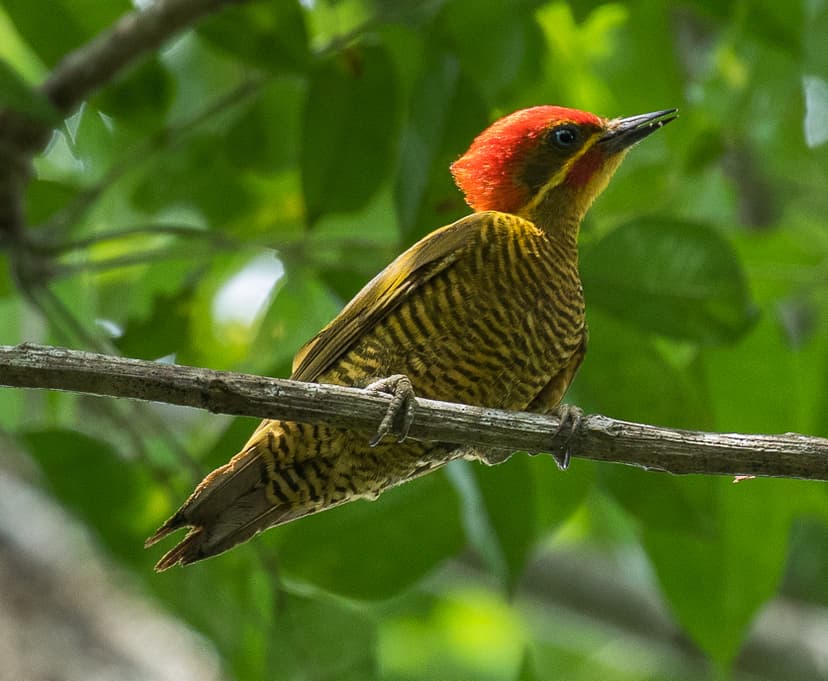
The golden-green woodpecker is a South American bird found in a variety of wooded habitats across the continent. Characterized by its size and distinctive head markings that vary between sexes and subspecies, it primarily feeds on ants and termites. This species is generally considered to be of Least Concern, despite a suspected decreasing population trend.

Cream-colored woodpecker
The cream-colored woodpecker is a South American bird species known for its predominantly yellowish plumage, long crest, and black tail. It inhabits various humid forest environments across much of mainland South America, excluding the southern cone. Primarily feeding on ants and termites, it plays a role in its ecosystem by breaking into arboreal nests for food.