
Yellow-crowned woodpecker
The yellow-crowned woodpecker, also known as the Mahratta woodpecker, is a small pied woodpecker species native to the Indian subcontinent. It is characterized by its pale head, black upperparts heavily spotted with white, and streaked underparts with a red belly patch. Both sexes have distinctive head markings, with the female exhibiting a yellowish crown and nape, while the male displays a scarlet nape and yellow fore-crown.
Key Facts
- ›The yellow-crowned woodpecker is the sole species within the genus Leiopicus.
- ›It is a medium-small woodpecker, measuring approximately 17.5 cm in length.
- ›Its plumage is pied, with black upperparts heavily marked with white, and streaked underparts featuring a red belly patch.
- ›Males have a scarlet nape and yellow fore-crown, while females have a yellowish crown and nape.
- ›The species is found across the Indian subcontinent.
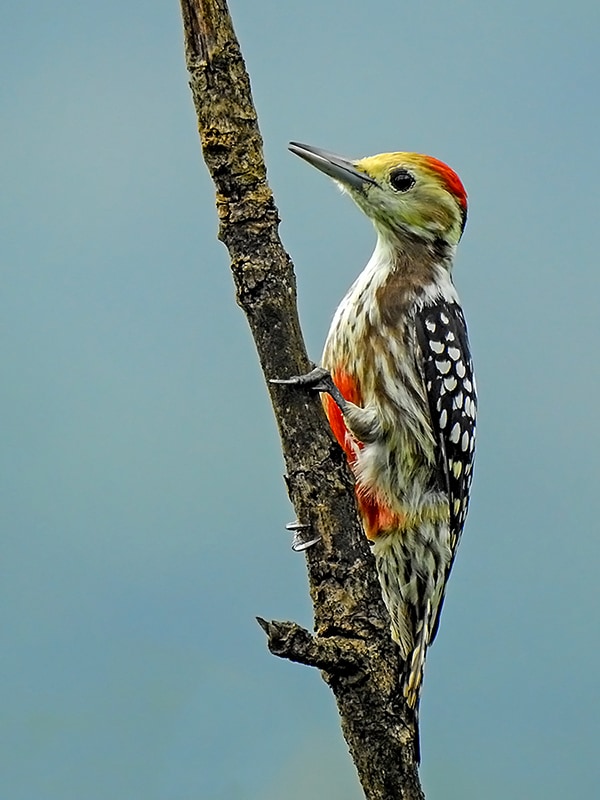
Mahratta Woodpecker
Indian Subcontinent
Pale-Headed, Pied Plumage, Red Belly Patch, Irregular Brown Cheek and Neck Patches, Yellowish Crown and Nape, Scarlet Nape and Yellow Fore-Crown
About Yellow-crowned woodpecker
The yellow-crowned woodpecker, scientifically known as Leiopicus mahrattensis, is a distinctive species of small pied woodpecker found across the Indian subcontinent. It holds the unique position of being the sole member of the genus Leiopicus. This species is recognized for its medium-small size, typically measuring around 17.5 cm in length and weighing between 28 and 46 grams.
Physical Characteristics
The plumage of the yellow-crowned woodpecker is characterized by its pied pattern. The upperparts are predominantly black, adorned with heavy white spotting and barring. Its underparts are dark and streaked with dingy white, distinguished by a notable red patch on the belly. Both males and females exhibit irregular brown patches on their cheeks and necks. A key sexual dimorphism is present in their crowns and napes: females display a yellowish crown and nape, while males are distinguished by a scarlet nape and a yellow fore-crown.
Taxonomy and Nomenclature
The species was first formally described by English ornithologist John Latham in 1801, who assigned it the binomial name Picus mahrattensis. Later, in 1854, French ornithologist Charles Lucien Bonaparte established the genus Leiopicus, placing this woodpecker as its sole representative. The specific epithet, 'mahrattensis,' is derived from Marhatta, a historical region situated within modern-day Maharashtra, India. The genus name Leiopicus is a combination of the Classical Greek words 'leios,' meaning 'smooth' or 'beardless,' and 'pikos,' meaning 'woodpecker.' The yellow-crowned woodpecker is considered closely related to woodpeckers belonging to the genus Dendrocoptes.
Source: Wikipedia ↗
Frequently Asked Questions
What is the scientific name for the yellow-crowned woodpecker?
The scientific name for the yellow-crowned woodpecker is Leiopicus mahrattensis. It was first described by John Latham in 1801 under the binomial name Picus mahrattensis.
What does the yellow-crowned woodpecker look like?
This is a medium-small woodpecker, about 17.5 cm long. It has a pale head, black upperparts heavily spotted and barred with white, and dark underparts streaked with dingy white, along with a red belly patch. Both sexes have irregular brown cheek and neck patches.
How do the male and female yellow-crowned woodpeckers differ in appearance?
The female possesses a yellowish crown and nape. In contrast, the male has a scarlet nape and a yellow fore-crown.
Where does the yellow-crowned woodpecker get its name?
The specific epithet 'mahrattensis' refers to Marhatta, a historical region within modern-day Maharashtra, India. The genus name Leiopicus combines Classical Greek words for 'smooth' or 'beardless' and 'woodpecker'.
Related Woodpecker species

Knysna woodpecker
The Knysna woodpecker is a species of bird endemic to South Africa, found in subtropical and tropical moist lowland forests, savannas, and shrublands. It is distinguished by its thickly spotted underparts and olive-green coloration with indistinct barring. This species is currently listed as Near Threatened due to habitat loss and alteration.
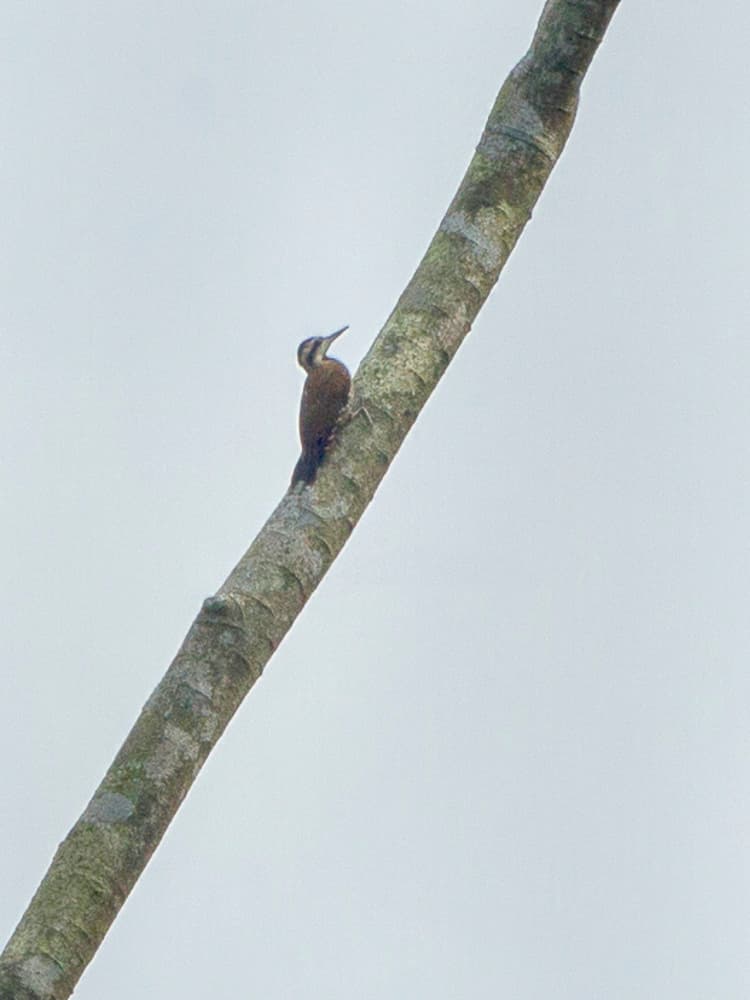
Fire-bellied woodpecker
The fire-bellied woodpecker is a bird species found across tropical West Africa, inhabiting various wooded environments from primary rainforest edges to savannahs. It is characterized by its olive-bronze upperparts, crimson rump, and a striking scarlet belly, with males displaying a red crown and females a black one. This species is common and its population is considered stable or increasing, leading to a 'least concern' conservation status.

Beautiful woodpecker
The beautiful woodpecker is a species endemic to Colombia, found primarily in the Magdalena River valley. This bird is characterized by its striking plumage, with males and females differing in head patterns, and it feeds on a mixed diet of insects and fruits, foraging high in forest canopies. Its conservation status is assessed as Least Concern.