
Kyoto Municipal Zoo
The Kyoto Municipal Zoo, established in 1903, is the second oldest zoo in Japan and is a member of the World Association of Zoos and Aquariums. It houses a diverse collection of mammals, birds, reptiles, amphibians, and fish, and features attractions like a children's zoo and a wildlife rescue center.
Key Facts
- ›Established on April 1, 1903.
- ›Covers an area of 3.4 hectares (8.4 acres).
- ›Housed 238 animals from 61 species on its opening day.
- ›Features a children's zoo with petting opportunities.
- ›Operates a wildlife rescue center in cooperation with Kyoto Prefecture and Kyoto City.
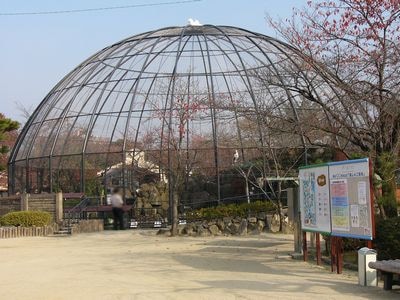
Elephant Room, Hippopotamus Room, Giraffe Room, Water Bird Pavilion, Children's Zoo
About Kyoto Municipal Zoo
The Kyoto Municipal Zoo, officially known as the Kyoto City Zoo (京都市動物園), is a significant zoological institution located in Sakyō ward, Kyoto, Japan. Established on April 1, 1903, it holds the distinction of being the second oldest zoo in the country, following only Ueno Zoo in Tokyo. As a member of the World Association of Zoos and Aquariums, the Kyoto Municipal Zoo plays a role in global zoological standards and practices.
History and Development
The zoo commenced its operations with an initial collection of 238 animals representing 61 species, spread across an area of 3.4 hectares (8.4 acres). Its early years saw steady growth, with the publication of its first guide in 1905 and an expansion of its species count. Key infrastructural developments included the opening of the Elephant Room in 1923 and the Hippopotamus Room in 1927, providing permanent quarters for these large animals.
World War II presented a period of immense hardship for the zoo. By 1940, its population had reached 965 individuals across 209 species. However, the conflict led to the culling of large carnivores by military order and the loss of other animals due to starvation and harsh conditions. Post-war, only 274 individuals from 72 species remained. The zoo also experienced a period of occupation by Allied forces in its southern section until 1952.
The latter half of the 20th century marked a phase of rebuilding and expansion. The Giraffe Room opened in 1953, accompanied by a saltwater aquarium that operated until 1968. The Sea Lion Pond was completed in 1954, and the popular "Fairyland" amusement area was established in 1955. Further additions included the Ape Room in 1969, the Reptile Room in 1974, and the Red Panda Room in 1980. The construction of a large dome aviary, the Water Bird Pavilion, in 1983, and other exhibits like the Bird Room and Senow Room in the 1980s, enhanced the zoo's offerings. The establishment of a wildlife rescue operation began in 1989, leading to the completion of the Wildlife Rescue Center in 1990.
Collections and Facilities
As of 2003, the Kyoto Municipal Zoo housed approximately 721 individuals representing 175 species. The zoo's collection spans a wide array of fauna, including mammals such as Asian elephants, chimpanzees, giraffes, and western lowland gorillas; birds like flamingos, owls, and macaws; and reptiles including tortoises and various snakes. It also features amphibians and fish.
Beyond its animal collections, the zoo offers several attractions. The Children's Zoo, opened in 1955, provides opportunities for close interaction with animals like rabbits, guinea pigs, and goats. The Animal Data Room, established in 1982, serves as an archive of information and artifacts related to former zoo residents. The zoo also includes a dedicated wildlife rescue center, which, while not open to the public, plays a crucial role in rehabilitating injured wildlife.
Source: Wikipedia ↗
Frequently Asked Questions
When was the Kyoto Municipal Zoo founded?
The Kyoto Municipal Zoo was founded on April 1, 1903, making it the second oldest zoo in Japan.
What was the size of the Kyoto Municipal Zoo when it opened?
Upon its opening, the Kyoto Municipal Zoo had a total area of 3.4 hectares (8.4 acres) and was home to 238 animals representing 61 species.
What notable facilities has the Kyoto Municipal Zoo opened over the years?
Throughout its history, the zoo has opened various facilities, including the Elephant Room in 1923, the Hippopotamus Room in 1927, the Giraffe Room in 1953, and a dome aviary (Water Bird Pavilion) in 1983.
How was the Kyoto Municipal Zoo affected by World War II?
During World War II, large carnivores were killed by military order, and other animals succumbed to hunger, malnutrition, and cold. By the end of the war, only 274 individuals of 72 species remained.
Does the Kyoto Municipal Zoo have a children's zoo?
Yes, a children's zoo opened in 1955, allowing visitors to observe animals up close and interact with some of them, including rabbits, guinea pigs, and goats.
What is the role of the wildlife rescue center at the zoo?
The wildlife rescue center, opened in 1989, rehabilitates injured wildlife for release by the prefecture. It operates in cooperation with Kyoto Prefecture and Kyoto City and is not open to the public.
Related Zoos

Asahiyama Zoo
Asahiyama Zoo is Japan's northernmost municipal zoo, located in Asahikawa, Hokkaido. It gained significant popularity for its innovative interactive exhibits that allow visitors to observe animals in unique ways, leading to record visitor numbers. The zoo is accredited by the Japanese Association of Zoos and Aquariums and is known for its focus on showcasing natural animal behaviors.

Himeji Central Park
Himeji Central Park is a unique safari and amusement park located in Himeji, Hyōgo, Japan, and is the only safari park in the Kansai region. Opened in 1984, it offers visitors the chance to observe animals in a drive-through or walking safari setting, alongside various amusement park attractions and a distinctive aerial lift for viewing wildlife.

Chiba Zoological Park
Chiba Zoological Park, located in Chiba Prefecture, Japan, is a significant zoological institution that opened in 1985. It is recognized for its diverse animal collection, including many endangered species, and its commitment to conservation and public education through innovative exhibits and programs.