
Riga Zoo
Riga Zoo is a city-owned zoological garden located in the Mežaparks neighborhood of Riga, Latvia, situated next to a park and on the western bank of Ķīšezers lake. It is a significant institution in Latvia, housing approximately 4000 animals across nearly 500 species and attracting a substantial number of visitors annually. The zoo plays an active role in wildlife conservation through various research and reintroduction projects, including efforts with owls, European tree frogs, and birds of prey.
Key Facts
- ›Founded in 1912, with a significant renewal in 1933.
- ›Houses around 4000 animals of nearly 500 species.
- ›Covers an area of 16.4 ha (41 acres) at its main location, with a branch "CīruļI" spanning 135 hectares (330 acres).
- ›Admitted approximately 250-300,000 visitors annually.
- ›Actively involved in conservation projects like owl migration monitoring and European tree frog reintroduction.
- ›Joined the European Association of Zoos and Aquaria in 1992.

African Savannah Exhibit, Giraffe House
- Monitoring of Owl Autumn Migration
- Reintroduction of European tree frog in Latvia
- Vulture Breeding Project
- Research of lesser spotted eagle behaviour traits
- Entomology Research
About Riga Zoo
Riga Zoo is a significant zoological institution located in Riga, Latvia, operating as a city-owned entity. Established in 1912, it is situated in the Mežaparks neighborhood, adjacent to the Mežaparks park and on the western bank of the Ķīšezers lake. The zoo houses a substantial collection of approximately 4000 animals, representing nearly 500 different species, and attracts between 250,000 and 300,000 visitors each year. Riga Zoo also operates a larger branch, "Cīruļi," in the Kalvene parish of Liepāja district, which covers an expansive 135 hectares (330 acres).
History
The society formed to establish Riga Zoo in 1908 saw the zoo officially open its doors to the public on October 14, 1912. At its inception, it housed 267 animals of 88 species. The zoo faced considerable challenges during World War I, leading to its closure in August 1917. After the war, the site was repurposed, but a renewed effort in 1932 led to the establishment of a new society and the zoo's reopening on September 24, 1933, with 124 animals of 48 species. By 1938, this number had grown to 106 species.
World War II also impacted the zoo's development, though its animals and buildings were preserved. It reopened to the public on November 9, 1944. Post-war, Riga Zoo experienced rapid growth and was recognized as one of the leading zoos in the Soviet Union. Key developments during this period included the creation of an aquarium in 1950 and the establishment of a tour guide service in 1955. While new animal housing, such as a flamingo and bear house, was constructed between 1980 and 1985, the zoo's population continued to expand, reaching 2150 animals of 401 species by 1987. In 1988, the zoo initiated a crucial reintroduction program for the European tree frog, which has since led to the species thriving in the wild in many parts of Courland.
Following Latvia's independence in 1991, the zoo encountered financial difficulties, leading to a significant drop in visitor numbers. To counter this, Riga Zoo launched development projects and enhanced its public relations, successfully restoring annual visitor numbers to their previous levels. The zoo became a member of the European Association of Zoos and Aquaria in 1992 and established its "Cīruļi" affiliate in 1996. The late 1990s and early 2000s saw the construction of several new animal houses, and in 2002, the zoo expanded its grounds by an additional 0.035 km².
Current Development and Conservation Efforts
Recent additions to Riga Zoo include the African Savannah exhibit, opened in 2019, which houses species such as geladas, impalas, zebras, and elands, complemented by the Giraffe house built in 2007. In 2022, the zoo unveiled plans for a comprehensive transformation into a four-season biopark, known as “Masterplan 2035.” This ambitious project will be executed in seven stages, beginning with the "Himalaya" section, aiming to create a more immersive and authentic visitor experience with planned exhibitions featuring species like the snow leopard, manul, takin, and bearded vultures.
Riga Zoo is deeply committed to scientific research and wildlife conservation. Its ongoing projects include the long-term monitoring of owl autumn migration in Pape Nature Reserve, which began in 1985 to gather data on owl migration patterns in Northern Europe. The successful reintroduction of the European tree frog in southwestern Courland, initiated in 1988, has resulted in the establishment of numerous wild colonies. Furthermore, a breeding complex at the "Cīruļi" affiliate, established in 2000, focuses on breeding species like white-tailed eagles and peregrine falcons for reintroduction into Latvia and population enhancement. The zoo also engages in research on lesser spotted eagle behavior and has a history of entomology research, including expeditions to various parts of the former Soviet Union and Vietnam, where new species have been discovered.
Source: Wikipedia ↗
Frequently Asked Questions
When was Riga Zoo established?
Riga Zoo was opened to the public on October 14, 1912. Following a period of hardship, a new society was established, and the zoo was reopened on September 24, 1933.
What is the size of Riga Zoo?
The main zoo in Riga covers an area of 16.4 hectares (41 acres). Additionally, the zoo has a branch called "Cīruļi" located in the Liepāja district, which spans 135 hectares (330 acres).
How many animals and species does Riga Zoo house?
Riga Zoo is home to approximately 4000 individual animals representing nearly 500 different species. This diverse collection makes it a notable zoological institution.
Does Riga Zoo have any conservation programs?
Yes, Riga Zoo is actively involved in several research and wildlife conservation projects. These include monitoring owl migration, reintroducing the European tree frog in Latvia, and a vulture breeding project at its "Cīruļi" branch.
What are some notable exhibits or developments at Riga Zoo?
Recent developments include the African Savannah exhibit, opened in 2019, which features animals like zebras and giraffes. The zoo also has plans to transform into a four-season biopark called “Masterplan 2035”, with the "Himalaya" section being the first stage.
Does Riga Zoo have an aquarium?
Yes, an aquarium was created at Riga Zoo in 1950. This addition expanded the zoo's offerings and capacity for housing aquatic species.
Related Zoos

Audubon Zoo
Audubon Zoo, located in New Orleans, Louisiana, is a significant zoological park and a part of the Audubon Nature Institute. It is renowned for its diverse animal collections, engaging exhibits like the "Jaguar Jungle" and "African Savanna," and its historical presence dating back to the 1884 World's Fair. The zoo plays a vital role in conservation and education, serving as a popular destination for both locals and tourists.
Baku Zoo
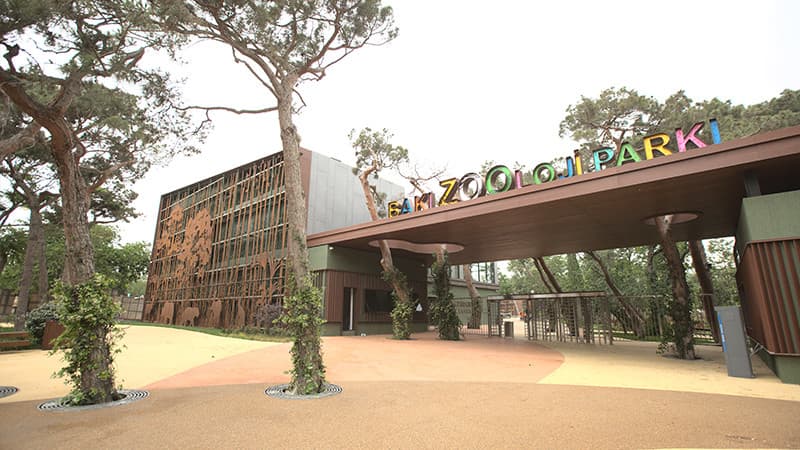
Baku Zoo, officially Baku Zoological Park, is a 10.5-acre zoological institution located in the Narimanov district of Baku, Azerbaijan. It houses over 125 species of animals and plays a role as an educational, research, and conservation center, particularly focusing on the rare fauna of Azerbaijan.

Beijing Zoo
Beijing Zoo, founded in 1906, is the oldest zoo in China and a significant zoological research center. It is renowned for its extensive collection of rare Chinese endemic species, particularly its giant pandas, and boasts one of the largest animal collections in the country, attracting over five million visitors annually.