
Safaripark Beekse Bergen
Netherlands·Safaripark·20th century
Safaripark Beekse Bergen is the largest wildlife zoo in the Benelux region, located in the southern Netherlands. It offers visitors a unique safari experience, allowing them to explore the park with their own vehicles or via bus, boat, and walking routes among approximately 1,250 animals from over 150 species, with a primary focus on African wildlife.
Key Facts
- ›Largest wildlife zoo in the Benelux region.
- ›Home to approximately 1,250 animals from over 150 species.
- ›Offers multiple safari experiences: car, bus, boat, and walking.
- ›Founded in 1968 as 'Lion Park Beekse Bergen'.
- ›Owned by Libéma Exploitatie BV since 1987.
- ›Features a notable bird show.

Spacious Savannahs For Zebras and Giraffes, Bird Show
Leopards, Zebras, Giraffes, Lions, Baboons, African Wild Dogs, Siberian Tigers, Amur Leopards
African Wild Dogs In Zimbabwe, Siberian tigers and Amur leopards in Siberia, Sloth Bears In India, European Endangered Species Programme, European Studbooks
About Safaripark Beekse Bergen
Safaripark Beekse Bergen is the largest wildlife zoo within the Benelux region, situated between the cities of Tilburg and Hilvarenbeek in the southern Netherlands. It is renowned for its immersive safari experiences, allowing visitors to observe a wide array of animals, including zebras and giraffes on expansive savannahs.
Exploration Options
The park offers multiple ways for visitors to explore its grounds and encounter its inhabitants. These include a traditional walksafari, a carsafari where visitors can use their own vehicles, a guided bussafari providing additional information from a Ranger, and a boatsafari that travels between piers within the park. These various safari routes often converge at central points, allowing for a comprehensive visit that can simulate an African safari.
History and Ownership
The park's origins trace back to 1968 with the opening of 'Lion Park Beekse Bergen,' which quickly became popular for its novel concept of viewing lions from within a car. Over the subsequent years, the park expanded its animal collection and offerings, leading to a name change to Safaripark Beekse Bergen in 1974. Following a period of declining popularity, the organization Libéma acquired the park in 1987, initiating a revitalization that included enhancements to the walking safari and the introduction of bus and boat safaris. Today, Libéma remains the owner, and Safaripark Beekse Bergen is recognized as the fourth-largest zoo in the Netherlands.
Conservation and Objectives
Safaripark Beekse Bergen is committed to several idealistic objectives, primarily contributing to the conservation of nature. This commitment is demonstrated through the conservation of threatened species, educational initiatives, scientific research, and active participation in global conservation programs. The park is involved in conservation efforts for species such as African wild dogs in Zimbabwe, Siberian tigers and Amur leopards in Siberia, and sloth bears in India. It also participates in breeding programs for threatened species as part of European initiatives like the European Endangered Species Programme (EEP) and European Studbooks (ESB).
Animal Collection
The park is home to approximately 1,250 animals representing over 150 species. While the name 'safari' evokes Africa, and the park's primary focus remains on conserving and observing African animals, it has historically featured and currently maintains representation from other continents. The collection includes a variety of mammals, from small to large, as well as birds. Animals under conservation programs include species like the red ruffed lemur, African wild dog, Siberian tiger, and Grévy zebra.
Source: Wikipedia ↗
Frequently Asked Questions
What is Safaripark Beekse Bergen?
Safaripark Beekse Bergen is the largest wildlife zoo in the Benelux region, located in the south of the Netherlands. It provides a home to a diverse collection of animals and offers visitors a unique safari experience.
What are the different ways to explore Safaripark Beekse Bergen?
Visitors can explore the park via a walksafari, carsafari, bussafari, and boatsafari. These options can often be combined for a comprehensive experience.
What is special about the car safari at Safaripark Beekse Bergen?
The car safari allows visitors to drive through the park with their own car, with no fence separating them from the animals. This allows for close encounters, such as zebras and giraffes on spacious savannahs, and even the possibility of a giraffe 'washing' their car.
What is the history of Safaripark Beekse Bergen?
The park opened in 1968 as 'Lion Park Beekse Bergen' and was a success due to its novel concept of observing lions from a car. It expanded over the years, changing its name to Safaripark Beekse Bergen in 1974, and was revitalized after being purchased by Libéma in 1987.
Does Safaripark Beekse Bergen focus on conservation?
Yes, Safaripark Beekse Bergen has idealistic objectives focused on nature conservation. This includes conserving threatened species, education, scientific research, and active participation in worldwide conservation programs.
What types of animals can be seen at Safaripark Beekse Bergen?
The park houses approximately 1,250 animals from over 150 species, with a main focus on African wildlife, though Asia is also represented. Notable species involved in conservation programs include African wild dogs, Siberian tigers, and Amur leopards.
Related Zoos
Burgers' Zoo
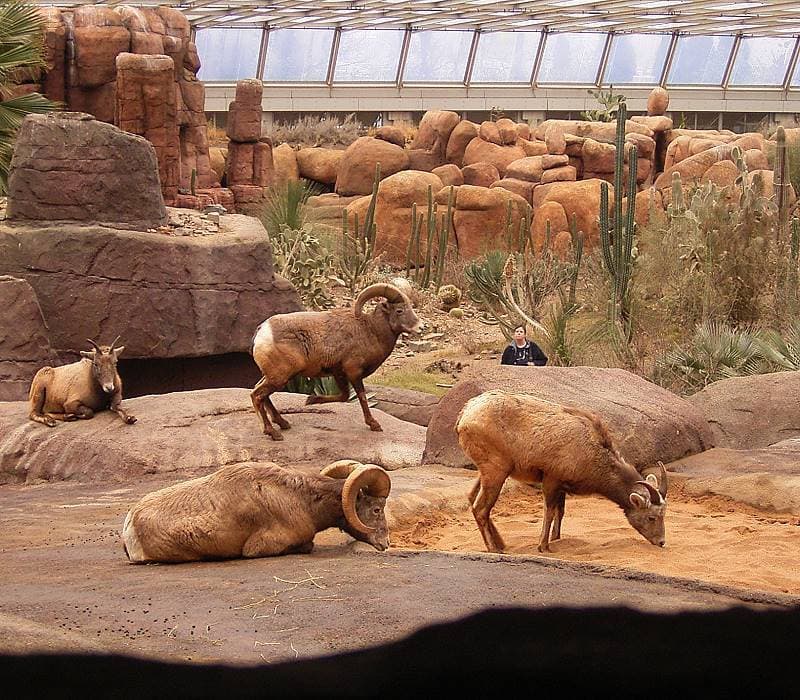
Royal Burgers' Zoo, located in Arnhem, Netherlands, is a prominent 45-hectare zoological park established in 1913. It is distinguished by its "ecodisplays," immersive, themed habitats that replicate diverse ecosystems from tropical rainforests to deserts and oceans, making it a significant destination for visitors and a leader in animal welfare and conservation.

Diergaarde Blijdorp
Diergaarde Blijdorp, officially Rotterdam Zoo, is one of the oldest zoos in the Netherlands, established in 1857. It is a significant zoological institution, operating under the Stichting Koninklijke Rotterdamse Diergaarde and divided into distinct zoogeographic regions. The zoo is notable for its extensive species collection, its historical relocation and architectural design, and its recent expansion including the Oceanium aquarium.
Apenheul
Apenheul Primate Park, located in Apeldoorn, Netherlands, is a zoo renowned for its specialization in apes and monkeys. It holds the distinction of being the first zoo globally to allow monkeys to roam freely within a forest environment and interact with visitors, fostering a unique and immersive experience.