
A. baconi
Mammal, Carnivora, Ursidae·Predominantly plant-based, broader than modern giant panda
Ailuropoda baconi is an extinct species or subspecies of bear that lived in South China, Laos, Vietnam, Myanmar, and Thailand during the Middle and Late Pleistocene and into the Middle Holocene. It is recognized as the direct ancestor of the modern giant panda, Ailuropoda melanoleuca, and was notably larger than its living descendant. Its distinctiveness from the modern giant panda is debated, with some scientists suggesting it be classified as a paleosubspecies.
Key Facts
- ›Direct ancestor of the modern giant panda (Ailuropoda melanoleuca).
- ›Lived in South China, Laos, Vietnam, Myanmar, and Thailand.
- ›Existed from the Middle Pleistocene to the Middle Holocene.
- ›Considerably larger than its predecessor, a. wulingshanensis, and somewhat larger than the living giant panda.
- ›Average body mass estimated between 120-130 kg, with some individuals exceeding 140 kg.
- ›Preferred open forest habitats and had a broader diet than the modern giant panda.

- Open Forest
- Varied Altitudes From Below 200m To Above 2000m
South China, Laos, Vietnam, Myanmar, Thailand
- Ecological Changes Leading To Range Restriction
About A. baconi
Ailuropoda baconi
Ailuropoda baconi is an extinct species or subspecies of bear recognized as the direct ancestor of the modern giant panda (Ailuropoda melanoleuca). This ancient bear inhabited cave deposits across South China, Laos, Vietnam, Myanmar, and Thailand, with its existence spanning from the Middle and Late Pleistocene epochs into the Middle Holocene. Its distinctiveness from the living giant panda is a subject of scientific debate, with some researchers proposing it be classified as a paleosubspecies, A. melanoleuca baconi.
Description and Size
Members of A. (melanoleuca) baconi were notably larger than their evolutionary predecessor, A. wulingshanensis, and also somewhat larger than the modern giant panda. A 2024 study estimated the average body mass of A. (m.) baconi in some localities to be approximately 120–130 kilograms (260–290 lb), with some individuals estimated to have exceeded 140 kilograms (310 lb). For comparison, captive mature male and female giant pandas typically average around 120 kg and 100 kg, respectively. The skull of A. baconi featured very well-developed zygomatic arches, though its sagittal crest was only moderately developed.
Palaeoecology and Habitat
Unlike the modern giant panda, which is primarily found in mountainous areas above 1,000 meters, A. (m.) baconi occupied a much broader range of altitudes, from below 200 meters to over 2,000 meters. Fossil evidence, specifically δ13C values, suggests a preference for open forest habitats. Its diet was likely more varied than that of the bamboo-dependent living giant panda, though it remained predominantly herbivorous.
Ailuropoda baconi was a significant component of the "Ailuropoda-Stegodon fauna" found in southern China during the Middle-Late Pleistocene. This fauna included a diverse array of species such as the giant tapir (Tapirus augustus), Asian elephant (Elephas maximus), extinct elephant relatives (Stegodon orientalis), various rhinoceros species, wild boar (Sus scrofa), muntjac, water buffalo, sika deer (Cervus nippon), extinct orangutan species (Pongo weidenreichi), gibbons (Hylobates), tigers (Panthera tigris), and the extinct cave hyena (Crocuta ultima).
Extinction and Evolution
From the end of the Pleistocene epoch into the Middle Holocene, Ailuropoda baconi experienced a significant contraction of its geographic range. It became increasingly restricted to upland areas exceeding 1,000 meters in elevation. This ecological shift and restriction to mountainous environments are believed to have driven the morphological transitions that led to the evolution of the modern giant panda.
Source: Wikipedia ↗
Frequently Asked Questions
What is Ailuropoda baconi?
Ailuropoda baconi is an extinct species or subspecies of bear that is the direct ancestor of the modern giant panda. It lived in parts of South China and Southeast Asia for a long period.
When did Ailuropoda baconi live?
This species inhabited Southeast Asia from the Middle Pleistocene epoch through the Middle Holocene epoch. This covers a vast span of geological time.
How large was Ailuropoda baconi compared to a modern giant panda?
Ailuropoda baconi was considerably larger than its evolutionary predecessor and somewhat larger than the living giant panda. Average body mass estimates place it around 120-130 kg, with some individuals weighing over 140 kg.
Where did Ailuropoda baconi live?
Fossil deposits indicate Ailuropoda baconi ranged widely across South China, Laos, Vietnam, Myanmar, and Thailand. Its habitat spanned a variety of altitudes.
What did Ailuropoda baconi eat?
While predominantly plant-based, its diet was likely broader than that of the modern giant panda, which primarily consumes bamboo. It inhabited open forest environments.
What happened to Ailuropoda baconi?
Ailuropoda baconi experienced a significant range reduction from the end of the Pleistocene to the Middle Holocene. It eventually evolved into the modern giant panda, becoming restricted to upland areas.
Related Bears
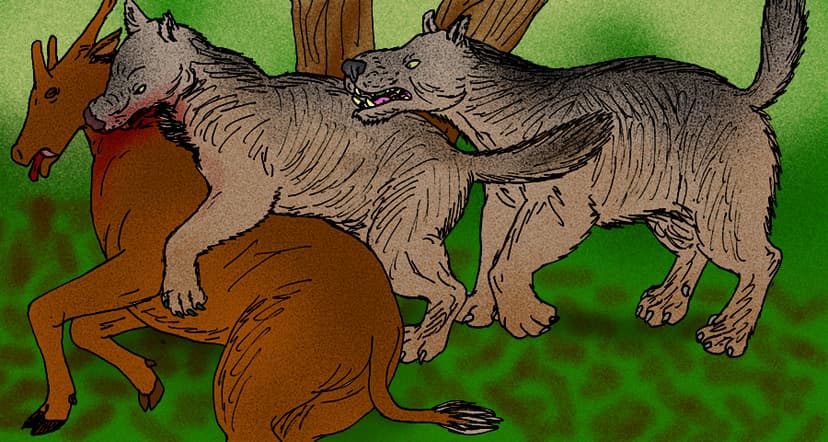
Hemicyoninae
Hemicyoninae, often referred to as dog bears, were an extinct subfamily of Ursidae that existed from the Oligocene through the Miocene epochs. These bear-like carnivorans inhabited parts of Europe, North America, Africa, and Asia, and are notable for their long evolutionary history, spanning approximately 28.6 million years.

Cave Bear
The cave bear (Ursus spelaeus) was a prehistoric species of bear that inhabited Europe and Asia during the Pleistocene epoch, going extinct approximately 24,000 years ago. Named for the prevalence of their remains found in caves, they are believed to have spent more time in these sheltered environments than modern bears, often using them for hibernation. Distinctive for their large size and a predominantly herbivorous diet, cave bears displayed significant variability in size, morphology, and genetics.
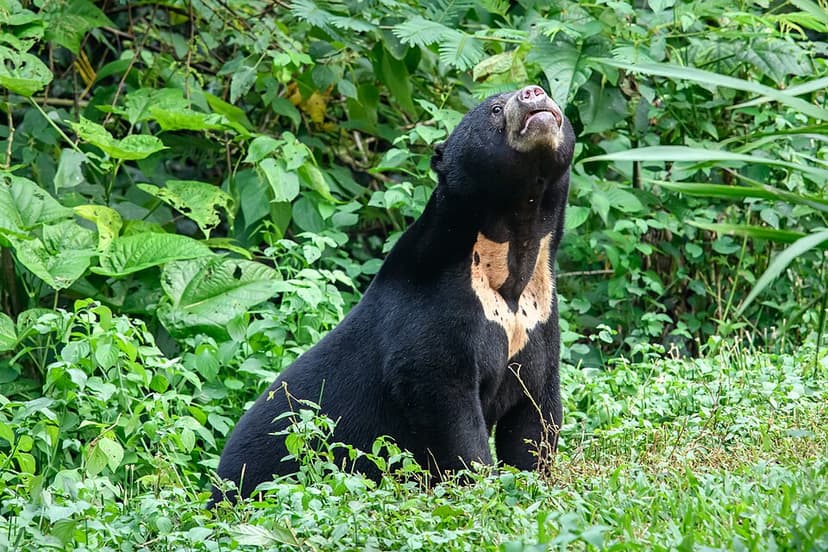
Helarctos
The sun bear (Helarctos malayanus) is the smallest bear species, native to the tropical forests of Southeast Asia. Distinctive for its short, jet-black fur and a characteristic orange to cream-colored chest patch, it is highly adapted for an arboreal lifestyle. Facing significant threats from deforestation and poaching, its population has seen a considerable decline.