
Ailuropoda
Mammal, Carnivora, Ursidae, Ailuropodinae·Herbivore (primarily bamboo)·Solitary
Ailuropoda is the sole genus of the bear subfamily Ailuropodinae, comprising one living species, the giant panda, and several extinct fossil species. Despite being classified as a carnivoran, the giant panda's diet is almost exclusively herbivorous, consisting mainly of bamboo. Its distinctive cat-like vertical pupils are reflected in its scientific name and common Chinese name, "large bear cat."
Key Facts
- ›Ailuropoda is the only extant genus in the bear subfamily Ailuropodinae.
- ›It includes the living giant panda (Ailuropoda melanoleuca) and extinct fossil species.
- ›The giant panda's diet is primarily herbivorous, consisting almost exclusively of bamboo.
- ›Unlike most bears, giant pandas have vertical slit pupils, similar to cats.
- ›The genus name Ailuropoda derives from Greek words meaning "cat" and "foot."
- ›Fossil species include Ailuropoda microta, Ailuropoda wulingshanensis, and Ailuropoda baconi.

Bamboo Forests
Asia
Solitary
About Ailuropoda
The genus Ailuropoda represents a unique lineage within the bear family, Ursidae, forming the sole subfamily Ailuropodinae. This genus is most famously recognized for containing the living giant panda (Ailuropoda melanoleuca), alongside several extinct fossil species such as Ailuropoda microta, Ailuropoda wulingshanensis, and Ailuropoda baconi. The classification of the giant panda as a carnivoran is notable given its highly specialized herbivorous diet, which consists almost exclusively of bamboo.
Distinctive Features and Etymology
A striking characteristic that sets Ailuropoda apart from most other bears is its pupil shape. Unlike the round pupils common to bears, giant pandas possess vertical slits, similar to felines. This distinctive trait is reflected in its scientific name, Ailuropoda, which is derived from Greek words meaning "cat" and "foot." In Chinese culture, this is further echoed in the name "large bear cat" (大熊猫, dà xióngmāo), highlighting both its ursine classification and its cat-like ocular feature.
Evolutionary Context
The evolutionary history of Ailuropoda traces back to Ailurarctos, an ancestor that lived during the late Miocene epoch. While the red panda (Ailurus fulgens) was once considered closely related, it is now placed in its own distinct family, Ailuridae, and is no longer classified as a bear. The fossil record indicates a broader distribution and potentially varied forms within the Ailuropoda genus during prehistoric times.
Source: Wikipedia ↗
Frequently Asked Questions
What does the scientific name Ailuropoda mean?
The scientific name Ailuropoda is derived from the Greek words 'ailouros' meaning 'cat' and 'podos' meaning 'foot'. This name was inspired by the giant panda's vertical pupils, which resemble those of cats, and its foot structure.
What is the diet of the giant panda?
Despite its classification as a carnivoran, the giant panda has a diet that is primarily herbivorous. This diet consists almost exclusively of bamboo.
Are there other species in the Ailuropoda genus?
While only one species, Ailuropoda melanoleuca, currently exists, the Ailuropoda genus also includes one or more fossil species. These prehistoric chronospecies are distinct from the living giant panda.
What is the relationship between Ailuropoda and the red panda?
The red panda, or lesser panda, was once thought to be closely related to the giant panda. However, it is no longer considered a bear and is now classified in its own separate carnivore family, Ailuridae.
What are some of the fossil species within the Ailuropoda genus?
Prehistoric species within the Ailuropoda genus include †Ailuropoda microta from the late Pliocene, †Ailuropoda wulingshanensis from the late Pliocene to early Pleistocene, and †Ailuropoda baconi from the Pleistocene. Some classifications may treat these as subspecies of Ailuropoda melanoleuca.
Related Bears

Agriotheriinae
Agriotheriinae represents an extinct tribe of bears that lived from the middle Neogene to the early Quaternary periods. Fossils of these animals have been discovered across Eurasia, Africa, and North America. Unlike their closest living relative, the giant panda, agriotheriins evolved into large, hypercarnivorous predators with unique adaptations for running, setting them apart in bear evolutionary history.

U. maritimus tyrannus
The tyrant polar bear (Ursus maritimus tyrannus), also known as the Kew Bridge bear, is an extinct subspecies of polar bear that lived during the Late Pleistocene. Named by Björn Kurtén in 1964 based on a fragmentary ulna found in London, its precise taxonomic classification remains a subject of debate among paleontologists.
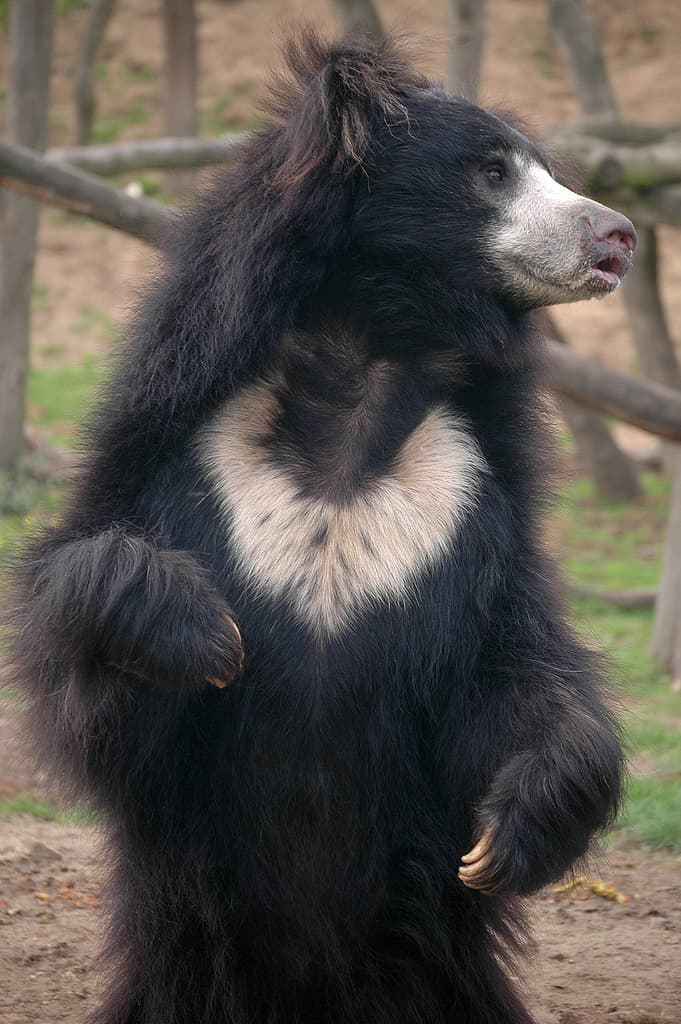
Melursus
The sloth bear (Melursus ursinus) is a distinctive myrmecophagous bear species native to the Indian subcontinent, known for its long shaggy fur, mane, and specialized snout for sucking up insects. It is listed as vulnerable due to habitat loss and degradation, and is the sole member of the genus Melursus.