
Ailurarctos
Mammal, Carnivora, Ursidae·Herbivore (specialized in bamboo)
Ailurarctos is an extinct genus of panda that lived in China during the Late Miocene, approximately 8 million years ago. Fossils, primarily teeth, indicate it is an early ancestor in the giant panda lineage and possessed a pseudothumb for gripping bamboo, suggesting a specialized diet dating back millions of years.
Key Facts
- ›Extinct genus of panda from the Late Miocene of China.
- ›Fossils discovered in the Lufeng Basin of Yunnan Province.
- ›Possessed a pseudothumb, similar to modern giant pandas, for gripping bamboo.
- ›The earliest known pseudothumb comes from Ailurarctos fossils.
- ›Its specialized bamboo diet is estimated to date back 6 to 7 million years.
- ›Differs from modern giant pandas by lacking a sharp inward distal hook in its radial sesamoids.

Miocene Forests
China
Specialized Diet
About Ailurarctos
Ailurarctos: An Early Ancestor of the Giant Panda
Ailurarctos is an extinct genus of panda that roamed China during the Late Miocene epoch, approximately 8 million years ago. The name "Ailurarctos" translates to "cat bear," reflecting its ancient lineage. Fossils attributed to this genus, primarily isolated teeth discovered in the Lufeng Basin of Yunnan Province, provide significant insights into the early evolution of the giant panda lineage.
Key Discoveries and Adaptations
A crucial discovery linked to Ailurarctos is the presence of a pseudothumb, a specialized wrist bone adaptation that modern giant pandas also possess. This false thumb is instrumental in gripping bamboo, the primary food source for pandas. The earliest known evidence of this pseudothumb comes from Ailurarctos fossils, suggesting that the panda's reliance on a bamboo-heavy diet dates back as far as 6 to 7 million years ago. This indicates a long evolutionary history of dietary specialization within the panda family.
Distinctions from Modern Pandas
While Ailurarctos shares the significant adaptation of a pseudothumb with its modern descendant, Ailuropoda melanoleuca (the giant panda), there are anatomical differences. Notably, Ailurarctos lacked the sharp inward distal hook in its radial sesamoids that is present in contemporary giant pandas. These variations highlight the mosaic pattern of evolution observed within the Ailuropoda lineage over the past 2 million years, with different traits developing at different rates.
Source: Wikipedia ↗
Frequently Asked Questions
When did Ailurarctos live?
Ailurarctos lived during the Late Miocene epoch, approximately 8 million years ago.
Where have fossils of Ailurarctos been found?
Fossils attributed to Ailurarctos have been discovered in the Lufeng Basin of Yunnan Province, China.
What is significant about Ailurarctos's pseudothumb?
Ailurarctos had a pseudothumb, a feature also found in modern giant pandas, which aided in gripping bamboo. The earliest known pseudothumb originates from Ailurarctos fossils.
What does Ailurarctos tell us about the panda diet?
The presence of a pseudothumb in Ailurarctos suggests that the specialized bamboo diet of pandas extends back to at least 6 to 7 million years ago.
How does Ailurarctos differ from modern giant pandas?
While sharing the pseudothumb, Ailurarctos differed from living giant pandas in that it lacked the sharp inward distal hook in its radial sesamoids.
Related Bears
Hemicyoninae
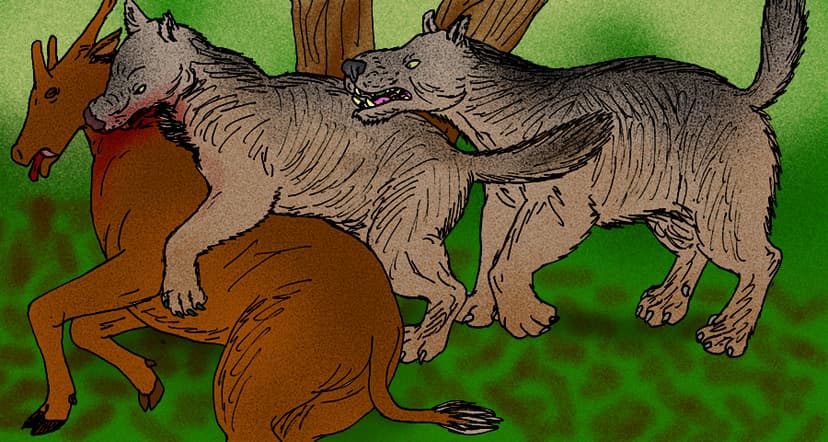
Hemicyoninae, often referred to as dog bears, were an extinct subfamily of Ursidae that existed from the Oligocene through the Miocene epochs. These bear-like carnivorans inhabited parts of Europe, North America, Africa, and Asia, and are notable for their long evolutionary history, spanning approximately 28.6 million years.

Cave Bear
The cave bear (Ursus spelaeus) was a prehistoric species of bear that inhabited Europe and Asia during the Pleistocene epoch, going extinct approximately 24,000 years ago. Named for the prevalence of their remains found in caves, they are believed to have spent more time in these sheltered environments than modern bears, often using them for hibernation. Distinctive for their large size and a predominantly herbivorous diet, cave bears displayed significant variability in size, morphology, and genetics.
Helarctos
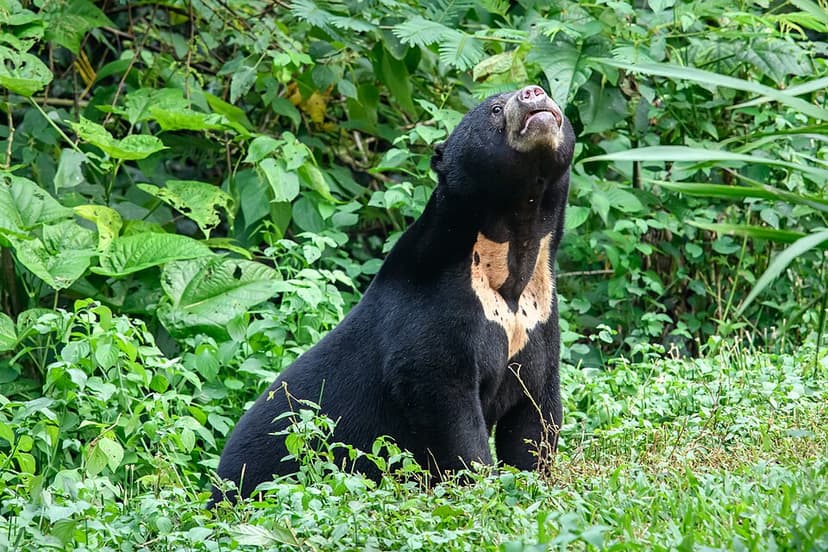
The sun bear (Helarctos malayanus) is the smallest bear species, native to the tropical forests of Southeast Asia. Distinctive for its short, jet-black fur and a characteristic orange to cream-colored chest patch, it is highly adapted for an arboreal lifestyle. Facing significant threats from deforestation and poaching, its population has seen a considerable decline.