
U. maritimus tyrannus
Mammal, Carnivora, Ursidae·Carnivore (inferred from polar bear lineage)
The tyrant polar bear (Ursus maritimus tyrannus), also known as the Kew Bridge bear, is an extinct subspecies of polar bear that lived during the Late Pleistocene. Named by Björn Kurtén in 1964 based on a fragmentary ulna found in London, its precise taxonomic classification remains a subject of debate among paleontologists.
Key Facts
- ›Lived during the Late Pleistocene epoch.
- ›Named based on a single fragmentary right ulna discovered at Kew Bridge, London.
- ›Its ulna was the largest ursine ulna ever found at the time of its discovery.
- ›Estimated to have had a longer skull than any recorded extant or extinct polar bear.
- ›Some researchers suggest it may have been a giant brown bear rather than a polar bear.
- ›Its existence highlights the close evolutionary relationship and potential for hybridization between polar and brown bears.

Coastal Regions
Europe
Potentially A 'Running Bear', Stalking/Ambush Hunting
About U. maritimus tyrannus
The Tyrant Polar Bear (Ursus maritimus tyrannus)
The tyrant polar bear, scientifically known as Ursus maritimus tyrannus and sometimes called the Kew Bridge bear, is an extinct subspecies of polar bear that inhabited the Earth during the Late Pleistocene epoch. Its name, meaning "tyrant marine bear," reflects its formidable estimated size. The exact taxonomic placement of this subspecies remains a subject of ongoing scientific debate, with some researchers suggesting it might represent a distinct lineage or even a giant brown bear.
Discovery and Taxonomy
The tyrant polar bear was formally named by Finnish paleontologist Björn Kurtén in 1964. The classification was based on a single, fragmentary right ulna discovered in the gravel deposits of the River Thames at Kew Bridge in London. At the time of its discovery, this ulna was the largest ursine ulna ever found. Kurtén initially assigned it to Ursus maritimus due to its size and specific morphological characteristics, such as its nearly-straight dorsal margin and the shape of the olecranon, which closely resembled those of modern polar bears. However, subsequent research by paleontologists like Andy Currant of the Natural History Museum, London, has proposed that the fossil might instead belong to a gigantic brown bear, citing faunal assemblages from contemporary British sites that also include unusually large brown bears.
Physical Characteristics and Evolution
The fossil ulna suggests that Ursus maritimus tyrannus was a considerably large individual, likely a subadult male. When complete, the ulna is estimated to have been approximately 48.5 cm (19 inches) long, substantially larger than that of modern subadult polar bears. Extrapolations based on skull measurements suggest a condylobasal length of around 447 mm (17.6 inches), which would surpass the largest recorded polar bear skulls. While speculative, some sources estimate the tyrant polar bear could reach shoulder heights of 1.83 meters (6.0 ft), lengths of 3.7 meters (12 ft), and body masses of around 1,000 kg (2,200 lb).
Evolutionarily, both polar bears and brown bears belong to the genus Ursus. Genomic studies indicate that the polar bear lineage diverged from brown bears approximately 400,000 to 600,000 years ago. The Kew Bridge specimen, dated to the early Weichselian (around 70,000 years ago), lived well after this divergence. The potential for hybridization between polar and brown bears during the Late Pleistocene and Holocene epochs is well-documented, suggesting overlapping distributions and ecological niches in regions like northwestern Europe.
Source: Wikipedia ↗
Frequently Asked Questions
What is the tyrant polar bear?
The tyrant polar bear, scientifically known as Ursus maritimus tyrannus, is an extinct subspecies of polar bear. It lived during the Late Pleistocene epoch and is distinguished by its exceptionally large size.
Where was the tyrant polar bear discovered?
The primary fossil evidence for the tyrant polar bear, a fragmentary right ulna, was discovered in the gravels of the River Thames at Kew Bridge in London. This specimen is also referred to as the Kew Bridge bear.
When did the tyrant polar bear live?
The tyrant polar bear lived during the Late Pleistocene epoch, specifically dating to the early Weichselian period, approximately 70,000 years ago. This places it well after the divergence of the polar bear lineage from brown bears.
Why is the taxonomy of the tyrant polar bear debated?
The taxonomic position of Ursus maritimus tyrannus is debated because the classification is based on limited fossil material, primarily a single ulna. Some paleontologists, like Andy Currant, propose it may represent a large brown bear due to faunal assemblages at contemporary sites.
How large was the tyrant polar bear?
Based on the fossil ulna and extrapolations, the tyrant polar bear is estimated to have been significantly larger than modern polar bears. Guinness World Records, though speculative, suggests a shoulder height of 1.83 m, a length of 3.7 m, and a body mass around 1,000 kg.
What is the evolutionary relationship between tyrant polar bears and brown bears?
Both polar bears and brown bears belong to the genus Ursus and share a common origin, with polar bears diverging from brown bears around 400,000-600,000 years ago. The existence of Ursus maritimus tyrannus, and potential hybridization, underscores their close evolutionary ties and overlapping distributions in northwestern Europe during the Pleistocene.
Related Bears

Ailuropoda
Ailuropoda is the sole genus of the bear subfamily Ailuropodinae, comprising one living species, the giant panda, and several extinct fossil species. Despite being classified as a carnivoran, the giant panda's diet is almost exclusively herbivorous, consisting mainly of bamboo. Its distinctive cat-like vertical pupils are reflected in its scientific name and common Chinese name, "large bear cat."
Hemicyoninae
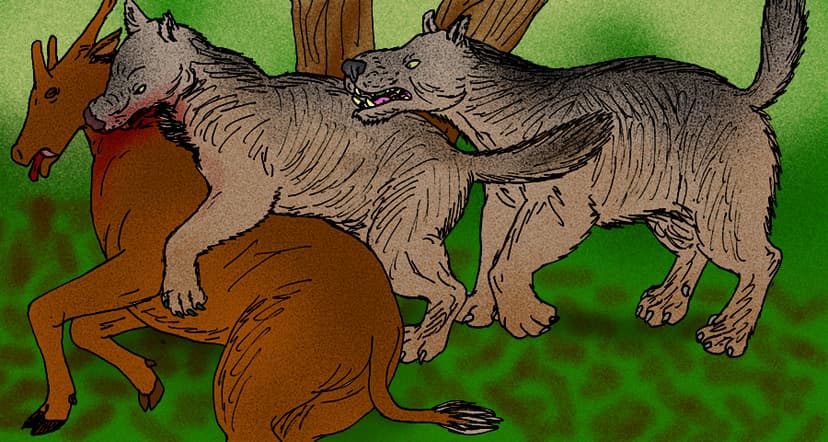
Hemicyoninae, often referred to as dog bears, were an extinct subfamily of Ursidae that existed from the Oligocene through the Miocene epochs. These bear-like carnivorans inhabited parts of Europe, North America, Africa, and Asia, and are notable for their long evolutionary history, spanning approximately 28.6 million years.

Cave Bear
The cave bear (Ursus spelaeus) was a prehistoric species of bear that inhabited Europe and Asia during the Pleistocene epoch, going extinct approximately 24,000 years ago. Named for the prevalence of their remains found in caves, they are believed to have spent more time in these sheltered environments than modern bears, often using them for hibernation. Distinctive for their large size and a predominantly herbivorous diet, cave bears displayed significant variability in size, morphology, and genetics.