
U. ingressus
Mammal, Carnivora, Ursidae·Omnivore (debated, potentially herbivorous or omnivorous with aquatic protein)
Ursus ingressus was a large, extinct species of cave bear that inhabited Central Europe during the Late Pleistocene. Distinguished by its massive limbs and larger size compared to Ursus spelaeus, it was found as far east as the Ural Mountains and as far west as Germany. Its diet is debated, with possibilities ranging from herbivorous to omnivorous, and it coexisted and sometimes conflicted with other large carnivores of the era.
Key Facts
- ›Lived in Central Europe during the Late Pleistocene.
- ›Larger and more massive than Ursus spelaeus.
- ›Diet debated: herbivorous or omnivorous with aquatic protein.
- ›Found from the Ural Mountains in Russia to the Swabian Jura in Germany.
- ›Migrated into the Alps around 50,000 years ago.
- ›Became extinct around 30,000 years ago.

- Medium and High Elevated Regions
- Continental Environments With Cold and Arid Climate
Central Europe, Eastern Europe, Ural Mountains, Swabian Jura, Alps
Competed With Other Large Carnivores, Migratory
Climate Change, Human Hunting
About U. ingressus
Ursus ingressus
Ursus ingressus is an extinct species of cave bear that lived in Central Europe during the Late Pleistocene epoch. It is recognized for its considerable size and robust build, being larger than its contemporary, Ursus spelaeus. The type specimen for this species was discovered in the Gamssulzen Cave in Austria, which gives the species its name.
Distribution and Habitat
This species had a wide geographic distribution, ranging from the Ural Mountains in Russia to the Swabian Jura in Germany. Around 50,000 years ago, Ursus ingressus migrated into the Alps, displacing earlier populations of Ursus spelaeus. It is thought to have inhabited medium and high elevated regions, adapted to continental climates characterized by cold and arid conditions.
Diet and Behavior
The precise diet of Ursus ingressus is a subject of ongoing scientific discussion. Some studies propose a primarily herbivorous diet, while others suggest it was omnivorous, incorporating both terrestrial and aquatic animal protein to a greater extent than modern brown bears. Evidence from Zoolithen Cave, in the form of bite damage on skulls, indicates that Ursus ingressus engaged in conflicts with other large carnivores of the period, such as the cave lion and cave hyena.
Evolution and Extinction
Ursus ingressus is believed to have evolved from Ursus deningeri, with its divergence occurring between 173,000 and 600,000 years ago. Some researchers still debate whether Ursus ingressus and Ursus spelaeus should be classified as separate species or as subspecies. Ursus ingressus persisted for a short period after Ursus spelaeus, locally replacing it, but ultimately became extinct around 30,000 years ago, shortly before the Last Glacial Maximum. The exact causes of its extinction are not definitively known, but climate change and human hunting are considered potential factors.
Source: Wikipedia ↗
Frequently Asked Questions
What is Ursus ingressus?
Ursus ingressus is an extinct species of cave bear. It lived in Central Europe during the Late Pleistocene epoch. This species is known for its large size and bulky limbs.
Where did Ursus ingressus live?
Ursus ingressus was found in Central and Eastern Europe. Its range extended from the Ural Mountains in Russia to the Swabian Jura in Germany. It also migrated into the Alps.
What did Ursus ingressus eat?
The diet of Ursus ingressus is debated among scientists. Some studies suggest it was herbivorous, feeding on vegetation. Other research proposes it was omnivorous, consuming terrestrial and aquatic animal protein.
How large was Ursus ingressus?
Ursus ingressus was a large cave bear with massive, bulky limbs. It was notably larger than Ursus spelaeus, which is estimated to have weighed between 350 and 600 kg for males.
When did Ursus ingressus go extinct?
Ursus ingressus became extinct around 30,000 years ago. This was just prior to the Last Glacial Maximum. Reasons for its extinction are still discussed, with climate change and human hunting as potential factors.
Did Ursus ingressus interact with other animals?
Skulls from Zoolithen Cave show bite damage, suggesting Ursus ingressus engaged in conflicts with other large carnivores of the Late Pleistocene. These included the cave lion (Panthera spelaea) and the cave hyena (Crocuta crocuta spelaea).
Related Bears
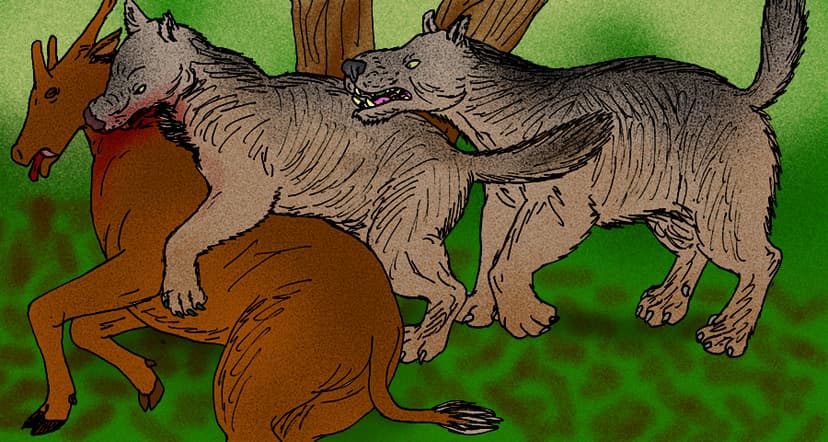
Hemicyoninae
Hemicyoninae, often referred to as dog bears, were an extinct subfamily of Ursidae that existed from the Oligocene through the Miocene epochs. These bear-like carnivorans inhabited parts of Europe, North America, Africa, and Asia, and are notable for their long evolutionary history, spanning approximately 28.6 million years.

Cave Bear
The cave bear (Ursus spelaeus) was a prehistoric species of bear that inhabited Europe and Asia during the Pleistocene epoch, going extinct approximately 24,000 years ago. Named for the prevalence of their remains found in caves, they are believed to have spent more time in these sheltered environments than modern bears, often using them for hibernation. Distinctive for their large size and a predominantly herbivorous diet, cave bears displayed significant variability in size, morphology, and genetics.
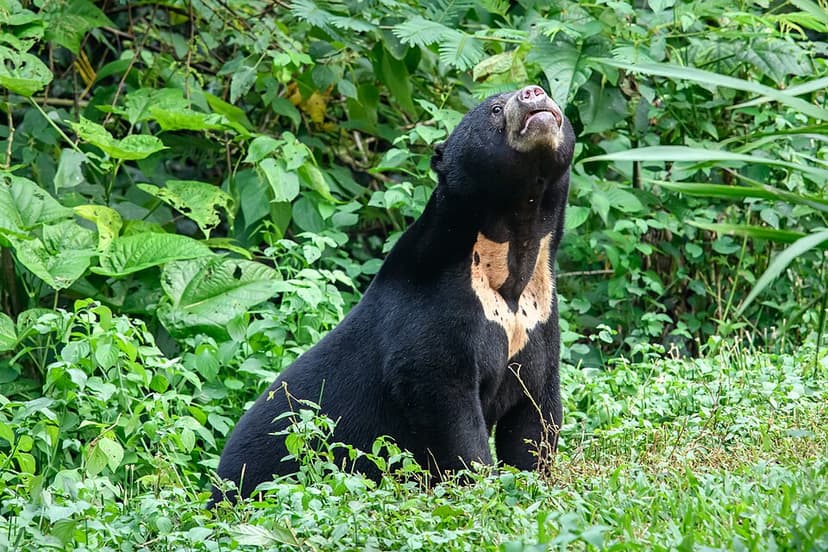
Helarctos
The sun bear (Helarctos malayanus) is the smallest bear species, native to the tropical forests of Southeast Asia. Distinctive for its short, jet-black fur and a characteristic orange to cream-colored chest patch, it is highly adapted for an arboreal lifestyle. Facing significant threats from deforestation and poaching, its population has seen a considerable decline.