
U. rossicus
Ursus rossicus was an extinct species of bear that inhabited the steppe regions of northern Eurasia and Siberia during the Pleistocene epoch. It is considered part of the cave bear species complex and is distinguished by its broad, domed skull and a diet that leaned heavily towards coarse, dry vegetation, including tubers, as indicated by dental microwear and stable isotope analysis.
Key Facts
- ›Lived during the Pleistocene in northern Eurasia and Siberia.
- ›Belongs to the cave bear species complex.
- ›Possessed a broad, domed skull with a steep forehead.
- ›Had a skeletal structure similar to the brown bear, with long thighs and massive shins.
- ›Dental evidence suggests a diet of coarse, dry vegetation and rhizophagy.
- ›Likely had a largely herbivorous diet, inferred from tooth morphology and stable isotopes.

Steppe Regions
Northern Eurasia, Siberia
About U. rossicus
Ursus rossicus: An Extinct Cave Bear of Eurasia
Ursus rossicus is an extinct species of bear that roamed the vast steppe regions of northern Eurasia and Siberia during the Pleistocene epoch. This species is recognized as part of the broader cave bear species complex, a group of bears that inhabited Eurasia during a period of significant climatic change.
Discovery and Fossil Evidence
The first remains of U. rossicus were identified in 1973 by Vereshchagin in the Altai Mountains. Subsequent fossil discoveries have been made at various significant paleontological sites, including Bachatsk Quarry, Krasni Yar, Mokhovo Quarry, and the renowned Denisova Cave, providing crucial insights into its morphology and ecology.
Physical Characteristics
U. rossicus possessed a distinct physical appearance, characterized by a very broad, domed skull and a steep forehead. Its body was stout, with long thighs and massive shins, and its feet were described as in-turning, giving it a skeletal structure that bore resemblances to the modern brown bear. Cave bears, in general, were comparable in size to the largest extant bear species.
Diet and Dentition
Analysis of U. rossicus's dental specimens suggests a diet that remained relatively consistent throughout its life. The microwear patterns on its incisors indicate a consumption of coarse, dry vegetation, and a frequent engagement in rhizophagy (eating roots). The chewing apparatus of cave bears, including U. rossicus, showed adaptations such as the loss of premolars and an elongated last molar with supplementary cusps, which are thought to reflect a higher degree of herbivory compared to the Eurasian brown bear. Stable isotope analysis of cave bear bones further supports a largely vegetarian diet, as indicated by low levels of nitrogen-15 and carbon-13, which accumulate more slowly in herbivores than in carnivores.
Source: Wikipedia ↗
Frequently Asked Questions
When did Ursus rossicus live?
Ursus rossicus lived during the Pleistocene epoch. This geological epoch is known for its glacial periods and significant changes in Earth's climate and fauna.
Where were Ursus rossicus remains found?
Fossil remains of Ursus rossicus have been discovered in the steppe regions of northern Eurasia and Siberia. Specific locations include the Altai Mountains, Bachatsk Quarry, Krasni Yar, Mokhovo Quarry, and Denisova Cave.
What did Ursus rossicus eat?
Dental analysis indicates that Ursus rossicus consumed coarse, dry vegetation and frequently engaged in rhizophagy (eating roots). Their teeth show wear consistent with a diet of tough plant materials, and stable isotope analysis points towards a largely vegetarian diet.
How is Ursus rossicus related to other bears?
Ursus rossicus is part of the cave bear species complex. Its skeletal structure, particularly the long thighs and massive shins, shows similarities to the modern brown bear.
What is distinctive about Ursus rossicus's skull?
Ursus rossicus is characterized by a very broad, domed skull and a steep forehead. These features are part of its overall morphology that helps paleontologists identify the species.
Related Bears

A. microta
Ailuropoda microta is the earliest known member of the giant panda genus, Ailuropoda, and is distinguished by its small size and primitive cranial features. Discovered in southern China, this Early Pleistocene species possessed adaptations for herbivory, particularly a diet of bamboo leaves, shoots, and fruits, as indicated by its dental wear patterns and isotopic analysis.
Hemicyoninae
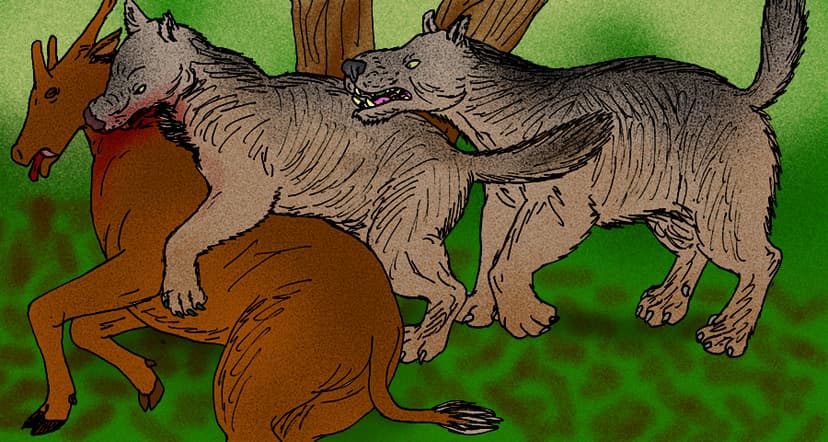
Hemicyoninae, often referred to as dog bears, were an extinct subfamily of Ursidae that existed from the Oligocene through the Miocene epochs. These bear-like carnivorans inhabited parts of Europe, North America, Africa, and Asia, and are notable for their long evolutionary history, spanning approximately 28.6 million years.

Cave Bear
The cave bear (Ursus spelaeus) was a prehistoric species of bear that inhabited Europe and Asia during the Pleistocene epoch, going extinct approximately 24,000 years ago. Named for the prevalence of their remains found in caves, they are believed to have spent more time in these sheltered environments than modern bears, often using them for hibernation. Distinctive for their large size and a predominantly herbivorous diet, cave bears displayed significant variability in size, morphology, and genetics.