
Ichthyophis husaini
Ichthyophis garoensis, also known as the Garo Hills caecilian, is a species of caecilian native to the northeastern Indian states of Assam and Meghalaya, and also found in Bangladesh. Until 2016, the Husain's caecilian, Ichthyophis husaini, was considered a distinct species but is now recognized as part of this species. It is a subterranean species that inhabits the moist leaf litter of tropical forests, typically found near water sources.
Key Facts
- ›Found in Assam and Meghalaya in north-eastern India, and in Bangladesh.
- ›Inhabits moist leaf litter of tropical forests.
- ›Typically located near streams and other water bodies.
- ›Subterranean lifestyle.
- ›Once considered a separate species, Ichthyophis husaini, until 2016.

Tropical Forests, Moist Leaf-Litter
Garo Hills Caecilian, Garo Hills Striped Caecilian
About Ichthyophis husaini
What is known about Ichthyophis garoensis
The Garo Hills caecilian, scientifically identified as Ichthyophis garoensis, is a species of caecilian native to northeastern India and Bangladesh. This amphibian is characterized by its subterranean existence, inhabiting the damp leaf litter found within tropical forests. Its geographical range includes the Indian states of Assam and Meghalaya, and it is also present in Bangladesh.
This species is typically discovered in close proximity to bodies of water, such as streams, suggesting a reliance on moist environments for survival. Until 2016, a closely related form, known as the Husain's caecilian (Ichthyophis husaini), was considered a distinct species. However, current classifications recognize Ichthyophis husaini as part of the Ichthyophis garoensis species complex.
Ichthyophis garoensis occupies elevations ranging from 410 to 530 meters (1,350 to 1,740 feet) above sea level. Its lifestyle is primarily fossorial, meaning it spends most of its time burrowing and living beneath the surface of the soil or leaf litter. Further details regarding its diet, reproductive habits, or lifespan are not extensively documented in the provided information.
Source: Wikipedia ↗
Frequently Asked Questions
What is the Garo Hills caecilian?
The Garo Hills caecilian, scientifically known as Ichthyophis garoensis, is a species of caecilian found in northeastern India and Bangladesh. It is characterized by its subterranean lifestyle within tropical forests.
Where is Ichthyophis garoensis found?
This caecilian species is naturally distributed in the states of Assam and Meghalaya in north-eastern India, as well as in Bangladesh. Its habitat is typically within tropical forests.
What kind of habitat does the Garo Hills caecilian prefer?
Ichthyophis garoensis is a subterranean species that lives in the moist leaf litter of tropical forests. It is often found in close proximity to streams and other water bodies, indicating a preference for damp environments.
Was Ichthyophis husaini always considered the same species as Ichthyophis garoensis?
No, the Husain's caecilian, Ichthyophis husaini, was recognized as a separate species until the year 2016. Following further classification, it has since been considered part of the Ichthyophis garoensis species.
Related Caecilian species

Black caecilian
The Black caecilian (Ichthyophis monochrous) is a species of amphibian found in the tropical moist forests of northern Borneo, specifically in western Kalimantan (Indonesia) and Sarawak (Malaysia), and likely Brunei. It is a relatively unknown species, with only a few specimens documented, and is characterized by its moderately slender body, distinct tail, and glandular skin with numerous annuli.
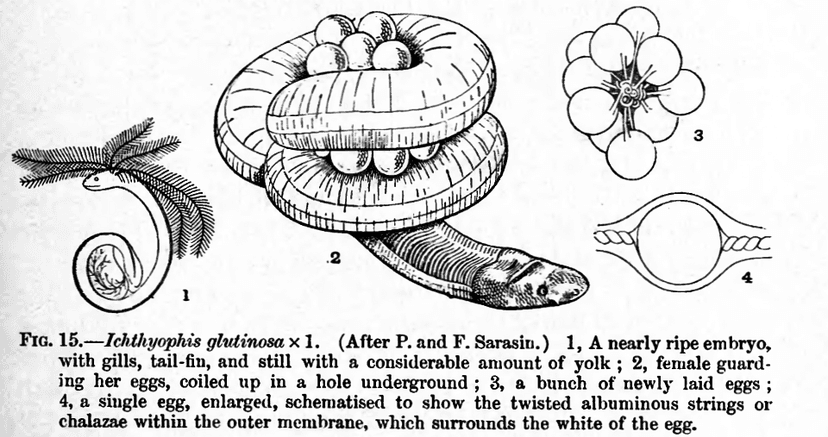
Common yellow-banded caecilian
The Common yellow-banded caecilian, also known as the Ceylon caecilian, is a species of caecilian endemic to Sri Lanka. It is characterized by its earthworm-like appearance, with steely blue and pale yellow coloration and a distinctive yellow band along its sides. This adaptable species inhabits moist tropical and subtropical forests and pastures, where it burrows in damp earth or leaf litter.
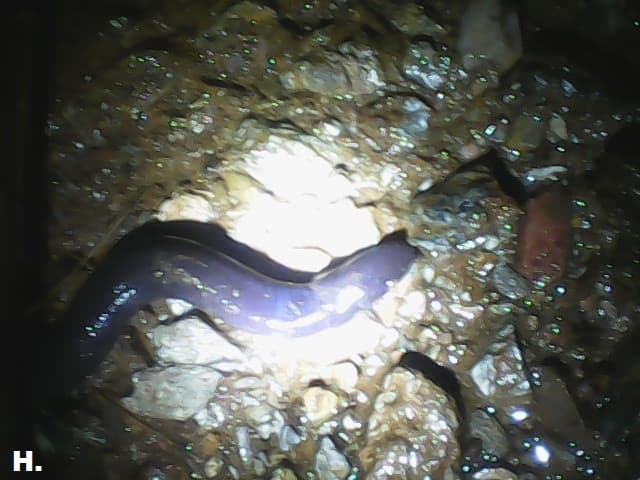
Darjeeling caecilians
The Darjeeling caecilian, scientifically known as Ichthyophis sikkimensis, is a species of amphibian native to the Himalayan foothills of India, Nepal, and potentially Bhutan. This burrowing amphibian is characterized by its elongated, worm-like body and smooth, moist skin, typically found in damp soil and leaf litter.