
Ichthyophis hypocyaneus
The Javan caecilian, Ichthyophis hypocyaneus, is a species of amphibian endemic to Java, Indonesia. Once thought to be extinct, it was rediscovered in 2000 and is known from a few specific sites on the island. This caecilian inhabits a variety of terrestrial microhabitats, from forests to plantations.
Key Facts
- ›Endemic to the island of Java, Indonesia.
- ›Rediscovered in 2000 after being known only from a single specimen collected in 1827.
- ›Inhabits diverse terrestrial microhabitats, including primary forests and plantations.
- ›Breeds during the rainy season, laying eggs in epigeic microhabitats.
- ›Metamorphosis of young occurs before the end of the dry season.

Primary Forests, Plantations, Terrestrial Microhabitats
Javan Caecilian, Marsh Caecilian
About Ichthyophis hypocyaneus
Ichthyophis hypocyaneus: The Javan Caecilian
The Javan caecilian, scientifically known as Ichthyophis hypocyaneus, is an amphibian species belonging to the family Ichthyophiidae. This unique creature is endemic to the island of Java, Indonesia. For many years, Ichthyophis hypocyaneus was known only from a single specimen collected in 1827, leading many to believe it had gone extinct. However, its rediscovery in the year 2000 brought renewed attention to this elusive species.
Distribution and Habitat
Ichthyophis hypocyaneus has been documented at four distinct sites on Java Island. Its original description came from Banten in West Java, and a significant rediscovery occurred in Pekalongan. Further sightings have been reported in Bodogol, situated at the edge of Gunung Gede Pangrango National Park, and within Gunung Halimun-Salak National Park. This species inhabits a broad spectrum of terrestrial microhabitats, adapting to environments ranging from undisturbed primary forests to cultivated plantations.
Ecology and Reproduction
As an oviparous species, the Javan caecilian reproduces by laying eggs. The breeding cycle of Ichthyophis hypocyaneus is closely tied to the island's rainy season. During this period, individuals are typically observed in epigeic microhabitats, which are environments found on or near the soil surface. Egg deposition commences with the onset of the monsoon, and the metamorphosis of the young into their adult form is completed before the conclusion of the dry season.
Source: Wikipedia ↗
Frequently Asked Questions
Where is the Javan caecilian found?
The Javan caecilian, Ichthyophis hypocyaneus, is found on the island of Java in Indonesia. It has been documented at four specific locations on Java, including Banten, Pekalongan, Bodogol, and within Gunung Halimun-Salak National Park.
Was the Javan caecilian thought to be extinct?
Yes, the Javan caecilian was believed to be extinct for a period. It was known only from a single specimen collected in 1827 until its rediscovery in the year 2000.
What kind of habitats does the Javan caecilian live in?
Ichthyophis hypocyaneus can be found in a wide array of terrestrial microhabitats. These range from undisturbed primary forests to agricultural areas like plantations.
When does the Javan caecilian breed?
The breeding season for Ichthyophis hypocyaneus coincides with the rainy season. During this time, they are typically found in epigeic microhabitats, which are habitats found on or near the surface of the soil.
Related Caecilian species

Ichthyophis sumatranus
Ichthyophis sumatranus, commonly known as the Sumatra caecilian, is a species of amphibian endemic to Sumatra, Indonesia. This species is characterized by its dark brown coloration, distinct eyes with a white spot, and a subterranean lifestyle as an adult. Its primary threat is habitat loss due to the expansion of palm oil plantations.

Ichthyophis tricolor
Ichthyophis tricolor, also known as the three-colored caecilian or Maddatorai caecilian, is an amphibian species native to the Western Ghats of India. This burrowing caecilian is characterized by its distinctive violet-brown body marked with a yellow lateral stripe and a broad, white ventral stripe. Its exact taxonomic status remains a subject of ongoing research.
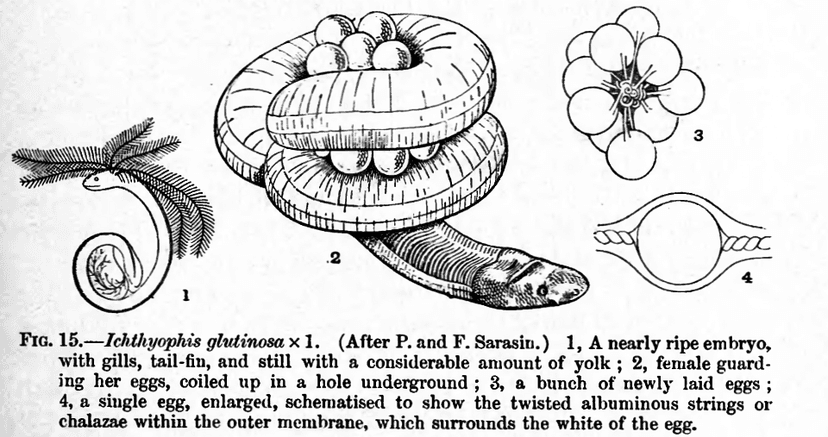
Ichthyophis glutinosus
The Ichthyophis glutinosus, commonly known as the Ceylon caecilian or common yellow-banded caecilian, is a species of caecilian native to Sri Lanka. It is characterized by its long, segmented appearance, steely blue and yellow coloration, and its habitat in moist tropical and subtropical forests and pastures.