
Grand Canyon of the Tuolumne
River Canyon·North America·Tuolumne River
The Grand Canyon of the Tuolumne is a significant river canyon within Yosemite National Park, California, carved by the Tuolumne River. It is characterized by steep, V-shaped walls adorned with diverse vegetation, numerous waterfalls along the main river, and dramatic geological features like the Muir Gorge. The canyon serves as a challenging but rewarding destination for hikers and nature enthusiasts.
Key Facts
- ›Located within Yosemite National Park, California.
- ›Defined by the USGS as extending from Glen Aulin to above Hetch Hetchy Valley.
- ›Features numerous waterfalls directly on the main Tuolumne River, including the 800-foot Waterwheel Falls.
- ›Includes the narrow Muir Gorge, a chasm less than 1 kilometer long.
- ›The canyon floor exhibits a MIX of chaparral, scrub, oak woodland, and coniferous forest.
- ›A difficult hiking trail follows the river, navigating steep and rocky terrain.

River Erosion
Waterwheel Falls, Muir Gorge
Chaparral, Manzanita Scrub, Oak Woodland, Coniferous Forest
About Grand Canyon of the Tuolumne
The Grand Canyon of the Tuolumne is a prominent river canyon situated within Yosemite National Park in California. Carved by the Tuolumne River, this dramatic gorge extends from Glen Aulin downstream to the Hetch Hetchy Valley, marking a significant geological feature within the Sierra Nevada.
Geography and Geology
Beginning at Glen Aulin, below the confluence of several creeks, the canyon's walls become steeper and the valley widens before narrowing again. Unlike the bare, sheer walls of Yosemite Valley, the Grand Canyon of the Tuolumne is characterized by steeper, V-shaped walls that are often densely vegetated. This flora includes chaparral, manzanita scrub, and oak woodland, interspersed with coniferous forests, creating a lush appearance that clings to ledges and climbs towards the rim. A key feature of the canyon is the presence of numerous waterfalls directly on the main course of the Tuolumne River, a contrast to Yosemite Valley where major falls are on tributaries. Among these is the spectacular 800-foot Waterwheel Falls, named for its distinct water plume. Further downstream, the canyon narrows significantly for less than a kilometer to form the Muir Gorge. Beyond this chasm, the canyon widens again into a broader section known as Pate Valley.
Recreation
The canyon is accessible to hikers via a trail that generally follows the Tuolumne River. This trail is noted for its challenging nature, often being steep, rocky, and difficult to traverse, particularly when detouring around the impassable Muir Gorge. The hike from Tioga Road to the Glen Aulin High Sierra Camp is approximately 10 kilometers. While areas like White Wolf campground are within day-hiking distance of the rim, descending to the canyon floor and returning is a strenuous undertaking. The wilderness between Hetch Hetchy Reservoir and the trail leading to White Wolf is considered trackless.
Source: Wikipedia ↗
Frequently Asked Questions
Where is the Grand Canyon of the Tuolumne located?
The Grand Canyon of the Tuolumne is situated within Yosemite National Park in California, spanning parts of Tuolumne County and the Sierra Nevada mountain range. It is a section of the Tuolumne River valley.
What are the main geological features of this canyon?
The canyon is characterized by its V-shaped cross-section with steep walls, though not as bare as Yosemite Valley's. It features numerous waterfalls along the main river, notably Waterwheel Falls, and a particularly narrow section known as Muir Gorge.
What kind of vegetation can be found in the Grand Canyon of the Tuolumne?
The valley floor supports a diverse flora including chaparral, manzanita scrub, and oak woodland, mixed with coniferous forests. This vegetation extends up the canyon walls, giving it a lush appearance despite a drier climate than Yosemite Valley.
What recreational activities are available in the Grand Canyon of the Tuolumne?
The primary recreational activity is hiking. A trail runs along the Tuolumne River, offering challenging routes through steep and rocky terrain. The Glen Aulin High Sierra Camp is accessible via a 10-kilometer hike from Tioga Road.
How does the Grand Canyon of the Tuolumne differ from Yosemite Valley?
While both are prominent canyons in Yosemite, the Grand Canyon of the Tuolumne features waterfalls directly on the main river, whereas Yosemite Valley's celebrated falls are on tributary streams. The walls of the Tuolumne canyon are also generally less steep and bare, with more varied vegetation on the valley floor.
Related Canyons

Big Bend National Park
Big Bend National Park is a vast protected area in West Texas, notable for its extensive Chihuahuan Desert topography and ecology. Formed by the erosive power of the Rio Grande and significant geological uplift, the park preserves a rich tapestry of life, including over 1,200 plant species and hundreds of animal species, as well as ancient fossils and diverse rock formations. Its remote location and dramatic landscapes, including the Chisos Mountains and deep river canyons, make it a significant destination for naturalists and adventurers.
Big South Fork of the Cumberland River
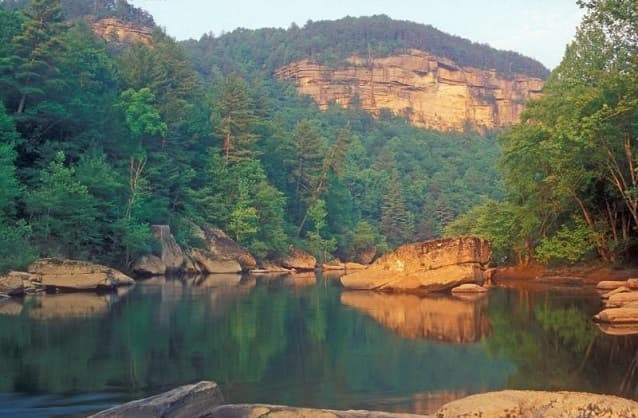
The Big South Fork of the Cumberland River is a significant river system in Tennessee and Kentucky, carved into the Cumberland Plateau. This 76-mile waterway is characterized by rugged terrain with deep gorges, natural arches, and rock shelters, and is the central feature of the Big South Fork National River and Recreation Area. Its formation by river erosion has created a diverse ecosystem and a popular destination for outdoor recreation.

Black Canyon of the Gunnison
The Black Canyon of the Gunnison is a dramatic gorge in western Colorado, carved by the Gunnison River. Its name derives from the fact that its sheer walls receive very little sunlight, often appearing black. The canyon is renowned for its extreme depth, steepness, and narrowness, combining these features into a formidable and awe-inspiring landscape.