
Dracovenator
Dracovenator was a medium-sized, bipedal carnivore that lived approximately 201 to 199 million years ago during the Early Jurassic period in what is now South Africa. Its name, meaning "dragon hunter," reflects its discovery near the "Dragon's Mountain" and its predatory nature. The genus is known from a partial skull and other fragmentary remains.
Key Facts
- ›Dracovenator lived during the Hettangian stage of the Early Jurassic epoch.
- ›Fossils were discovered in the Upper Elliot Formation of South Africa.
- ›It was a bipedal carnivore with an estimated length of 5.5–6.5 meters and a mass of 250 kg.
- ›The genus name "Dracovenator" translates to "dragon hunter."
- ›Its skull exhibits a unique kink between the maxilla and premaxilla.
- ›It is thought to have preyed on prosauropod dinosaurs in its environment.

- Medium-sized, moderately built
- Estimated length of 5.5–6.5 meters
- Estimated body mass of 250 kg
- Kink in upper jaws between maxilla and premaxilla
- Lumps and bumps on the back end of the lower jaw
Dilophosaurus, Zupaysaurus
South Africa
About Dracovenator
Dracovenator is a genus of neotheropod dinosaur that roamed the Earth approximately 201 to 199 million years ago, during the early part of the Jurassic period. Its fossils have been discovered in what is now South Africa, specifically within the Upper Elliot Formation. The genus name, Dracovenator, is a fitting moniker meaning "dragon hunter," derived from the Latin "draco" (dragon) and "venator" (hunter), and also referencing its discovery in the foothills of the Drakensberg mountains, known as "Dragon's Mountain."
Physical Description and Biology
Dracovenator was a bipedal carnivore, meaning it walked on two legs and subsisted on a diet of meat. It is estimated to have been a medium-sized dinosaur, with a moderately built body. Adults likely reached lengths of 5.5 to 6.5 meters (18 to 21 feet) and weighed around 250 kilograms (550 pounds). Anatomical studies of its partial skull reveal distinctive features, including a notable kink between the maxilla and premaxilla in its upper jaws. The posterior part of its lower jaw also displays a pattern of lumps and bumps, a trait observed to a lesser extent in other theropods like Dilophosaurus.
Discovery and Classification
The type specimen of Dracovenator was unearthed at the "Upper Drumbo Farm" locality in the Eastern Cape Province of South Africa by James Kitching and Regent "Lucas" Huma. The fossils were found in sandstone deposited during the Hettangian stage. Dracovenator was formally described and named by Adam M. Yates in 2005, with the type species being Dracovenator regenti, named in honor of Regent "Lucas" Huma. Phylogenetic analyses have placed Dracovenator within the clade Neotheropoda, suggesting a close relationship with basal theropods such as Dilophosaurus and Zupaysaurus.
Paleoenvironment
Dracovenator inhabited an ancient floodplain environment, as suggested by the geological context of the Upper Elliot Formation. This ecosystem was shared with other dinosaurs, including prosauropods like Massospondylus and Plateosaurus, as well as a diverse array of early Jurassic ornithischian dinosaurs. It is hypothesized that Dracovenator was a predator in this environment, likely preying on the herbivorous prosauropods it coexisted with. Unfortunately, the cranial material housed at the Evolutionary Studies Institute has been lost, and no new fossils of Dracovenator have been discovered to date, making its fossil record relatively fragmentary.
Source: Wikipedia ↗
Frequently Asked Questions
When did Dracovenator live?
Dracovenator lived approximately 201 to 199 million years ago, during the Hettangian stage of the Early Jurassic period. This places it among the earliest dinosaurs to roam the Earth.
Where were Dracovenator fossils found?
The fossils of Dracovenator were discovered in the Upper Elliot Formation of the Stormberg Group in Eastern Cape Province, South Africa. This region was part of a floodplain environment during the Early Jurassic.
What does the name Dracovenator mean?
The name Dracovenator is a combination of the Latin words "draco" (dragon) and "venator" (hunter), meaning "dragon hunter." This name was inspired by its discovery in the foothills of the Drakensberg mountains, or "Dragon's Mountain."
What was Dracovenator's diet?
Dracovenator was a carnivore, meaning it primarily ate meat. It is believed to have preyed on smaller herbivores, such as prosauropod dinosaurs, that shared its habitat.
How large was Dracovenator?
Dracovenator was a moderately sized dinosaur, estimated to have reached lengths of 5.5 to 6.5 meters (18 to 21 feet) and weighed around 250 kilograms (550 pounds).
What are some of Dracovenator's distinctive physical features?
Dracovenator possessed a kink in its upper jaws between the maxilla and premaxilla. The back of its lower jaw also featured a series of lumps and bumps, a characteristic also observed in Dilophosaurus.
Related Dinosaur species

Aardonyx
Aardonyx is a genus of basal sauropodomorph dinosaur from the Early Jurassic period of South Africa. Known from disarticulated bones of two immature individuals, it exhibits a unique mix of traits, showing adaptations for both bipedal and quadrupedal locomotion and feeding. Its discovery helped fill a gap in understanding the transition towards the large, quadrupedal sauropods.

Aristosaurus
Aristosaurus is a dubious genus of sauropodomorph dinosaur from the Early Jurassic of southern Africa, known from a single, nearly complete skeleton. Initially described as Aristosaurus erectus, it was later considered a synonym of Gyposaurus or a juvenile Massospondylus, but recent reviews classify it as an indeterminate sauropodomorph.
Anthodon
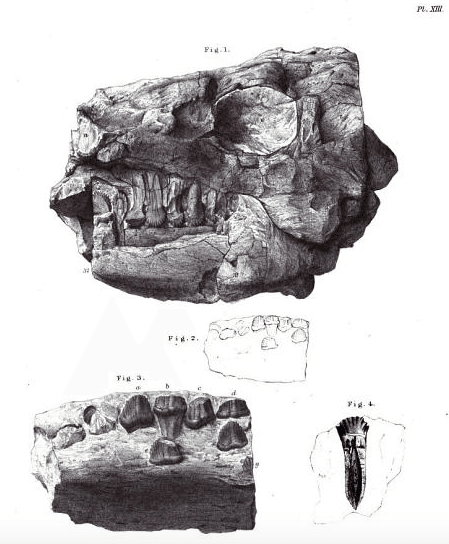
Anthodon was an extinct genus of parareptile that lived during the Permian period in what is now South Africa and Tanzania. Named for its distinctive flower-like teeth, which had numerous cusps, Anthodon was a relatively small herbivore, measuring about 1.2 to 1.5 meters in length.