
Aprasia smithi
The Zuytdorp worm-lizard (Aprasia smithi), also known as Smith's legless lizard, is a species endemic to Australia, specifically found in Western Australia. It prefers grassland and shrubland habitats and reproduces by laying eggs.
Key Facts
- ›Found exclusively in the Australian state of Western Australia.
- ›Inhabits natural environments such as grasslands and shrublands.
- ›Is a legless lizard belonging to the Pygopodidae family.
- ›Reproduces via the oviparous method, laying eggs.
- ›Named in honor of Australian herpetologist Lawrence Alec Smith.

Zuytdorp Worm-Lizard, Smith's Legless Lizard
Western Australia, Australia
Legless Lizard.
About Aprasia smithi
Aprasia smithi: The Zuytdorp Worm-Lizard
The Zuytdorp worm-lizard, scientifically designated as Aprasia smithi and also commonly referred to as Smith's legless lizard, is a distinctive species of lizard found exclusively in Australia. Belonging to the family Pygopodidae, this reptile is characterized by its legless form, a trait shared by other members of its family. Its natural habitat is specifically confined to the state of Western Australia, where it prefers to reside in grassland and shrubland environments.
Taxonomy and Naming
The specific epithet, smithi, was chosen to honor Lawrence Alec Smith, an Australian herpetologist born in 1944, recognizing his contributions to the field. The species is sometimes referred to by variations in scientific nomenclature, with historical records noting combinations like Abilaena smithi.
Habitat and Distribution
Aprasia smithi is endemic to Western Australia, a vast region in the western part of the Australian continent. The preferred natural habitats for this legless lizard are open grasslands and areas dominated by shrubs. These environments likely provide the necessary cover and resources for its survival and foraging.
Reproduction
In terms of reproduction, Aprasia smithi is oviparous. This means that the species reproduces by laying eggs, a characteristic shared by many reptile species. Details regarding specific nesting behaviors or clutch sizes are not extensively documented in the primary available records.
Source: Wikipedia ↗
Frequently Asked Questions
What is the Zuytdorp worm-lizard?
The Zuytdorp worm-lizard, scientifically known as Aprasia smithi, is a species of legless lizard. It is part of the Pygopodidae family and is found only in Australia.
Where can Aprasia smithi be found?
Aprasia smithi is geographically restricted to the Australian state of Western Australia. Its natural range is within this specific region of the continent.
What kind of habitat does Smith's legless lizard prefer?
Smith's legless lizard thrives in natural environments that include grassland and shrubland. These open and vegetated areas provide its preferred living conditions.
How does Aprasia smithi reproduce?
Aprasia smithi reproduces using the oviparous method. This means females lay eggs as part of their reproductive cycle.
Why is this lizard called Smith's legless lizard?
The species name, smithi, was given in honor of Lawrence Alec Smith, an Australian herpetologist. This acknowledges his contributions to the field of herpetology.
Related Lizards

Agama anchietae
Agama anchietae, commonly known as Anchieta's agama or the western rock agama, is a species of lizard native to southern Africa. It is characterized by its cryptic coloration, a wider head and longer tail in males due to sexual dimorphism, and a diet primarily consisting of insects, particularly ants. This species inhabits diverse environments including deserts, shrublands, and grasslands, and it reproduces by laying eggs.
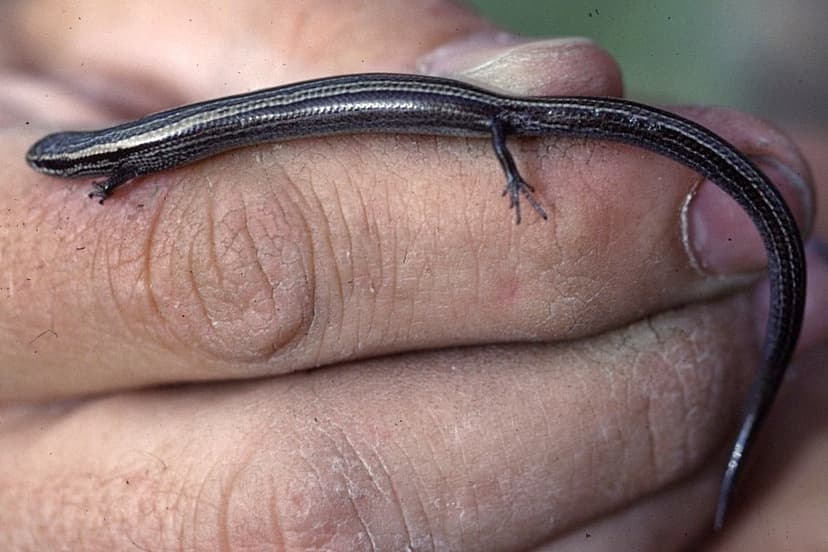
Chernov's skink
Chernov's skink, scientifically known as *Ablepharus chernovi*, is a species of skink found in northern Eurasia. This lizard inhabits grasslands, shrublands, and forests at moderate to high altitudes. It is characterized by being oviparous, with females laying clutches of up to four eggs.
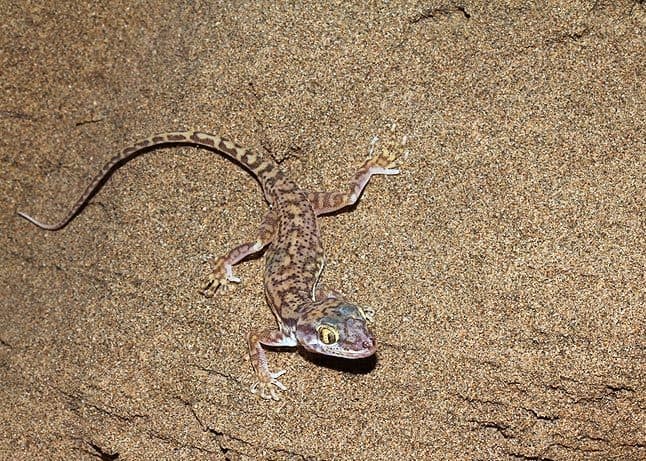
Crossobamon eversmanni
Crossobamon eversmanni, commonly known as the comb-toed gecko, is a species of Asian gecko found in desert, grassland, and shrubland habitats across Iran, Pakistan, and Central Asia. This terrestrial and nocturnal lizard is characterized by its burrowing behavior and oviparous reproduction, with females laying one to two eggs per clutch.