
Blanus mariae
Maria's worm lizard (Blanus mariae) is an amphisbaenian species endemic to the Iberian Peninsula, specifically found in the southwestern regions of Portugal, Extremadura, and western Andalusia in Spain. Characterized by its pale pink to dark brilliant purple coloration and a distinct reticulate pattern, this fossorial reptile is part of a cryptic species complex.
Key Facts
- ›Endemic to the southwestern Iberian Peninsula, including southern Portugal and parts of Spain.
- ›Displays a pale pink to dark brilliant purple body color.
- ›Features a reticulate pattern caused by inter-segmental sutures.
- ›Belongs to the Blanidae family of amphisbaenians (worm lizards).
- ›Forms a cryptic species complex with Blanus cinereus.
- ›Named in honor of Maria del Rosario Aguilar Tortajada.
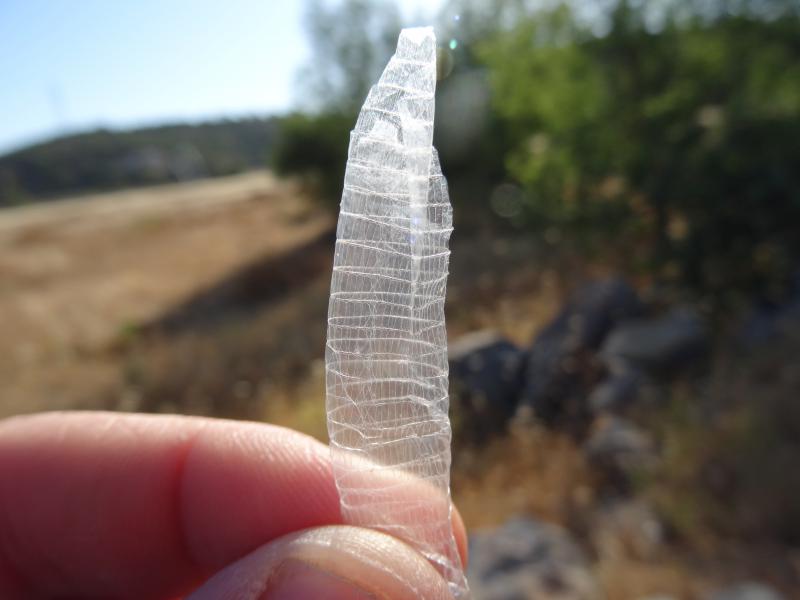
Maria's Worm Lizard
Southwestern Iberian Peninsula, Southern Portugal, Extremadura, Western Andalusia
- Average Snout-Vent Length of 175 mm .
- Body Color Ranges From Pale Pink To Dark Brilliant Purple.
- Features A Reticulate Pattern Caused By Inter-Segmental Sutures.
Fossorial Lifestyle.
About Blanus mariae
Maria's Worm Lizard
Maria's worm lizard, scientifically known as Blanus mariae, is a species of amphisbaenian lizard belonging to the family Blanidae. This species is specifically endemic to the Iberian Peninsula, with its natural range concentrated in the southwestern regions. It is found primarily in southern Portugal and extends into the Spanish autonomous communities of Extremadura and western Andalusia.
Physical Characteristics
Blanus mariae is characterized by its distinctive coloration, which can range from a pale pink to a dark, brilliant purple. A notable feature is the presence of a reticulate pattern across its body, created by the inter-segmental sutures. The average snout-vent length for this species is approximately 175 mm (6.9 inches). As a fossorial species, it is adapted for a life spent underground.
Taxonomy and Etymology
This species is recognized as forming a cryptic species complex with Blanus cinereus, indicating a close evolutionary relationship that can make differentiation challenging. The specific name, mariae, was chosen in honor of Maria del Rosario Aguilar Tortajada, who was the grandmother of Eva María Albert, one of the scientists credited with describing this species. The research describing Blanus mariae was published in 2009, highlighting its status as a newly identified species within the Blanus genus.
Source: Wikipedia ↗
Frequently Asked Questions
Where is Maria's worm lizard found?
Maria's worm lizard is endemic to the southwestern Iberian Peninsula. Its range primarily includes the southern half of Portugal and the Spanish autonomous communities of Extremadura and western Andalusia.
What does Maria's worm lizard look like?
This species has a body color that ranges from pale pink to dark brilliant purple. A distinctive reticulate pattern is visible due to the inter-segmental sutures along its body.
What is the scientific classification of Maria's worm lizard?
Maria's worm lizard belongs to the genus Blanus within the family Blanidae. It is classified as an amphisbaenian, commonly known as a worm lizard.
What is the significance of the name 'mariae'?
The specific name 'mariae' honors Maria del Rosario Aguilar Tortajada, the grandmother of one of the scientists who described this species, Eva María Albert.
Is Maria's worm lizard related to other species?
Yes, Blanus mariae is known to form a cryptic species complex with Blanus cinereus. This suggests they are closely related but distinct species, often difficult to differentiate based on external characteristics alone.
Related Lizards
Amphisbaena mertensi
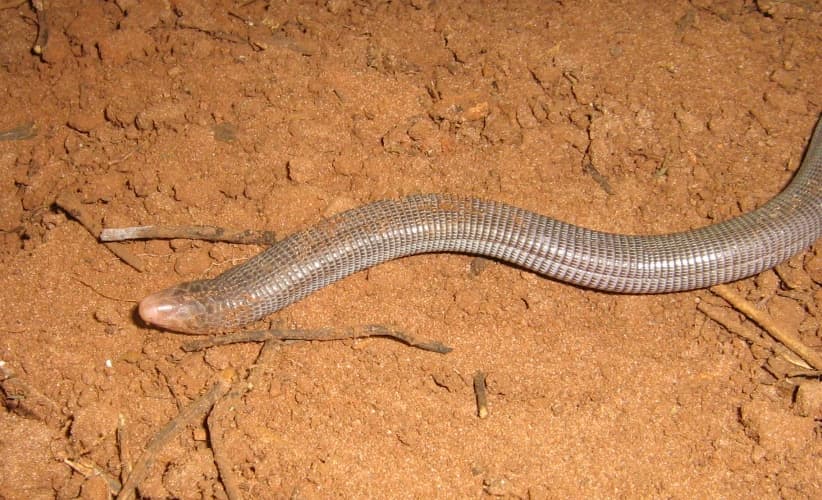
Amphisbaena mertensii, also known as Mertens' worm lizard, is a species of amphisbaenian endemic to South America, found in parts of Argentina, Brazil, and Paraguay. These fossorial reptiles possess a powerful bite and employ writhing defensive tactics, including releasing a foul discharge from their cloacal region, to deter predators.

Aprasia inaurita
The Mallee worm-lizard (Aprasia inaurita) is a slender, legless lizard endemic to southern mainland Australia. It is characterized by its pale olive-brown or greyish-brown upper body, whitish underside, and a distinctively bright reddish-orange tail. This species inhabits semi-arid Mallee woodlands and is fossorial, often found under leaf litter, in sand, or within ant tunnels.

Leposternon microcephalum
Leposternon microcephalum, commonly known as the smallhead worm lizard, is a species of amphisbaenian native to South America. It is characterized by its fossorial habits, which offer protection from predators. This oviparous reptile is found across several South American countries.