
Blanus mettetali
The Moroccan worm lizard (Blanus mettetali) is a species of amphisbaenian endemic to Morocco. It is characterized by having eight or more preanal pores, typically arranged in a continuous transverse series. This terrestrial species inhabits various temperate and Mediterranean environments, including forests, shrublands, and pasturelands.
Key Facts
- ›Endemic to Morocco.
- ›Possesses eight or more preanal pores.
- ›Found in temperate forests, shrublands, and pasturelands.
- ›Adults are terrestrial and shelter in sandy soil or under stones.
- ›Reproduction is oviparous, with a clutch size of one egg.
- ›Threatened by habitat loss.

Moroccan Worm Lizard
Morocco
- Possesses Eight Or More Preanal Pores.
- Preanal Pores Are Usually Arranged In A Continuous Transverse Series.
Terrestrial., Shelters In Sandy Soil., Shelters Under Stones.
Habitat Loss
About Blanus mettetali
Blanus mettetali: The Moroccan Worm Lizard
The Moroccan worm lizard, scientifically identified as Blanus mettetali, is a distinct species of amphisbaenian belonging to the Blanidae family. This reptile is endemic to Morocco, meaning it is found naturally nowhere else in the world. Its name honors Mr. Mettetal, who led the Laboratory of Animal Biology at the Faculty of Sciences of Morocco.
Habitat and Behavior
Blanus mettetali inhabits a variety of terrestrial environments. Its natural range includes temperate forests, temperate shrublands, Mediterranean-type shrubby vegetation, arable land, and pastureland. These lizards have been observed at elevations reaching up to 2,092 meters (6,864 feet). Behaviorally, the Moroccan worm lizard is terrestrial, seeking refuge in sandy soil or beneath stones. This suggests a life spent largely underground or hidden from view.
Physical Characteristics and Reproduction
A key distinguishing feature of Blanus mettetali is the presence of eight or more preanal pores. These pores are typically arranged in a continuous transverse series along the ventral side of the body. The species is oviparous, reproducing by laying eggs. A characteristic of its reproductive cycle is a small clutch size, with typically only one egg laid per breeding event.
Conservation Concerns
The Moroccan worm lizard faces threats, with habitat loss being the most significant concern. As its natural environments are altered or disappear, the populations of Blanus mettetali are put at risk. Specific details regarding its lifespan, precise diet, and natural predators are not extensively documented in available records.
Source: Wikipedia ↗
Frequently Asked Questions
What is the Moroccan worm lizard?
The Moroccan worm lizard, scientifically known as Blanus mettetali, is a species of amphisbaenian. It belongs to the Blanidae family and is found exclusively in Morocco.
What are the distinctive physical features of Blanus mettetali?
A notable characteristic of Blanus mettetali is the presence of eight or more preanal pores, which are typically arranged in a continuous transverse series. Other specific physical descriptions are not detailed in available records.
Where does the Moroccan worm lizard live?
The natural habitats of Blanus mettetali include temperate forests, temperate shrublands, Mediterranean-type shrubby vegetation, arable land, and pastureland. They have been recorded at elevations up to 2,092 meters.
What is the behavior of Blanus mettetali?
Blanus mettetali is a terrestrial species. It is known to shelter in sandy soil and beneath stones, indicating a fossorial or semi-fossorial lifestyle.
How does Blanus mettetali reproduce?
The Moroccan worm lizard reproduces by laying eggs, making it an oviparous species. Each reproductive event typically results in a single egg.
What are the threats facing Blanus mettetali?
The primary threat identified for Blanus mettetali is habitat loss. This loss of suitable environments likely impacts their survival and population numbers.
Related Lizards
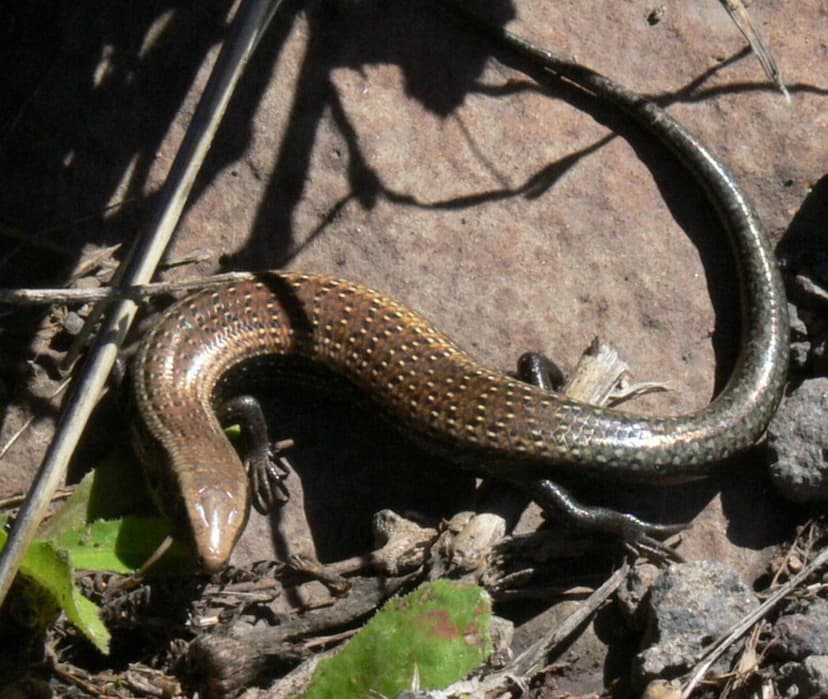
Chalcides viridanus
The West Canary skink, scientifically known as Chalcides viridanus, is a species of lizard endemic to the Canary Islands. This skink inhabits a diverse range of environments, from temperate forests and grasslands to urban areas, and can be found at elevations up to 2,000 meters. It is characterized by its cylindrical body and can reach a total length of approximately 18 cm.
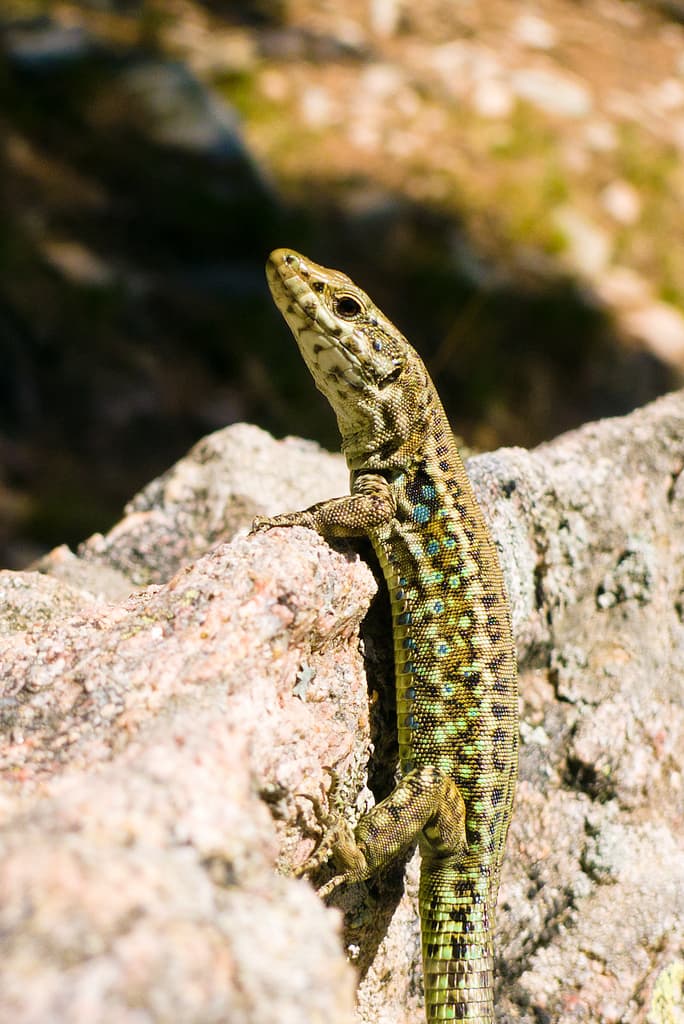
Podarcis tiliguerta
The Tyrrhenian wall lizard (Podarcis tiliguerta) is a species of lizard belonging to the Lacertidae family. It is native to the islands of Corsica and Sardinia and their surrounding islets, inhabiting a variety of temperate and Mediterranean environments. This species is distinguished by its subspecies diversity and is not currently considered threatened.

West Canary skink
The West Canary skink, also known as the Canaryan cylindrical skink, is a species of lizard endemic to the Canary Islands. It inhabits a variety of environments, from temperate forests to urban areas, and can be found at altitudes up to 2,000 meters. This viviparous lizard is active during the day and at dusk, reaching a total length of about 18 cm.