
Gehyra mutilata
Gehyra mutilata, also known as the common four-clawed gecko, is a small, adaptable lizard native to Southeast Asia with a wide distribution across various islands and continents. It is characterized by its delicate, purplish-gray skin that may have golden spots in younger individuals, and a distinctive lack of a claw on its innermost digit. This unobtrusive gecko is often found in human dwellings, woodlands, and rocky areas, where it helps control insect populations.
Key Facts
- ›Native to Southeast Asia but widely distributed globally.
- ›Possesses delicate, purplish-gray skin, sometimes with golden spots.
- ›Distinguished by the absence of a claw on its innermost digit.
- ›Primarily feeds on isopods, termites, and other small insects.
- ›Oviparous, typically laying one to three eggs per clutch.

Common Four-Clawed Gecko, Pacific Gecko, Stump-Toed Gecko, Sugar Gecko, Tender-Skinned House Gecko, Butiki
Borneo, Southeastern China, French Polynesia, Hawaii, India, Indonesia, Malaysia, Singapore, Mascarene Islands, Western Mexico, Myanmar, Thailand, New Guinea, Philippines, Pitcairn Islands, Seychelles, Sri Lanka
Woodlands, Rocky Areas, Human Dwellings, Sand Beaches
- Head Is Longer Than Broad.
- Snout Is Longer Than the Distance Between the Eye and Ear-Opening.
- Forehead Has A Median Groove.
- Ear-Opening Is Moderately Large and Suboval.
- Body and Limbs Are Moderately Elongate and Depressed.
- Skin Is Delicate, Usually Colored A Soft Purplish/Pinkish Gray.
- Younger Specimens May Have Golden Spots That Fade With Age.
- Digits Are Short and More Or Less Webbed At the Base.
- Inferior Lamellae Are Angular and Divided By A Median Groove.
- Upper Surface of the Body and Throat Are Covered With Small Granular Scales.
- Abdominal Scales Are Moderate.
- Tail Is Depressed, Normally With A Sharpish, Minutely Serrated Lateral Edge.
- Upper Surface of the Tail Has Very Small Flat Scales.
- Lower Surface of the Tail Generally Has A Median Series of Large Transversely Dilated Scales.
- May Attain A Snout-To-Vent Length of 5.7 cm .
- Tail Length Is Equal To Snout-To-Vent Length.
- Absence of A Claw On the Innermost Digit Is A Key Identification Character.
Isopods, Termits, Other Small Insects
- Very Adaptable To Its Surroundings.
- Nocturnally Active.
- Unobtrusive.
- Preys On Household Insects.
- Capable of Making Noises To Communicate.
- Call Sounds Like 'Tock', Repeated Six To Eight Times With Increasing Volume.
- Capable of Running Faster Than Other House Geckos.
About Gehyra mutilata
Gehyra mutilata: The Common Four-Clawed Gecko
Gehyra mutilata, commonly known as the common four-clawed gecko, is a small lizard species belonging to the Gekkonidae family. Originally native to Southeast Asia, it has established populations in numerous regions worldwide, including various Pacific Islands, Sri Lanka, and parts of the Indian subcontinent. This gecko is characterized by its delicate, purplish-gray skin, which may feature golden spots in younger individuals that diminish with age. A defining physical trait is the absence of a claw on its innermost digit, distinguishing it from many other gecko species.
Habitat and Behavior
Highly adaptable, Gehyra mutilata thrives in diverse environments, including woodlands, rocky terrains, and, notably, human dwellings. It can be found from sea level up to altitudes of 1,400 meters. While often present in houses, it is generally unobtrusive and beneficial, contributing to pest control by preying on insects such as isopods and termites. This species is primarily nocturnal, spending much of its time on walls and ceilings, and is capable of vocalizations, producing a 'tock'-like call. It is also known for its agility, being able to run faster than other common house geckos.
Reproduction and Description
Gehyra mutilata is an oviparous species, meaning it reproduces by laying eggs, with clutches typically containing one to three eggs, most commonly two. Physically, the gecko has a somewhat plump build with a head that is longer than it is broad. Its snout is longer than the distance from its eye to its ear. The body and limbs are moderately elongated and flattened. The digits are short and partially webbed at the base. The tail is depressed and can have a slightly serrated lateral edge. Adult specimens may reach a snout-to-vent length of approximately 5.7 centimeters, with the tail length being roughly equivalent.
Source: Wikipedia ↗
Frequently Asked Questions
What are the common names for Gehyra mutilata?
Gehyra mutilata is known by several common names, including the common four-clawed gecko, Pacific gecko, stump-toed gecko, sugar gecko (in Indonesia), and tender-skinned house gecko. In the Philippines, it is referred to as butiki.
Where is Gehyra mutilata found geographically?
This species is widely distributed and can be found throughout Borneo, southeastern China, French Polynesia, Hawaii, India, Indonesia, Malaysia, Singapore, the Mascarene Islands, western Mexico, Myanmar, Thailand, New Guinea, the Philippines, the Pitcairn Islands, Seychelles, and Sri Lanka.
What kind of habitat does Gehyra mutilata prefer?
Gehyra mutilata is highly adaptable and typically inhabits woodlands, rocky areas, and human dwellings. It can be found at altitudes ranging from sea level up to 1,400 meters and is also common on sand beaches, where it can be considered an invasive species.
What is the typical diet of Gehyra mutilata?
The diet of Gehyra mutilata consists mainly of small invertebrates. It preys upon isopods, termites, and other small insects found in its environment.
How does Gehyra mutilata reproduce?
Gehyra mutilata is oviparous, meaning it lays eggs. A typical clutch size ranges from one to three eggs, with two eggs being the most common number.
What are the distinctive physical characteristics of Gehyra mutilata?
Gehyra mutilata has a somewhat plump appearance with delicate skin, usually colored a soft purplish/pinkish gray. Younger specimens may have golden spots that fade with age. A key identification feature is the absence of a claw on its innermost digit.
Is Gehyra mutilata considered a pest?
While Gehyra mutilata is adaptable and often found in human dwellings, it is generally unobtrusive and beneficial as it preys on household insects. However, in some areas like Hawaii, it is considered an invasive species.
Related Lizards
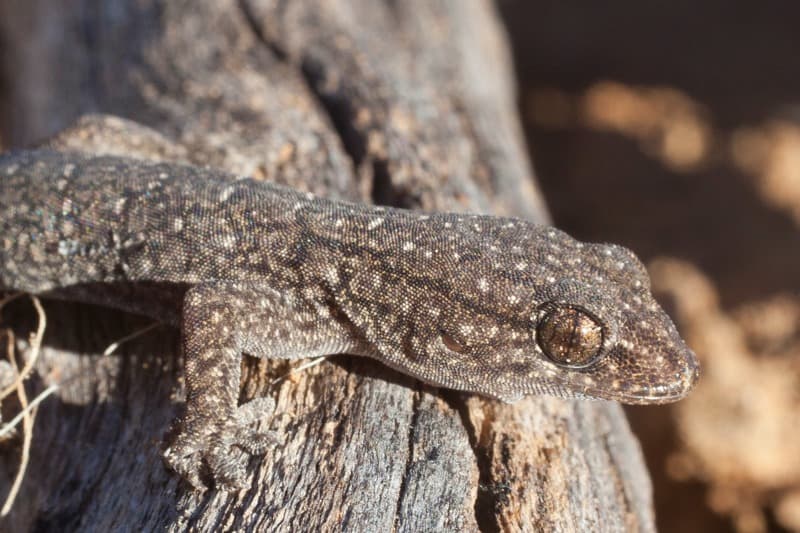
Gehyra variegata
Gehyra variegata, also known as the tree dtella, is a gecko species native to inland Australia. This lizard is characterized by its highly variable dorsal coloration, ranging from grey to brown with blotches or spots, and its ability to climb using specialized toe pads. It inhabits arid to sub-humid woodlands, shrublands, and rocky areas, demonstrating adaptability to disturbed land.

Hemidactylus platyurus
The flat-tailed house gecko (Hemidactylus platyurus) is a species of gecko native to southeastern and southern Asia, also known as the frilled house gecko or Asian house gecko. It is characterized by distinctive skin flaps, or patagia, along its body and limbs, which aid in gliding. This species is commonly found in various terrestrial habitats and is also a frequent inhabitant of human dwellings.
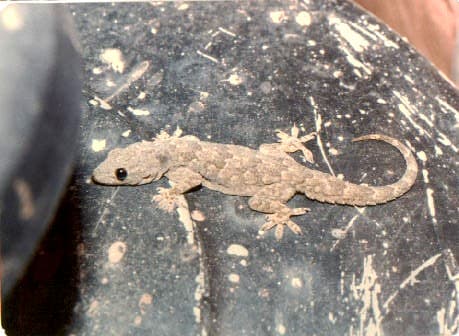
Hemidactylus flaviviridis
Hemidactylus flaviviridis, commonly known as the yellow-belly gecko or northern house gecko, is a widespread gecko species found across parts of Africa, the Middle East, and the Indian subcontinent. These geckos are typically found in human-modified habitats and are known for their adaptability.