
Greek slowworm
The Greek slow worm (Anguis graeca) is a legless lizard species native to Greece, Albania, and North Macedonia. It thrives in vegetated, humid environments offering ample hiding places among rocks and leaves. This species is known for its defensive behavior of feigning death when threatened.
Key Facts
- ›Inhabits Greece, Albania, and North Macedonia.
- ›Prefers vegetated, humid areas with cover.
- ›Preyed upon by snakes, amphibians, birds, and mammals.
- ›Exhibits death feigning behavior as a defense mechanism.
- ›Belongs to the Anguidae family of lizards.

Greek Slow Worm
Greece, Albania, North Macedonia
Vegetated Areas, Humid Areas, Areas With Rock Cover, Areas With Leaf Litter
Legless Lizard.
- Engages In Death Feigning Behavior When Threatened.
Snakes, Frogs, Toads, Birds, Mammals, Lizards of the Genus Lacerta
About Greek slowworm
The Greek Slow Worm (Anguis graeca)
The Greek slow worm, scientifically known as Anguis graeca, is a species of legless lizard found in the Balkan region of Europe. Its native range includes Greece, Albania, and North Macedonia, where it prefers to inhabit environments that are both vegetated and humid. These conditions provide the necessary cover and moisture for its survival, with the species often found seeking refuge among rocks and leaf litter.
Key Characteristics and Behavior
This lizard is characterized by its lack of limbs, a feature that often leads to confusion with snakes. However, it belongs to the Anguidae family. When faced with danger, the Greek slow worm exhibits a notable defense mechanism: it feigns death. This behavior is thought to deter predators by making the lizard appear unappetizing or already deceased.
Ecology and Predation
The Greek slow worm plays a role in its ecosystem as both a predator and prey. Its diet is not detailed in available records, but it is known to be preyed upon by a variety of animals. Common predators include snakes, amphibians such as frogs and toads, various birds, and mammals. More recently, lizards belonging to the genus Lacerta have also been identified as predators of this species.
Source: Wikipedia ↗
Frequently Asked Questions
Where is the Greek slow worm found?
The Greek slow worm is naturally found in Greece, Albania, and North Macedonia. It prefers vegetated and humid areas within these regions that provide good hiding spots.
What kind of habitat does the Greek slow worm prefer?
This species prefers vegetated and humid areas. It particularly favors locations with good cover, such as hiding spots among rocks and fallen leaves.
What are the natural predators of the Greek slow worm?
The Greek slow worm is preyed upon by a variety of animals. These include snakes, frogs, toads, birds, and mammals. More recently, lizards of the genus Lacerta have also been identified as predators.
How does the Greek slow worm defend itself?
When threatened, the Greek slow worm engages in a defensive behavior known as death feigning. This involves acting as if it is dead to deter potential predators.
Related Lizards

Smooth-backed gliding gecko
The smooth-backed gliding gecko, scientifically known as Gekko lionotum, is a species of gecko native to Southeast Asia. It is characterized by its ability to glide, an adaptation for navigating its arboreal habitat. This species is found across several countries in the region, inhabiting forests and other vegetated areas.

Oplurus quadrimaculatus
Oplurus quadrimaculatus, also known as Duméril's Madagascar Swift or the Madagascar spotted spiny-tailed iguana, is a terrestrial lizard endemic to Madagascar. This species is characterized by its greyish coloration, spotted back and tail, and legs covered in enlarged, spinous scales. It inhabits a variety of environments across Madagascar, from arid spiny forests to humid rainforest margins.
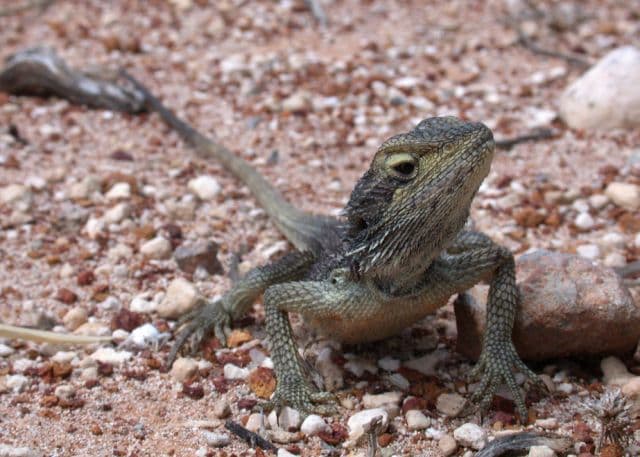
Abrolhos bearded dragon
The Abrolhos bearded dragon (Pogona minor minima) is a small agamid lizard endemic to the islands of the Houtman Abrolhos archipelago off the coast of Western Australia. It is characterized by its smaller size compared to related bearded dragons and inhabits sandy or limestone outcrop environments.