
Hemidactylus imbricatus
The carrot-tail viper gecko (Hemidactylus imbricatus) is a species of gecko recognized for its depressed body and long, slender limbs. It is characterized by a distinctive swollen tail that tapers to a point. This gecko primarily inhabits arid regions and is found in Iran, Pakistan, and potentially India.
Key Facts
- ›Also known by its former scientific name, Teratolepis fasciata.
- ›Possesses a depressed body and relatively long, slender limbs.
- ›Features a distinctive swollen tail that tapers to a point.
- ›Dorsal scales are large and slightly keeled, while ventral scales are smaller and smooth.
- ›Typically exhibits grayish coloration with brown longitudinal bands interrupted by white spots, forming cross bands.
- ›Adult head and body length averages around 38 mm (1.5 inches).
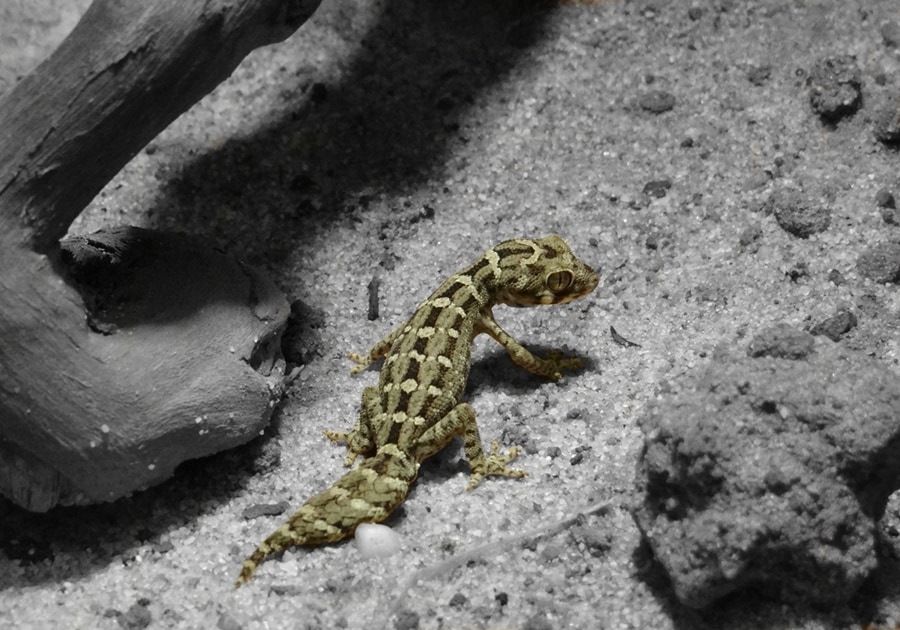
Carrot-Tail Viper Gecko, White-Striped Viper Gecko
Iran, Pakistan, India
- Body Somewhat Depressed; Limbs Rather Long and Slender.
- Head Covered With Polygonal Flat Scales.
- Seven Lower Labials; Mental Large, Triangular; Two Larger Anterior Chin-Shields, In Contact Behind the Mental, Followed By Others Passing Gradually Into the Small Gular Granules.
- Dorsal Scales Large, Lozenge-Shaped, Slightly Keeled; Ventral Scales Much Smaller, Smooth.
- Tail Depressed, Swollen, Tapering At the End, Covered With Imbricate Irregular Scales, Some of Those of the Upper Surface Being Extremely Large.
- Coloration Is Grayish Above, With Five Brown Longitudinal Bands, Which At Regular Intervals Are Interrupted By White Spots Forming Cross Bands; Seven of These Cross Bands On the Neck and Trunk.
- Head and Body Length Is Approximately 1.5 Inches .
About Hemidactylus imbricatus
The carrot-tail viper gecko, scientifically known as Hemidactylus imbricatus, is a species of gecko distinguished by its somewhat depressed body and notably long, slender limbs. Its tail is a prominent feature, being swollen and tapering to a point, covered in imbricate and irregular scales. This species is found in arid environments across Iran and Pakistan, with some less certain records indicating its presence in India.
Taxonomy and Nomenclature
Historically, this gecko was classified under the genus Teratolepis as Teratolepis fasciata. Following taxonomic revisions that synonymized Teratolepis with Hemidactylus, the species required a new name to avoid being a junior homonym of Hemidactylus fasciatus Gray 1842. Thus, Hemidactylus imbricatus became its accepted scientific designation.
Physical Description
Adult Hemidactylus imbricatus typically measure around 38 mm (1.5 inches) from head to body. The head is adorned with flat, polygonal scales. Its dorsal scales are relatively large and slightly keeled, contrasting with the smaller, smooth ventral scales. The tail is depressed and swollen, tapering to a fine point and covered in imbricate, irregular scales. The typical coloration is a grayish base, overlaid with five brown longitudinal bands. These bands are periodically broken by white spots, creating a pattern of cross bands, with approximately seven such cross bands present on the neck and trunk.
Distribution and Habitat
The geographic range of Hemidactylus imbricatus primarily includes Iran and Pakistan. While historical accounts mention its presence in India, these records are considered questionable by some authorities. The species is adapted to arid environments, suggesting it thrives in dry, possibly rocky or sandy habitats within these regions.
Source: Wikipedia ↗
Frequently Asked Questions
What is the scientific name of the carrot-tail viper gecko?
The current scientific name for the carrot-tail viper gecko is Hemidactylus imbricatus. It was formerly known as Teratolepis fasciata before taxonomic updates.
Where is the carrot-tail viper gecko found?
This species is primarily found in Iran and Pakistan. There are also questionable records suggesting its presence in India.
What are the physical characteristics of Hemidactylus imbricatus?
Hemidactylus imbricatus has a somewhat depressed body with long, slender limbs. Its tail is swollen, tapering to a point, and covered in imbricate scales. The coloration is typically grayish with brown longitudinal bands and white cross bands.
What is the typical size of a carrot-tail viper gecko?
The head and body length of this gecko species is approximately 1.5 inches (38 mm).
What are the main features of the carrot-tail viper gecko's scales?
The dorsal scales of Hemidactylus imbricatus are large and slightly keeled, while the ventral scales are much smaller and smooth. The tail is covered in imbricate and irregular scales, with some on the upper surface being notably large.
Related Lizards

Ablepharus
Ablepharus, commonly known as snake-eyed skinks, are small lizards distinguished by fused eyelids that prevent blinking, similar to snakes. They inhabit dry fields, hills, and rocky areas, often concealed within leaf litter. These skinks possess shiny, bronze scales and a characteristic dark stripe along their sides, feeding primarily on small insects and mollusks.
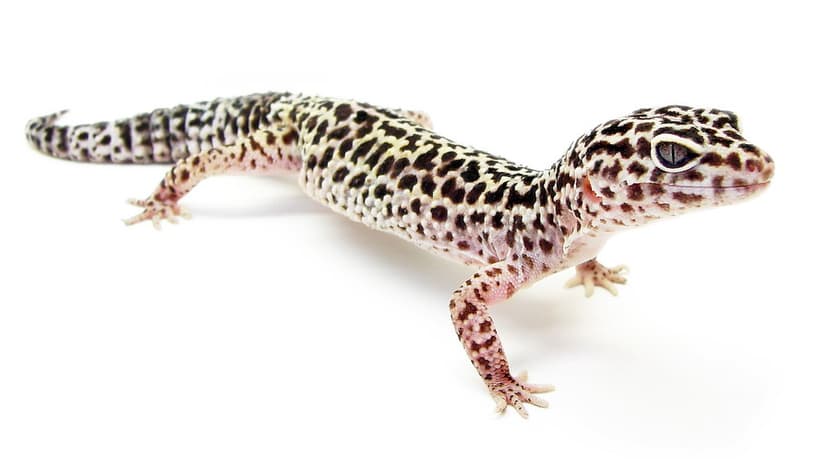
Common leopard gecko
The common leopard gecko (Eublepharis macularius) is a ground-dwelling lizard native to the arid regions of South Asia, including Afghanistan, Pakistan, India, and Nepal. Known for its distinctive spotted patterns and thick, fat-storing tail, it is a popular pet, often considered the first domesticated lizard species. These geckos are primarily nocturnal and opportunistic predators, feeding on invertebrates and small vertebrates.
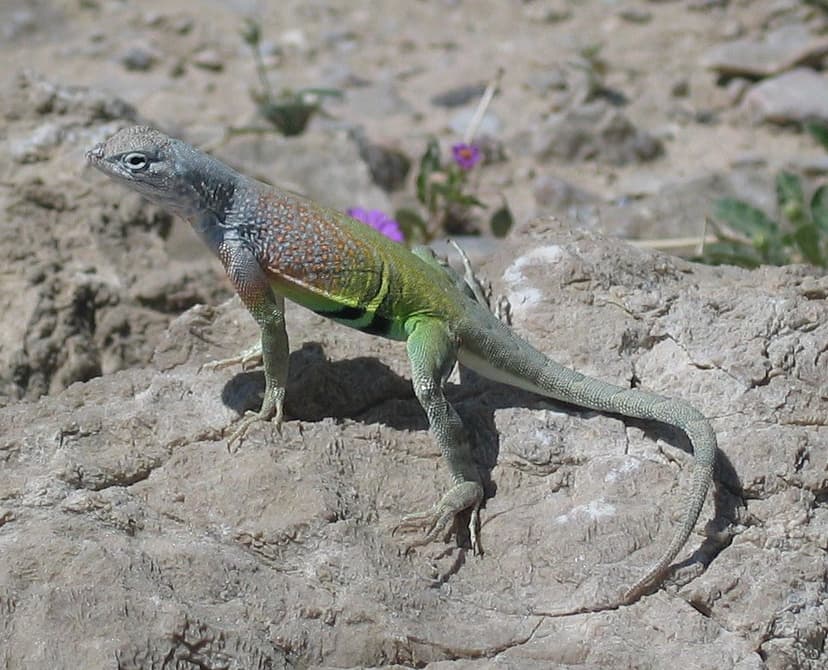
Cophosaurus texanus
The greater earless lizard (Cophosaurus texanus) is a medium-sized lizard native to arid and semi-arid regions of the southwestern United States and northern Mexico. It is distinguished by its lack of external ear openings, an adaptation for burrowing, and exhibits notable sexual dimorphism, with males being larger and more vibrantly colored than females. These lizards are primarily insectivores and rely on camouflage and speed to evade predators.