
Hemidactylus triedrus
Hemidactylus triedrus, commonly known as the termite hill gecko or blotched house gecko, is a species of gecko native to South Asia. This lizard is characterized by its large head, distinct tubercles on its upper body, and a patterned coloration that aids in camouflage. It inhabits arid and semi-arid regions, often found near termite mounds or rocky outcrops.
Key Facts
- ›Found in South Asia, including India, Pakistan, and Sri Lanka.
- ›Possesses a large head with prominent tubercles arranged in longitudinal series on its upper body.
- ›Coloration typically includes a light pinkish-brown base with darker bands and white-edged streaks.
- ›Distinguished by its free, moderately dilated digits with infra-digital lamellae.
- ›Males have a series of preanal pores.

Termite Hill Gecko, Dakota's Leaf-Toed Gecko, Blotched House Gecko
Sri Lanka, Pakistan, India
Arid Regions, Semi-Arid Regions, Near Termite Mounds, Rocky Outcrops
- Head Is Large and Oviform.
- Snout Is Longer Than the Distance Between the Eye and Ear-Opening.
- Ear-Opening Is Large, Suboval, and Oblique.
- Digits Are Free and Moderately Dilated, With Oblique Infra-Digital Lamellae .
- Upper Surface Covered With Small Flat Granular Scales and Large Trihedral Tubercles In 16-20 Longitudinal Series.
- Largest Tubercles Do Not Exceed Two-Fifths the Diameter of the Eye.
- Abdominal Scales Are Large, Smooth, Rounded, and Imbricate.
- Tail Is Rounded, Feebly Depressed, Tapering, Covered With Irregular, Small, Smooth, Imbricated Scales and Rings of Large, Pointed, Keeled Tubercles.
- Coloration Is Light Pinkish-Brown Above, Generally With More Or Less Defined Transverse Darker Bands Bordered By Pure White Tubercles Surrounded By Deep-Brown Rings.
- Young Are Very Regularly Barred With Dark Brown .
- A Dark-Brown Streak, White-Edged Above, Passes Through the Eye On the Side of the Head.
- Lower Surfaces Are White.
- Snout To Vent Length of 3.7 Inches and Tail Length of 3.8 Inches Have Been Recorded.
Insects, Other Small Invertebrates
Associated With Termite Mounds.
About Hemidactylus triedrus
Hemidactylus triedrus: The Termite Hill Gecko
Hemidactylus triedrus, commonly referred to as the termite hill gecko, Dakota's leaf-toed gecko, or blotched house gecko, is a species of gecko native to the diverse landscapes of South Asia. Its geographical range encompasses Sri Lanka, Pakistan, and India, where it has adapted to various arid and semi-arid environments. The species is often found in close proximity to termite mounds, which likely provide both shelter and a hunting ground for its prey.
Description and Physical Characteristics
This gecko possesses a distinct appearance characterized by a large, oviform head and a snout that is proportionally longer than the distance between its eye and ear opening. The upper surface of its body is covered with small, flat granular scales interspersed with prominent, large trihedral tubercles. These tubercles are arranged in more or less regular longitudinal series, with the largest not exceeding two-fifths the diameter of the eye. The digits are free and moderately dilated, featuring oblique infra-digital lamellae that aid in climbing. Coloration typically consists of a light pinkish-brown base, often adorned with more or less defined transverse darker bands. These bands are frequently bordered by pure white tubercles that are themselves surrounded by deep-brown rings. Young individuals exhibit more regular dark brown barring. A characteristic feature is a dark-brown streak, edged with white above, that runs along the side of the head through the eye. The lower surfaces are typically white. Adult specimens have been recorded with a snout-to-vent length of approximately 9.4 cm (3.7 inches) and a tail length of 9.65 cm (3.8 inches).
Source: Wikipedia ↗
Frequently Asked Questions
What are the common names for Hemidactylus triedrus?
Hemidactylus triedrus is also known by several common names, including the termite hill gecko, Dakota's leaf-toed gecko, and blotched house gecko. These names often reflect its habitat or distinctive physical features.
Where is Hemidactylus triedrus distributed?
This species is naturally found across South Asia. Its distribution includes Sri Lanka, Pakistan, particularly eastward from Karachi, and India.
What does Hemidactylus triedrus look like?
It has a large, oviform head with a snout longer than the distance from the eye to the ear. The upper body is covered in small granular scales interspersed with large trihedral tubercles. Its coloration is typically light pinkish-brown with darker transverse bands and white-edged streaks.
What are the physical characteristics of its digits?
The digits of Hemidactylus triedrus are free and moderately dilated, with the inner digit being well-developed. The infra-digital lamellae are slightly oblique, with typically 6 or 7 on the inner digits and 8 to 10 on the median digits.
Does Hemidactylus triedrus have any sexual dimorphism related to pores?
Yes, males of Hemidactylus triedrus possess a series of preanal pores, which are interrupted in the middle. There are typically 6 to 8 pores on each side.
What is the typical size of Hemidactylus triedrus?
An adult specimen measured from snout to vent was 3.7 inches, with the tail measuring 3.8 inches. This suggests a total length of approximately 7.5 inches.
Related Lizards
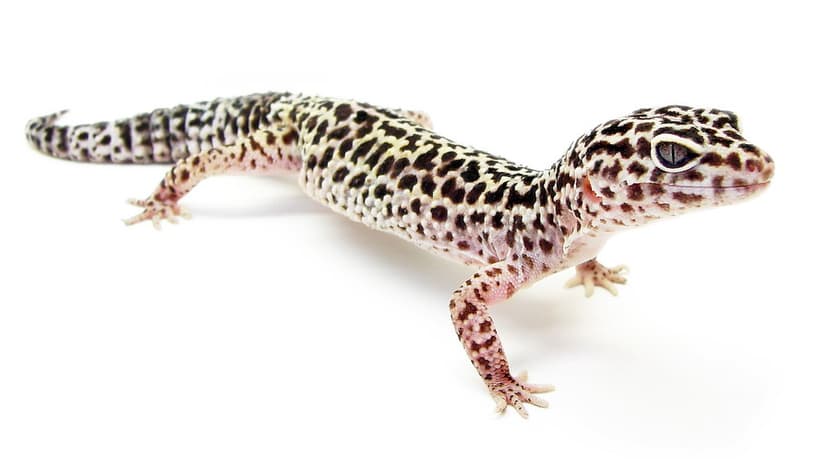
Common leopard gecko
The common leopard gecko (Eublepharis macularius) is a ground-dwelling lizard native to the arid regions of South Asia, including Afghanistan, Pakistan, India, and Nepal. Known for its distinctive spotted patterns and thick, fat-storing tail, it is a popular pet, often considered the first domesticated lizard species. These geckos are primarily nocturnal and opportunistic predators, feeding on invertebrates and small vertebrates.
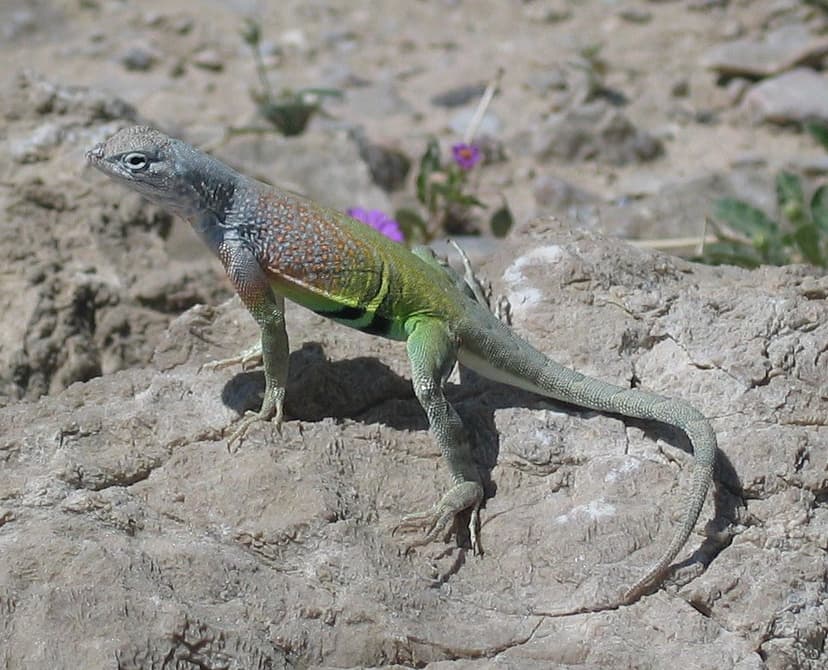
Cophosaurus texanus
The greater earless lizard (Cophosaurus texanus) is a medium-sized lizard native to arid and semi-arid regions of the southwestern United States and northern Mexico. It is distinguished by its lack of external ear openings, an adaptation for burrowing, and exhibits notable sexual dimorphism, with males being larger and more vibrantly colored than females. These lizards are primarily insectivores and rely on camouflage and speed to evade predators.

Desert monitor
The desert monitor (Varanus griseus) is a large carnivorous lizard found across North Africa and Central and South Asia. It exhibits varied coloration from light brown to grey and can reach up to 2 meters in length. Known for its adaptability, the desert monitor inhabits arid and semi-arid regions, preying on a wide range of vertebrates and invertebrates.